
Imagine a scenario like this. You sell a camera lens on the internet. You box it carefully, drive to the post office, pay for tracked shipping, hand it over the counter, get a receipt, and watch the tracking update all the way from your door to the buyer’s zip code. Delivered. 9:43 AM. Scanned and confirmed.
- The Basic Promise and Its Cracks
- The Architecture of Asymmetry
- The “Sole Discretion” Clause: A Black Box
- Friendly Fraud: The Enemy in Plain Sight
- The Digital Goods Gap
- The Automation Problem
- The 10-Day Trap and the Missed Deadline
- What the Fine Print Actually Says
- The “Friendly Fraud” Tax on Small Sellers
- The Double-Jeopardy Problem
- The Argument for the Other Side
- What Sellers Can Actually Do
- A System That Needs Reform
A week later, you get an email from PayPal. Dispute opened. Item Not Received.
You go into the Resolution Center, paste in the tracking number, and upload a screenshot showing the green checkmark. Case closed in your favor? Not necessarily. In a troubling number of cases documented across seller forums, PayPal community threads, and merchant advice blogs, the answer is: you lose anyway.
This is not a story about fraud. Or rather, it is not only a story about fraud. It is a story about a dispute resolution system that is structurally, philosophically, and contractually tilted against the people who sell things. And understanding why requires getting into the fine print, the policy architecture, and the quiet logic of a company that processes over $1.4 trillion in payments each year.
The Basic Promise and Its Cracks
On the surface, PayPal’s framework looks fair. Buyers can file an Item Not Received claim within 180 days of payment. Sellers respond with proof of delivery. PayPal reviews. Decision made. The company’s own help pages declare, reassuringly, that if you shipped the item to the buyer’s registered address and can show delivery confirmation, you should be protected.
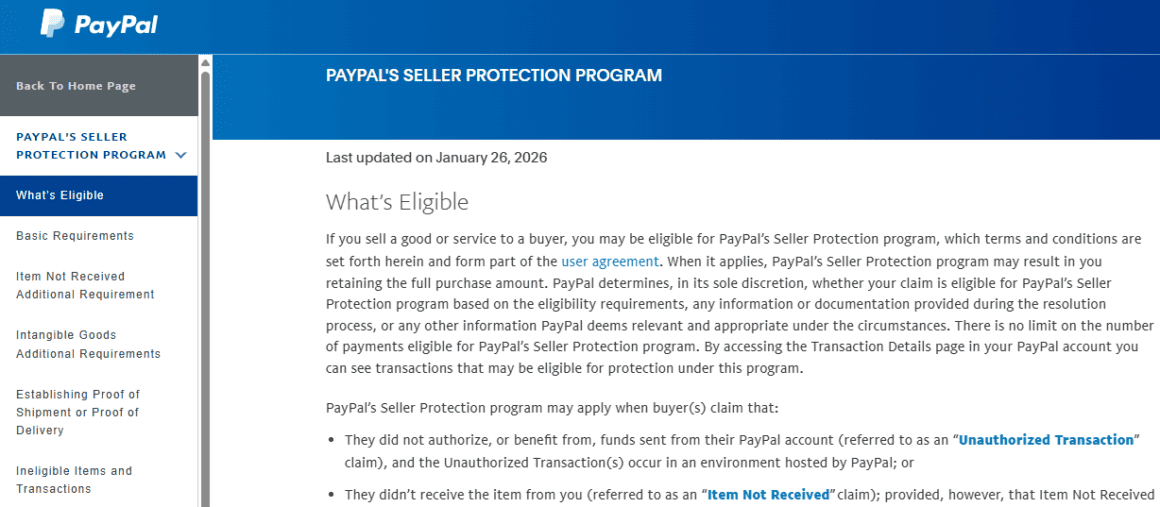
But buried inside PayPal’s Seller Protection policy1 is a phrase that appears again and again, in context after context: “
PayPal determines, in its sole discretion.”
Those four words do a lot of heavy lifting. They appear in the user agreement when PayPal decides if your claim is eligible, when it evaluates your evidence, when it reviews appeals, and when it chooses whether to hold your funds. Sole discretion means exactly that: no independent arbiter, no appeals court, no obligation to explain.
Sellers who have gone through this process know the feeling well. You submit everything. Tracking number, carrier confirmation page, screenshot of the delivery scan, proof the package went to the registered address. And PayPal still sides with the buyer. When you call customer service, you are told the decision is final. When you try to appeal, you get a template response.
This is not anecdotal. It is systemic.
The Architecture of Asymmetry
The imbalance starts with how disputes are framed. When a buyer files an Item Not Received claim, according to PayPal’s own resolution page2, the default assumption is that the item was not received. The seller then carries the burden of proving otherwise. That sounds reasonable until you understand how narrow the acceptable proof actually is.
According to PayPal’s Seller Protection requirements3, valid proof of delivery for physical goods must include: a tracking number showing delivery to the buyer’s registered PayPal address, a delivery date, the carrier name, and for any transaction over $750, a signature confirmation. Delivery to a neighbor’s door, a parcel locker, a safe place, or any address that differs even slightly from what PayPal has on file can void your protection entirely.
That last condition creates a serious practical trap. Carriers like USPS, UPS, and FedEx routinely deliver to adjacent addresses when the recipient is unavailable, leave packages at building management offices, or drop them at community mailboxes. These are delivery events. The carrier marks them delivered. The buyer receives their goods. And yet the seller’s protection can evaporate because the confirmation does not match the exact address in PayPal’s database.
The policy is explicit about this edge case. PayPal’s seller protection terms state that if you originally ship to the registered address but the item is redirected to a different address, you lose protection. This even applies in cases where the buyer or the carrier initiated the redirection, not the seller.
“Paypal is just a payment processor that gives you some buyer and some seller protection. So disputes for non receipt of item are mostly automated. Seller provides tracking that shows delivery = seller wins.” –
– PayPal Community moderator, noting the automation that governs most outcomes.
Mostly. That word is doing real work. Because as any seller who has been through the process knows, the automation is not the whole story.
The “Sole Discretion” Clause: A Black Box
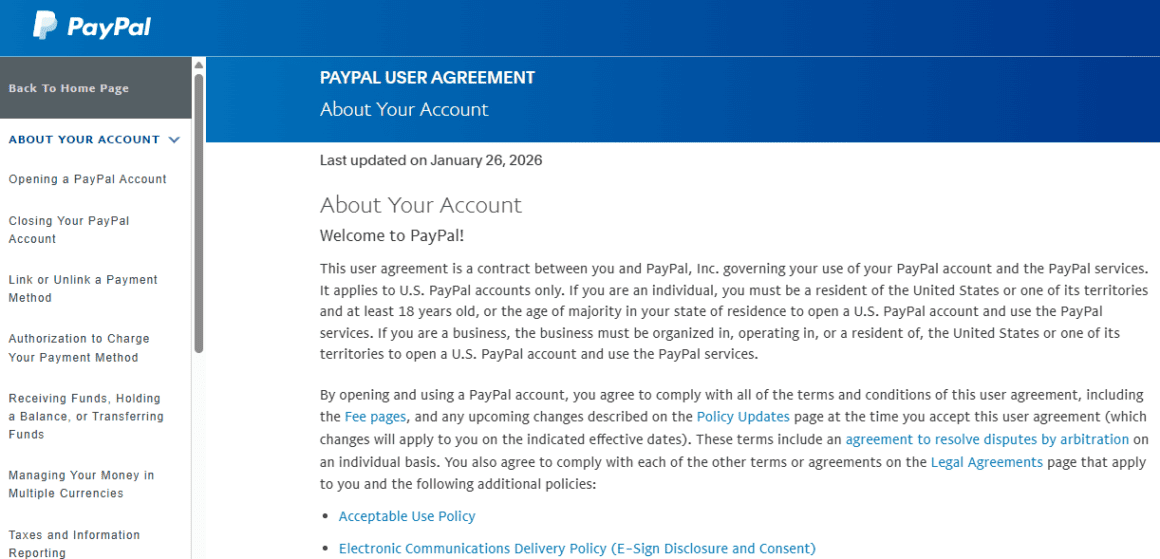
What makes this system particularly hard to fight is the opacity. PayPal’s user agreement4 gives the company authority to make final decisions based on
“any other information PayPal deems relevant and appropriate under the circumstances.”
That is a remarkably broad mandate. It means a reviewer can look at your perfect tracking confirmation and still decide against you, and they do not have to tell you why.
There is a community thread on PayPal’s own support forums where a user recounts exactly this scenario. They had delivery confirmation. The package was marked delivered to the buyer’s address. They submitted everything. PayPal refunded the buyer anyway, citing internal risk criteria that the company was under “no obligation to disclose.”
This is not a bug in the system. It is a feature. PayPal explicitly states in its user agreement that its “decision to take certain actions may be based on confidential criteria that is essential to our management of risk.” You agreed to this when you signed up. Most sellers did not read that far.
The Quora5 discussion on PayPal buyer favoritism captures the frustration of experienced sellers:
“Paypal is not a bad system but their fraud and dispute team is terrible and I have seen a lot of bad teams in my 15 years of fraud investigation experience.”
The comment is blunt, but it reflects a perspective shared across decades of merchant complaints.
Friendly Fraud: The Enemy in Plain Sight
There is a reason PayPal tilts toward buyers, and it is not malice. It is math. According to PayPal’s own research6, friendly fraud, where a customer disputes a legitimate charge to get a refund while keeping the goods, represents 61% of all chargebacks businesses receive. Mastercard estimated chargeback fees cost businesses around $117 billion in 2023 alone.
Friendly fraud sounds like a contradiction in terms, but it is a real and growing problem. PayPal itself predicted it as one of the most alarming fraud trends heading into 2024. Industry data shows from ChargeFlow7 shows that 84% of customers find filing a chargeback simpler than following a merchant’s formal refund process, and 72% think chargebacks are essentially the same as refunds. First-party fraud, which includes buyers lying about non-delivery, now represents a third of all reported fraud globally.
The problem is acute: dispute rates spiked 78% year-over-year in Q3 2024 alone. Online fraud grew 15% in 2024, costing nearly $48 billion. The average chargeback climbed to $169.13. U.S. merchants now lose $4.61 for every dollar of actual fraud in 2025, up 37% from 2020.
So PayPal is not wrong that fraud is rampant. The mistake is assuming that defaulting to the buyer in close calls is a neutral or costless policy. It is not. It transfers risk entirely onto sellers, many of whom are small businesses and individual sellers with no leverage to fight back.
The Digital Goods Gap
If physical goods sellers face an uphill battle, digital goods sellers are playing an entirely different game, and mostly losing it. PayPal’s Seller Protection does not extend to digital goods by default in many regions. Even where it nominally does, the requirements are nearly impossible to meet.
To prove delivery of a digital item, PayPal requires what it calls “compelling evidence” that includes things like system logs showing the date the item was sent, the recipient’s IP address, and proof that the file was accessed or downloaded. Most individual sellers running small digital shops, selling e-books, art files, design templates, or software licenses, do not have server-side access logs. They send a file via email or a download link. That is not good enough.
Online services present an even stranger problem. Imagine you are a freelance writer hired through a private arrangement. You deliver ten articles on time. The buyer then opens a dispute claiming the service was never provided. You have emails. You have the articles themselves. You have timestamps. And yet PayPal may still refund the buyer, because you cannot produce a “signed contract” or a “service acknowledgment receipt” as required by their policy.
The PayPal community thread on service disputes is worth reading at length. A seller provided a service, kept detailed records, and still lost. The outcome was not because PayPal caught them lying. It was because the company’s evidentiary standards were built for formal commercial contracts, not the informal service economy that now makes up a huge share of digital transactions.
The Automation Problem
One of the most under-discussed issues in PayPal’s dispute system is how much of it runs on automation. For a dispute that involves clear tracking data showing delivery, the system is mostly algorithmic. Seller provides a valid tracking number showing delivery to the registered address equals seller wins. The seller does not have tracking equals seller loses. That is the rough shape of it.
But automation breaks down at the edges. What happens when the tracking number shows delivery to a slightly different zip code? When was the parcel picked up at a post office box? When the carrier’s international tracking does not update after the package crosses a border? In those cases, the system often defaults to the buyer, regardless of the actual truth of the situation.
There is a particularly instructive thread on the eBay Community forums where an international seller shipped via USPS to the UAE, a country not covered by PayPal’s e-DELCON tracking network. The tracking went dark at the US border. The buyer opened a dispute. PayPal sided with the buyer because there was no delivery confirmation, even though the seller had done everything right. The DHL handoff confirmation later proved delivery, but by then, the dispute was already lost.
This is not an abstract risk. For any seller operating across borders, which in the age of global e-commerce means most sellers, the gap between “shipped with tracking” and “can prove delivery to PayPal’s standard” is enormous.
The 10-Day Trap and the Missed Deadline
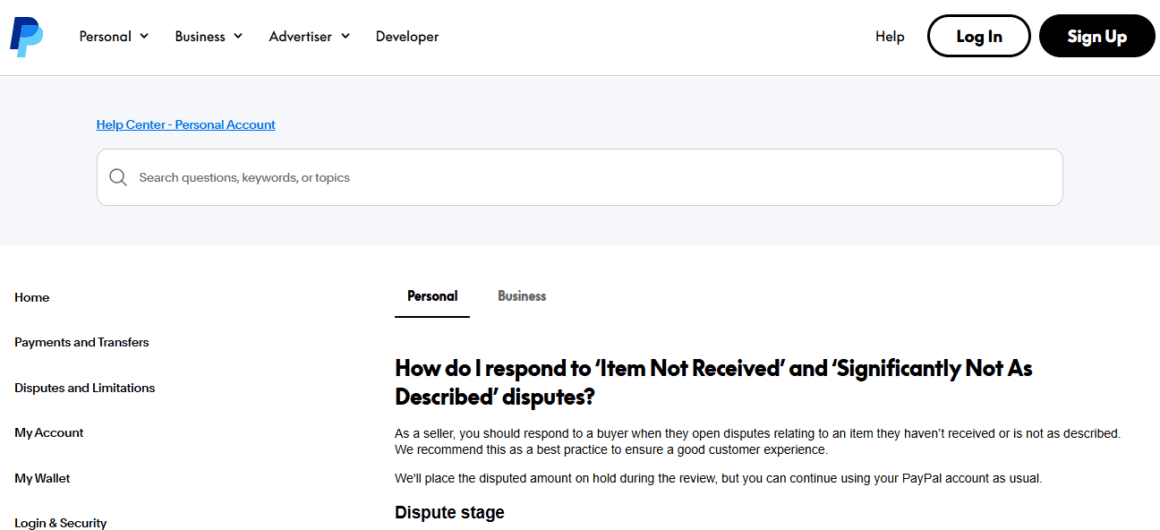
The clock mechanics of PayPal’s Resolution Center create another structural disadvantage for sellers. When a buyer escalates a dispute to a claim, according to PayPal’s own guidance8, the seller has exactly 10 days to respond with documentation. Miss that window, and the case is automatically decided in the buyer’s favor. No exceptions.
For individual sellers, people running side businesses or hobby shops from home, 10 days can slip by easily. You are on a trip. You are dealing with a family emergency. You did not notice the email among a hundred others. You are not a full-time merchant with a dedicated disputes team. The case closes against you, and the money is gone.
One buyer’s account on Quora9 captures the same dynamic from the opposite side: they had opened a dispute, waited, and found their case had been closed in the seller’s favor without PayPal ever reviewing the case, simply because the buyer had not escalated to a claim within 20 days. The system closes disputes on both sides through inaction, not justice.
The appeal process after a loss is equally narrow. PayPal’s policy states that you can file an appeal within 10 days of a case closure, but only if you have “new or compelling information not available at the time of the original determination.” That standard is hard to meet if you have already submitted everything you had. You cannot simply argue that PayPal made the wrong call. You have to show them something new.
What the Fine Print Actually Says
Let me be direct about something most sellers find out too late. PayPal’s purchase protection terms say clearly:
“PayPal’s original determination is considered final.”
That is a remarkable clause. It means PayPal has built a private dispute resolution system where it is simultaneously the payment processor, the evidence reviewer, and the judge. There is no independent oversight.
The user agreement also contains a mandatory arbitration clause. You cannot sue PayPal in court over a dispute decision in most cases. You cannot join a class action. You agreed to resolve any disagreement through binding non-appearance-based arbitration, which in practice means: almost no one does it, because the cost of arbitrating a $200 dispute outweighs the potential recovery.
The seller protection policy page lists a set of transactions that are categorically excluded from any seller protection regardless of evidence: digital goods in many contexts, in-person delivery, transactions marked “ineligible,” personal payments sent via Friends and Family, real estate, vehicles, and NFTs above a threshold. The list is long. The average seller does not read it before their first dispute.
This is where the asymmetry becomes most visible. Buyer Protection has a clear, simple promise: if you do not get your item or it is not as described, you can get your money back. Seller Protection has a long list of conditions, exceptions, exclusions, and discretionary override clauses. The two programs are not mirror images of each other. They are fundamentally different in design and intent.
The “Friendly Fraud” Tax on Small Sellers
Merchants dealing with regular PayPal disputes face a compounding problem. According to PayPal’s dispute fee structure10, if your dispute ratio reaches 1.5% or more across three calendar months, you get charged a High Volume Dispute fee on every dispute. That fee comes on top of losing the disputed transaction amount.
Think about what that means. A seller in a category that attracts more fraud, collectibles, electronics, and high-value clothing can find themselves in a spiral. They lose disputes they should win, which pushes up their dispute ratio, which triggers extra fees on future disputes, which makes their finances tighter, which gives them less ability to invest in better shipping and documentation practices.
One industry analysis from ChargeBlast11 put it plainly:
“One scammer can lock up thousands of dollars for weeks while you scramble to prove your case.”
The moment a dispute is opened, PayPal freezes the disputed funds in your account. You cannot access that money while the review is underway, which can take 10 to 30 days or more. For a small business running on thin margins, that hold is not inconvenient. It is existential.
Merchants’ chargeback net win rate via formal representment sits at roughly 8.1% across the industry in 2024. Among large enterprises, about 52% win more than half their chargebacks. Among midmarket businesses, only 36% do. Small individual sellers are not even in those statistics, because most of them give up before fighting.
The Double-Jeopardy Problem
Here is a scenario that keeps experienced sellers up at night: the double-claim. A buyer pays via PayPal, but funds the payment through a credit card. The buyer can file a dispute through PayPal’s Resolution Center. If they lose, or if they simply want a second bite, they can file a chargeback directly with their card issuer. PayPal’s own help pages acknowledge this, noting that“applicable card chargeback rights may be broader than those available under PayPal’s Purchase Protection program.”
What this means in practice is that a seller can win a PayPal dispute, have their funds released, and then have the money clawed back weeks later when the buyer’s bank processes a separate chargeback. The seller is then fighting a second battle with different rules, different evidence standards, and a different adjudicator, while PayPal collects its fee regardless of the outcome.
It is worth noting that PayPal’s Seller Protection explicitly does not cover Item Not Received chargebacks filed with external card issuers. Shopify’s12 documentation on PayPal Seller Protection makes this gap explicit: Seller Protection applies to INR claims made within PayPal’s Resolution Center only. It does not extend to external chargebacks. So a seller can meet every requirement, win the internal dispute, and still lose the money through the external chargeback channel.
The Argument for the Other Side
In fairness, PayPal’s position is not indefensible. The company operates at a scale that makes individual case review economically impossible. With hundreds of millions of transactions, the only way to manage disputes is through algorithmic sorting and policy standards. The rules have to be bright-line and consistent to work at scale.
There is also the genuine fraud problem. If PayPal gave every seller with a tracking number an automatic win, the delivery confirmation system would immediately be gamed. Fraudulent sellers in China and elsewhere already manipulate tracking numbers, shipping packages of junk to the right zip code to generate a delivery scan, and then pocketing the payment. PayPal has to stay ahead of that.
And buyer trust matters to the whole ecosystem. If buyers do not trust that their purchases are protected, they do not use PayPal. If they do not use PayPal, sellers cannot reach them. The buyer protection program is, in a very real sense, what makes PayPal worth using for buyers. Sellers benefit from that too, even when they hate the dispute process.
All of that is true. But none of it explains why the system has to be as opaque, as unreviewable, and as structurally tilted as it currently is. Better tools exist. Better processes are possible.
What Sellers Can Actually Do
The most honest advice I can give any seller is this: do not trust that doing the right thing will protect you. The right thing is necessary but not sufficient. Here is what actually helps, drawn from Chargeback Gurus’s13 documentation and the collective wisdom of merchant forums.
Get signature confirmation on everything over $100, not just the $750 threshold PayPal requires. Yes, it costs a few extra dollars. But a signature is the one form of delivery proof that is essentially irrefutable. No one signs for a package they did not receive, at least not without committing a crime.
Screenshot and save every piece of documentation the moment a package ships. Do not rely on carrier websites to preserve your tracking history. Carrier websites drop old tracking data. Download a PDF of the tracking confirmation at the time of delivery. Store it somewhere permanent.
For digital goods and services, create paper trails that would survive scrutiny. Get written confirmations of service delivery from clients. Use tools that log download or access events. The informal handshake model of digital commerce is a liability when disputes arise.
Check the “eligible” or “partially eligible” status of every transaction on the Transaction Details page before you ship. PayPal makes this status visible, and if a transaction is marked “ineligible,” you have no seller protection regardless of what you do next. Consider whether to proceed with that sale on PayPal at all, or to use a different payment method.
Set up notifications so disputes catch your attention immediately. The 10-day window to respond after escalation is brutal for sellers who check their email weekly. Treat every dispute notification as an emergency that requires a same-day response.
And keep records for at least six months after every transaction. The 180-day dispute window is longer than most sellers expect. An item sold in January can be disputed in late June.
A System That Needs Reform
The deeper issue here is structural. PayPal has built a private judicial system that processes billions of dollars in disputes, operates under minimal external oversight, and explicitly reserves final decision-making authority for itself. This might be acceptable if the system were transparent, consistent, and subject to meaningful appeal. It is none of those things.
What would a better system look like? It would separate evidence review from business interests. PayPal has a financial incentive to side with buyers because buyer trust drives transaction volume and fees. An independent arbiter would not have that conflict. It would publish aggregate data on dispute outcomes by category, so sellers can understand what they are actually signing up for. It would provide specific, written reasons for decisions so sellers know what evidence they lacked. And it would create a real appeals process with independent reviewers, not a second look from the same team.
None of this is beyond the reach of a company that processes over $6.8 billion in free cash flow annually. It is a question of priorities.
There are regulatory winds shifting in this direction. Consumer financial protection discussions in the US and EU are increasingly focused on embedded financial services and payment platform accountability. The question of whether PayPal’s dispute resolution process meets a fair process standard has not been seriously litigated yet. But it may be sooner than the company expects.
Here is the plain truth of it. PayPal’s dispute system is not designed to find the truth. It is designed to manage risk at scale, protect buyer trust, and do so as cheaply and automatically as possible. Sellers are a variable in that equation, not a priority.
The tracking confirmation you are counting on is not a trump card. It is a factor. PayPal can override it, ignore it, or discount it under the sole discretion clauses that govern every stage of their process. That is the system you agreed to when you signed up.
This does not mean you should stop selling on PayPal. The platform has real advantages: enormous reach, trusted brand recognition for buyers, and a genuine dispute process for clear-cut cases. But walk in with clear eyes. Know what your protection actually covers and what it does not. Know that friendly fraud is real and that buyers know how to game the system. Know that the company adjudicating your dispute has a business interest in the outcome. And know that the best defense is documentation so thorough that no reviewer, human or algorithmic, has any room to doubt you.
The scales are not balanced. They are rigged, if not maliciously, then structurally. That is worth knowing before your first dispute, not after it.
Sources
- “PayPal’s Seller Protection Program” 26 Jan. 2026, www.paypal.com/us/legalhub/paypal/seller-protection. Accessed 30 Mar. 2026. ↩︎
- “Solving Problems with a Purchase” PayPal US, www.paypal.com/us/webapps/mpp/security/buyer-protection-resolution. Accessed 31 Mar. 2026. ↩︎
- “PayPal’s Seller Protection Program” PayPal US, 26 Jan. 2026, www.paypal.com/us/legalhub/paypal/seller-protection. Accessed 31 Mar. 2026. ↩︎
- “Paypal User Agreement” 26 Jan. 2026, www.paypal.com/us/legalhub/paypal/useragreement-full. Accessed 31 Mar. 2026. ↩︎
- Quora, www.quora.com/Does-PayPal-tend-to-favor-the-buyer-in-a-buyer-seller-dispute. Accessed 31 Mar. 2026. ↩︎
- Staff, PayPal Editorial. “Combat the rise of friendly fraud” PayPal US, 2 July 2024, www.paypal.com/us/brc/article/rise-of-friendly-fraud. Accessed 31 Mar. 2026. ↩︎
- “The Ultimate Chargeback Statistics 2025: Trends, Costs, and Solutions” 24 June 2025, www.chargeflow.io/blog/chargeback-statistics-trends-costs-solutions. Accessed 31 Mar. 2026. ↩︎
- “How do I respond to ‘Item Not Received’ and ‘Significantly Not As Described’ disputes?” PayPal US, www.paypal.com/us/cshelp/article/how-do-i-respond-to-%E2%80%98item-not-received%E2%80%99-and-%E2%80%98significantly-not-as-described%E2%80%99-disputes-help1083. Accessed 31 Mar. 2026. ↩︎
- Quora, www.quora.com/What-does-it-mean-if-PayPal-requested-information-from-a-seller-by-July-2nd-on-the-PayPal-dispute-claim-I-filed-but-the-seller-didnt-respond-and-the-Paypal-dispute-claim-is-now-under-review. Accessed 31 Mar. 2026. ↩︎
- “Paypal User Agreement” 26 Jan. 2026, www.paypal.com/us/legalhub/paypal/useragreement-full. Accessed 31 Mar. 2026. ↩︎
- “PayPal Goods and Services Buyer Protection Explained” Chargeblast, 19 Aug. 2025, blog.trychargeblast.com/blog/paypal-goods-and-services-buyer-protection-explained/. Accessed 31 Mar. 2026. ↩︎
- Shopify, help.shopify.com/en/manual/payments/paypal/paypal-seller-protection. Accessed 31 Mar. 2026. ↩︎
- 02, January. “Transaction Issues: How to Handle PayPal Disputes & Claims” Chargeback Gurus, 2 Jan. 2022, www.chargebackgurus.com/blog/transaction-issues-how-to-handle-paypal-disputes-claims. Accessed 31 Mar. 2026. ↩︎