Coinbase is still a familiar starting point, but many traders now move on once they need lower costs, better order tools, broader asset access, or a platform that feels less limited in day-to-day use. That shift is what makes Coinbase alternatives relevant in 2026: the best choice is no longer the biggest brand, but the exchange that fits your trading style, pace, and tolerance for trade-offs.
What “Pro Trading Platform” Means
A pro trading platform is built for execution quality, order control, fee structure, and market depth. In practice, that means maker-taker pricing, advanced order types, charting, API access, and clearer liquidity visibility.
It also reduces hidden friction: spreads, slippage, withdrawal costs, and opaque risk presentation.
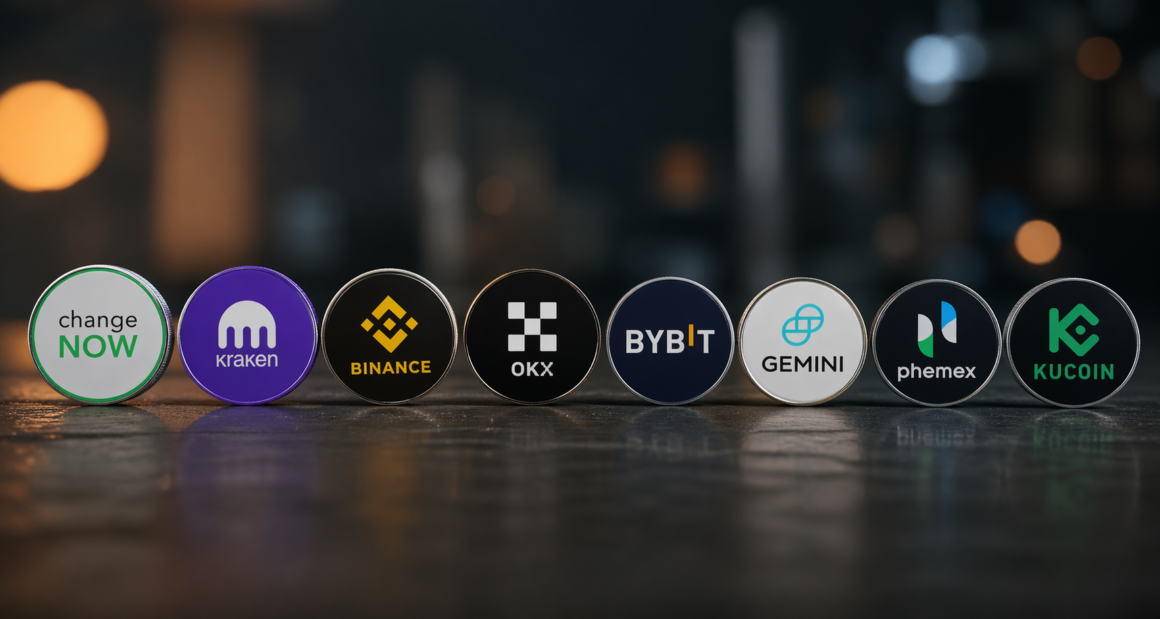
Top Coinbase alternatives at a glance
ChangeNOW is the most relevant option for users who want fast, non-custodial swaps without moving funds onto an exchange. It supports 1,500+ assets across 110+ blockchains, and its value lies in simple conversions with wallet control. For users who need more flexibility, a ChangeNOW PRO account adds extra functionality while keeping the product centered on swaps. It is useful for quick rotation, but not for margin, futures, or order-book trading.
Kraken is the most straightforward centralized exchange in this group for users who care about cost discipline, security, and a cleaner trading setup. Kraken Pro is widely used by active traders because it offers maker-taker pricing, margin on supported markets, and a more advanced interface than the standard app, while still keeping the platform relatively conservative in design. Its main limitation is that it does not always match the widest exchanges on token variety, so it is stronger on structure than on sheer breadth.
Binance is the strongest option when liquidity and market depth matter most. It offers a very wide asset selection, large trading volumes, and one of the broadest product ecosystems in crypto, which is useful for users who trade frequently or need access to many markets in one place. The trade-off is complexity: the platform can feel crowded, and access depends heavily on region, so it is powerful but not equally simple for every user.
OKX sits closer to an advanced-trader platform than a beginner-first exchange. It is strong in derivatives, flexible order handling, and broader trading workflows, which makes it useful for users who want more than spot trading and basic charts. The downside is that the interface and product range can feel dense, so it rewards users who already know what they need.
Bybit is best understood as a fast-moving trading venue with a strong derivatives focus. It tends to appeal to users who care about execution speed, leverage, and an interface built around active trading rather than passive holding. Its limitation is that the platform can offer more tools than a casual trader actually needs, which makes it less efficient for simple buy-and-hold use.
Gemini is the most conservative name in the list and usually makes sense for users who prioritize compliance, custody discipline, and a more restrained exchange model. It is not usually the cheapest option, but that is partly the point: the platform positions itself around trust and regulated access rather than aggressive feature expansion. In practice, that makes it suitable for users who value clarity and structure over maximum breadth.
Phemex is a flexible trading platform that tries to balance usability with active-trading features. It is more relevant for users who want a pro-style environment without moving into the most complicated exchanges, and it is often discussed in the context of spot plus derivatives workflows. Its main limitation is scale: it does not have the same ecosystem depth or brand reach as the largest players.
KuCoin is the most attractive option here for users who want broad token access and a wide feature set. It often stands out for altcoin availability and a product mix that goes beyond basic spot trading, which can be useful for users looking outside the most established pairs. At the same time, its breadth comes with a trade-off: the platform is not the most conservative or the simplest to navigate, especially for users who prefer a more tightly controlled environment.
| Platform | Type | Custody | Spot fees | Derivatives | Asset range | Best for |
| ChangeNOW | Non-custodial swap service | User-controlled | Included in swap estimate | No | Broad | Fast swaps |
| Kraken | Centralized exchange | Exchange custody | Tiered maker/taker | Yes | Broad | Active spot trading |
| Binance | Centralized exchange | Exchange custody | Tiered maker/taker | Yes | Very broad | High liquidity |
| OKX | Centralized exchange | Exchange custody | Tiered maker/taker | Yes | Broad | Advanced workflows |
| Bybit | Centralized exchange | Exchange custody | Tiered maker/taker | Yes | Broad | Derivatives |
| Gemini | Centralized exchange | Exchange custody | Published fee schedule | Limited / varies | Moderate | Compliance-first users |
| Phemex | Centralized exchange | Exchange custody | Tiered maker/taker | Yes | Moderate | Flexible traders |
| KuCoin | Centralized exchange | Exchange custody | Tiered maker/taker | Yes | Very broad | Altcoin access |
How to read the comparison: ChangeNOW is a swap service, Kraken and Gemini are more structured centralized exchanges, Binance and OKX offer broader trading environments, Bybit is more derivatives-focused, Phemex sits in the middle, and KuCoin emphasizes breadth.
Best Coinbase alternatives for different user profiles
The right platform depends on use case. A quick profile-based list is enough here.
For fast swaps and simple asset rotation: ChangeNOW works for users who want quick conversions without opening an exchange account first. Its non-custodial model fits wallet control and minimal setup, but it is not meant for order management or leverage.
For active spot traders: Kraken suits users who want a cleaner trading setup and deliberate order placement. It is often discussed in Coinbase vs Kraken Pro comparisons because its Pro interface is built around maker-taker trading.
For users who need market depth: Binance fits traders who prioritize liquidity and broad asset access. Its scale is useful, but the interface can feel crowded.
For advanced and derivatives-oriented users: OKX and Bybit are the stronger fit. OKX leans toward flexible workflows, while Bybit is more execution- and derivatives-focused.
For compliance-first users: Gemini is the conservative option. It suits users who want clearer custody expectations and a restrained product model.
For users who want flexibility without maximum complexity: Phemex sits in the middle. It offers a pro-style setup without the heaviest interface.
For altcoin hunters: KuCoin is useful for users who care more about token breadth than curation.
The comparison here is simple: swap service, spot exchange, derivatives platform, or altcoin-heavy venue. The best fit depends on what the user actually needs.
Fees Are Not the Whole Story
Fee tables are useful, but they do not show the full cost. A low headline fee can still be offset by spreads, weaker liquidity, or worse execution.
A better comparison looks at four parts:
- Trading fee. The visible maker-taker or swap commission.
- Spread. The difference between buy and sell prices, which can quietly widen the total cost.
- Execution quality. Whether the order fills cleanly at the expected price.
- Transfer and withdrawal costs. The part that often becomes visible only after you move funds.
This is where the platforms diverge. ChangeNOW can work well for quick swaps, but its price is part of a swap quote, not an exchange book. Kraken and Binance can be cost-effective for active trading, but the final cost still depends on liquidity and order type. OKX, Bybit, Phemex, and KuCoin each balance fees and liquidity differently, while Gemini often costs more in exchange for a more conservative setup.
Security, Regulation, and Market Context in 2026
Security depends on custody model, regulatory reach, and platform complexity.
- ChangeNOW: Non-custodial, so users keep control of funds during swaps.
- Kraken and Gemini: More conservative centralized exchanges, suited to users who want structured custody.
- Binance, OKX, Bybit, Phemex, and KuCoin: Broader trading environments with more products, but also more operational complexity.
- Regulation: Regional access, onboarding rules, and product availability can matter as much as fees.
- 2026 reality: The best choice is often the one that fits the user’s location and trading style.
Which Alternative Fits Which Strategy
This section is best read as a use-case map, not a ranking. Each platform fits a different trading pattern, and the differences become clearer once the strategy is specific.
- Fast swaps: ChangeNOW.
- Active spot trading: Kraken.
- High liquidity and broad access: Binance.
- Advanced workflows: OKX.
- Derivatives and leverage: Bybit.
- Compliance-first setup: Gemini.
- Balanced pro-style trading: Phemex.
- Altcoin access: KuCoin.
If the goal is simple rotation, the swap-first model is enough. If the goal is order control, Kraken and OKX become more relevant. If the goal is deeper market access, Binance is the broadest option. If the goal is a narrower and more cautious setup, Gemini is the more conservative choice. Phemex and KuCoin sit between those extremes, depending on whether the user wants less complexity or more token variety.
Forecasts for 2026
Forecasts for 2026 point to a larger but more specialized crypto exchange market. One estimate places the global crypto exchange market at USD 103.30 billion in 2026, rising to USD 381.18 billion by 2033 at a 20.5% CAGR; another puts the broader cryptocurrency exchanges market at USD 55.38 billion in 2026, growing to USD 142.02 billion by 2033 at 14.4% CAGR.
That suggests a market where spot trading remains important, centralized exchanges keep the largest share of activity, and non-custodial swap services stay relevant for faster conversions.
Regulation is also likely to stay a key variable in 2026, with tighter onboarding, more compliance, and more jurisdiction-specific limits affecting access and product availability.
The likely outcome is specialization rather than consolidation: swap services, spot exchanges, and advanced venues will keep serving different user needs.
Final Takeaway
The real direction in 2026 is not “one best exchange,” but a market splitting into clear roles: custodial venues for depth and execution, and non-custodial tools for speed and control. As regulation tightens and users become more selective, platforms that stay simple, transparent, and reliable are likely to gain the most trust.
The practical advice is to choose by use case, not by brand size. If you trade actively, prioritize liquidity, fees, and order quality; if you move assets often, favor speed and custody control; if you want long-term stability, look for compliance, clear pricing, and a platform you can use consistently without friction.
FAQ
1. What is the best Coinbase alternative for active trading?
Kraken is often the strongest fit for active spot traders, while Binance, OKX, and Bybit are better suited to users who want deeper markets or more advanced tools.
2. Which platform is best for fast swaps?
ChangeNOW is the best match for users who want quick, non-custodial swaps without opening a traditional exchange account.
3. Which Coinbase alternative has the widest asset range?
Binance and KuCoin are usually the strongest options for users who care most about broad token access and market variety.
4. What is the safest choice for conservative users?
Gemini is the most conservative option in this list, especially for users who prioritize compliance, custody discipline, and a more restrained product set.
5. How should traders choose between these platforms in 2026?
The best approach is to match the platform to your main use case: swaps, spot trading, derivatives, liquidity, or altcoin access. In 2026, the right choice will matter more than the biggest brand name.
Disclaimer
This article is for informational purposes only and should not be considered financial, investment, or trading advice. Cryptocurrency trading involves risk, and users should evaluate fees, security, regulation, and product availability based on their own circumstances before choosing a platform.