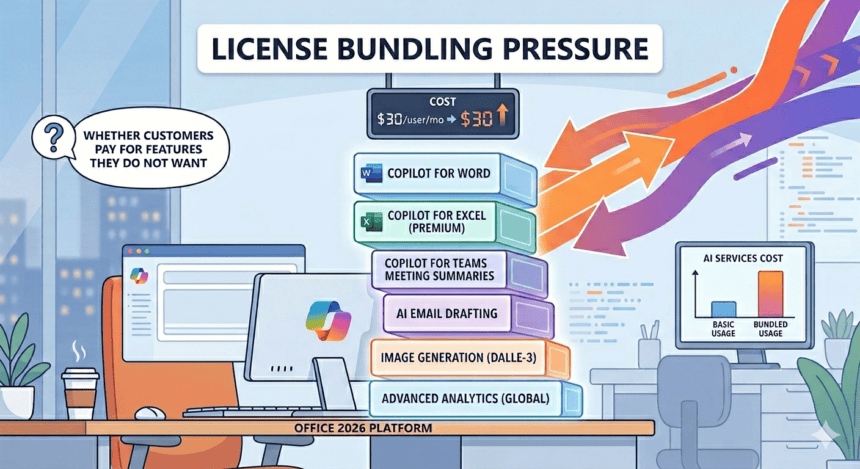

There is a moment familiar to millions of Microsoft 365 subscribers now. You open your email one morning, and there is a message from Microsoft. The price of your subscription has gone up. The reason given is Copilot, Microsoft’s AI assistant. The tone of the email is cheerful, frictionless, and final. And buried somewhere in the fine print is the fact that you had a choice all along. You just were not told about it.
That story, played out across the inboxes of 2.7 million Australians, and according to ABC News1, is now the subject of a federal court lawsuit. It is also, depending on how you look at it, a preview of where enterprise software is heading for everyone.
A Pattern With a Long History
Microsoft has been bundling products for so long that it is hard to remember the tech world ever worked any other way. The company’s rise to dominance in the 1990s was built on exactly this model: ship Windows with Internet Explorer, drive a competitor out of business, repeat. The Department of Justice2 sued. Microsoft won, more or less, and kept bundling.
The pattern never really stopped. It just got dressed up in new vocabulary. “Integrated value.” “Suite economics.” “Platform synergy.” What it means, in practical terms, is that you buy the whole bundle or you lose access to things you need. And lately, the new thing in the bundle is AI.
Microsoft’s packaging strategy has made Copilot harder to avoid, particularly for enterprise customers, with the new E7 Frontier Suite representing a pivot toward bundling AI into core suite offerings at the top end of the market. According to ACCC3, for consumers at the other end, Microsoft integrated Copilot into Microsoft 365 Personal and Family subscriptions in Australia on October 31, 2024, with the global rollout continuing through early 2025, bringing varying subscription price increases with each jurisdiction.
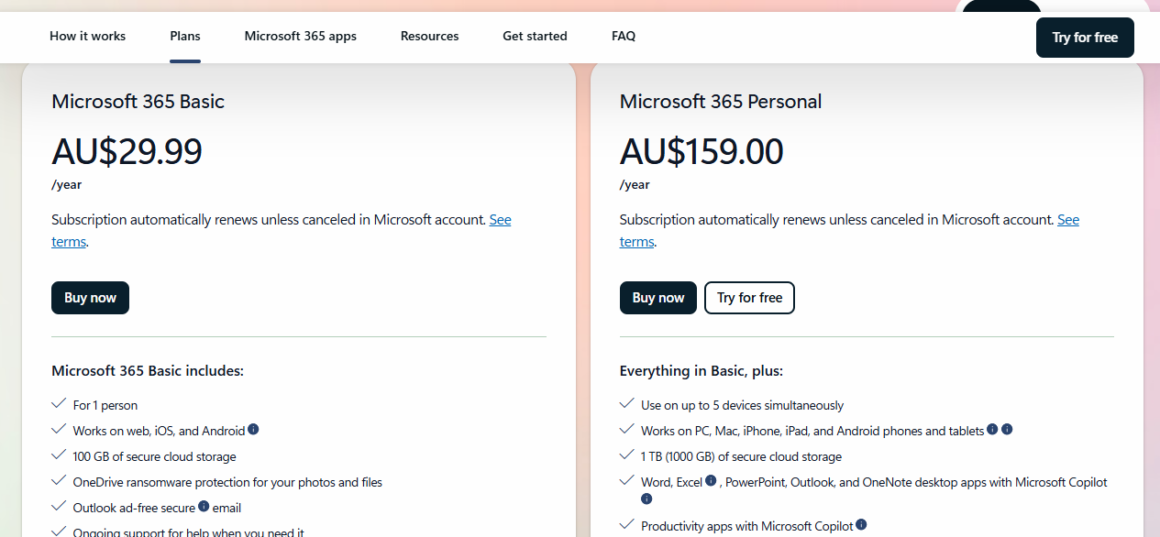
The price increases were not small. In Australia, as reported by ABC News4, the cost of a personal licence rose 45 percent from $109 per year to $159 per year, and a family subscription rose about 30 percent from $139 per year to $179 per year. Microsoft’s justification was the same everywhere: Copilot adds value. You should want this. Here is your bill.
The Hidden Door
The problem, as Australia’s competition regulator eventually decided to argue in court, was not the price increase itself. It was what customers were not told.
The ACCC5 alleges that since October 31, 2024, Microsoft told subscribers of Microsoft 365 Personal and Family plans with auto-renewal enabled that to maintain their subscription, they must accept the integration of Copilot and pay higher prices for their plan, or, alternatively, cancel their subscription. This framing, pay more or leave, presented customers with a false binary.
There was a third option. Microsoft called it the “Classic” plan. It lets you keep exactly what you had, at exactly the price you were paying, without Copilot. A subscriber only saw this screen once they had navigated to the subscriptions section of their Microsoft account, selected “Cancel subscription”, and continued with the cancellation process.
Read that again. To find out you could keep paying the old price, you had to start the process of cancelling your subscription. You had to walk toward the exit before Microsoft would tell you there was another door.
ACCC Chair Gina Cass-Gottlieb did not mince words about this.
She alleged that Microsoft “deliberately omitted reference to the Classic plans in its communications and concealed their existence until after subscribers initiated the cancellation process to increase the number of consumers on more expensive Copilot-integrated plans.”
Cass-Gottlieb argued that cancelling a Microsoft 365 subscription was “a decision many would not make lightly,” given that the subscription included popular Microsoft Office apps such as Word, PowerPoint, Excel, and Outlook, which were “essential in many people’s lives.”
One Australian user on the Microsoft Q&A forum put it more directly:
“Adding Copilot to my Office without my knowledge or active consent, where it was unwanted, distracting and intrusive, and time-wasting to fix, is just plain stupid. And increasing the cost of subscriptions for what ultimately proves to be an optional extra is unethical. It is in effect forcing a price hike on clients for a service they do not want, then leaving them to search for the hidden remedy. It is a highly deceptive practice.”
The same person noted they had already filed a complaint with the ACCC.
Microsoft automatically charged customers without making them aware that the cheaper option was available, even sending an email seven days before renewal that said:
“We want to let you know about a change to the amount of your next payment. Unless you cancel two days before Saturday, April 19 2025, we’ll charge AUD 159.00 including taxes every year.”
No mention of Classic. No mention of alternatives. Just pay more, or leave.
The arbitration law firm classaction.org, which is gathering affected Microsoft subscribers in the United States, has documented similar sentiment across Reddit threads. One user there wrote:
“Microsoft forced users to a more expensive plan with the copilot built in, deceiving customers and not informing them that the cheaper plan they were originally on was still available.”
Another described the experience plainly:
“Microsoft increasing the price by 42% without warning and with the excuse of copilot is abuse to customers. Particularly, when there are other ‘free’ options. They should have offered it, but not immediately move everyone to the ‘Premium’ tier.”
The Broader “AI Tax”
Microsoft is not alone in doing this, which is worth acknowledging before anyone mistakes this for a story about one rogue company. The industry now has a name for what is happening. Vendors across the board are bundling AI features into existing products and using this as justification for price increases. Adobe’s Creative Cloud Pro restructuring, ServiceNow’s Now Assist add-on at 30 to 45 percent more, and Microsoft’s Copilot ecosystem all follow this pattern. Whether customers use these AI features or not, they are paying for them.
But Microsoft’s scale makes it different. When Google bundles Gemini into Workspace, the stakes are large. When Microsoft bundles Copilot into Microsoft 365, the stakes are enormous. We are talking about the productivity software used by the majority of office workers on earth. Every law firm. Every hospital. Every government department. Every school. Every business that runs on Word, Excel, and Outlook. All of them now face a version of the same question: pay for the AI you did not ask for, or find a way out.
More than four in five technology leaders believed adoption of AI features within SaaS products would increase overall software costs in 2025, according to a Forrester6 report published in 2024. The prediction has proven accurate. The question is whether that increase is fair.
What IT Professionals Actually Think
The forums tell a story that Microsoft’s press releases do not. The Register’s comment section, Reddit’s r/sysadmin7, Microsoft’s own Q&A platform8. They are full of IT professionals describing the same experience. Copilot appears. They do not want it. Removing it is far harder than it should be.
One commenter on The Register’s forums put the enterprise IT experience this way:
“A friend discovered you can’t just say ‘no Copilot’ at the global level, you have to say no to every single Microsoft app. No, you don’t want it in Outlook. No, you don’t want it in Excel. No, you don’t want it in Visual Studio. No, you don’t want it in PowerPoint, etc. After thinking he’d finally defanged the beast, he was shocked to see that it had snuck into Notepad.”
When Microsoft promoted Copilot Mode for Edge in late 2025 by claiming it had “heard” that businesses wanted this feature, the response from users was swift and unflattering. “I find your detachment from reality disturbing,” one user wrote. “No, you heard wrong. Literally no one asked for all this AI. In fact, everyone wants to know how to remove it,” another user wrote. An IT professional managing Windows Servers for decades reportedly replied that not a single IT professional they knew wanted Copilot integrated into Windows.
SharePoint expert Marc D. Anderson9, writing on his blog in June 2025, described the frustration of watching Microsoft redirect core productivity workflows toward Copilot prompts:
“Forcing people into buying licenses to make a page useful was not the ethos we expected historically from them. This change to Office.com is just one example of Copilot being rammed down the throats of people who may not want it at all, while taking away features people actually used.”
The SAMexpert licensing analysts10 noted that the October 2025 packaging changes created something more insidious than a straightforward price increase: previously, seeing Copilot in Office apps meant you had a licence. Now, everyone sees Copilot, but most can use it only in limited ways. This creates confusion and upgrade pressure.
That confusion is by design, even if Microsoft would never say so. Show someone a tool they cannot fully use, and they are more likely to pay for it. It is a product demo that never ends, built into the software you already bought.
Regulators Are Watching, From Multiple Directions
Australia’s ACCC is not the only regulator paying attention to Microsoft’s bundling habits. The company is facing scrutiny on multiple fronts, and the Copilot question sits at the center of most of them.
According to Reuters11, in the United States, the FTC opened an expansive investigation into Microsoft’s cloud computing and software licensing practices in late 2024, covering allegations that Microsoft is abusing its market power in productivity software by imposing restrictive licensing terms that discourage customers from moving data from Azure to competing cloud platforms. The FTC is also closely examining Microsoft’s practice of bundling Office productivity and security software with cloud services, which could potentially violate antitrust laws if the company is exploiting its dominance in the productivity space to gain unfair advantages in cloud computing and cybersecurity markets.
One analyst offered a warning about what comes next:
“Future concerns will likely center around potential bundling or integration of AI services such as Microsoft Copilot, for which the consumption metrics will be ambiguous, and the services will be difficult, if not impossible, to disable for IT administrators.”
This observation was made before the Copilot rollout reached full velocity. It reads now like a prediction that came true.
In Europe, Microsoft has already been forced to respond to bundling complaints, though those centered on Teams rather than AI. Slack12 filed an official antitrust complaint against Microsoft in the EU, alleging that Microsoft was abusing its market dominance to extinguish competition by bundling its Teams app with the Office 365 suite at no additional cost. By 2024, the European Commission ruled that Microsoft had violated competition rules by unfairly bundling Teams with its Office and Microsoft 365 software suites, and Microsoft was required to offer stripped-down versions of Office without Teams at reduced prices.
The Teams precedent is directly relevant to Copilot. Microsoft was told by regulators that it cannot use dominance in one market to force the adoption of a product in another. The company complied, at least on paper. And then it turned around and began building Copilot into everything it sells. One industry analyst observed that the EU ruling signals that bundling to maintain dominance attracts antitrust action, but that consolidation will likely accelerate because there will be stronger benefits, especially in the AI arena, for having content consolidated versus just connected, particularly for Microsoft 365 Copilot in the near term. Regulatory pressure and technological consolidation are pulling in opposite directions.
The Adoption Problem Nobody at Microsoft Wants to Talk About
Here is the thing about Microsoft’s Copilot strategy that makes it strange: the product is not, by most accounts, particularly good at converting users who try it freely into users who would pay for it on their own.
Microsoft13 publicly disclosed in January 2025 that only around 3% of Microsoft 365 customers were paying for the fully featured Copilot offering, which is a very small conversion rate by Microsoft’s standards. That number matters because it is the honest answer to the question of whether customers want Copilot when given a genuine choice.
According to Stackmatix14, when employees have access to both Copilot and ChatGPT, only 18% choose Copilot while 76% choose ChatGPT. When all three major platforms are available simultaneously, Copilot’s share falls to just 8%. The single-platform scenario tells the other side of the story: when Copilot is the only available tool, adoption reaches 68%, demonstrating that employer provisioning, not user preference, is artificially inflating many enterprise adoption metrics.
That last line deserves to sit with you for a moment. Most of what Microsoft is reporting as “adoption” is not people choosing Copilot. It is people using Copilot because it is the only option their employer has provisioned. The moment another option appears, the majority abandon it.
User trust has also been a headwind. Recon Analytics tracked Copilot’s accuracy Net Promoter Score across three measurement points: negative 3.5 in July 2025, deteriorating to negative 24.1 in September 2025, and partially recovering to negative 19.8 in January 2026. A persistently negative accuracy NPS signals that users who try Copilot are more likely to distrust its answers than recommend it, and 44.2% of lapsed Copilot users cite distrust of answers as the primary reason for stopping use.
Reports indicate that the company has slashed sales targets for its AI agents by up to 50%, citing weak demand and underwhelming performance in real-world applications. In competitive benchmarks, Copilot often falls short in multimodal tasks, where handling text, images, and data simultaneously is crucial.
None of this is to say Copilot is worthless. There are use cases where it genuinely shines. Software development has seen robust adoption, with GitHub Copilot securing 4.7 million subscribers, and enterprise pilots show meaningful productivity gains in specific workflows. But there is a vast distance between “useful in targeted scenarios” and “worth bundling into every license whether you want it or not.”
What Competitors Do Differently
The contrast with how Google has handled its own AI push is instructive. Google15 announced in January 2025 that Gemini would be included in Google Workspace Business and Enterprise plans at no additional cost. Before this, Gemini was between $20 and $30 per user per month. Zoom and Cisco made similar moves, including AI features in existing plan pricing without upcharges. Microsoft went the other direction. It created a premium add-on, tried to sell it, found that only 3% of its base would pay voluntarily, and is now engineering the bundle so the choice becomes harder to avoid.
The enterprise licensing specialists at SAMexpert16 have documented the practical consequences. Microsoft makes the purchase of its Microsoft 365 E5 top-tier subscription plan the “only viable short-term economic choice” compared to cheaper options like E3, even where the purchase results in a significant amount of unused software. Licensing of several security products is obscure, and upon audit, Microsoft frequently forces customers to upgrade their entire suite to E5 to attain compliance.
That E5 observation predates Copilot’s full rollout, but the logic applies. Microsoft’s licensing architecture is designed to make upgrading the path of least resistance and staying put the path of maximum friction. Copilot is simply the latest feature to be woven into that architecture.
If there was any doubt about the direction of travel, the April 2026 changes resolved it. After expanding Copilot Chat into Microsoft 365 apps for commercial users at no extra cost in 2025, Microsoft began pulling that convenience back for a subset of large enterprise customers beginning April 15, 2026. Starting April 15, 2026, Copilot Chat access in Word, Excel, PowerPoint, and OneNote was restricted for users without a paid Copilot license, particularly at organizations with 2,000 or more employees.
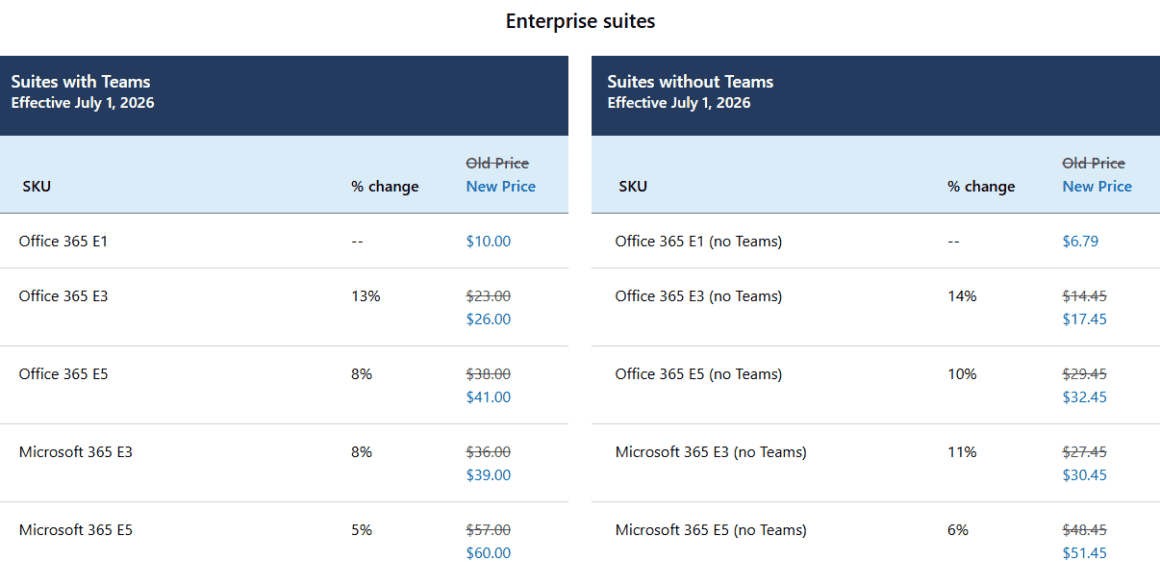
This is how the ratchet works. Give away access. Let people build habits around it. Then take away the free version and offer to sell it back. Microsoft’s17 December 4, 2025 announcement that it will update Microsoft 365 packaging and list prices starting July 1, 2026, marks a clear pivot: Microsoft is bundling more security, management, and AI-driven capabilities into its core suites and asking customers to pay for that expansion. The company frames this as delivering additional value. Customers paying for tools they rarely use may frame it differently.
The Question of Consent
There is something philosophically strange about this entire episode that does not get discussed enough. We are not talking about a company sneaking a bad product past customers. We are talking about a company with an extraordinary amount of real power over how most of the world’s office workers spend their days, deciding unilaterally that AI is now part of the deal, and structuring its pricing to make opting out difficult, expensive, or invisible.
Research by the Consumer Policy Research Centre18 has revealed the use of manipulative tactics to trap Australians, ranging from lengthy cancellation processes to spam messages after users opt out, leading to some Australians paying up to AUD $1,261 per year on unused subscriptions. About a third of Australians feel pressured to keep a subscription, and one in ten Australians admit they have simply given up trying to cancel, continuing to pay for a product or service they no longer need.
The Copilot bundling fits squarely into that pattern. If finding the Classic plan requires initiating a cancellation, most people will never find it. That is not a coincidence. It is a design decision.
On Microsoft’s own community forum, one user summarized the situation with a clarity that no amount of corporate language could match:
“I absolutely do not want Copilot, and I cannot allow work files to be accessed by any online resource. But I have to use Word to ensure compatibility with customers. With the tight monopoly they have, there is no need to listen to customers.”
That monopoly is exactly what makes this different from a normal consumer dispute. You cannot simply take your Word documents to a competitor the way you might take your streaming subscription elsewhere. The switching costs are real, and they are enormous. Microsoft knows this. And it is why the question of what customers are consenting to when they accept a license renewal deserves more scrutiny than it has traditionally received.
What Happens Next
The ACCC’s case against Microsoft is still working through the Australian Federal Court. The outcome could have significant implications for technology providers, as Microsoft’s integration of Copilot is part of a wider industry trend to monetise AI through existing subscription bundles. The case demonstrates how regulators are using existing consumer protections to address the challenges presented by the digital environment.
If Australia wins, the precedent travels. European regulators, who already forced Microsoft’s hand on Teams, will be watching. The FTC, which has already issued a civil investigative demand running to hundreds of pages, will be watching. If the Federal Court rules in favour of the ACCC, Microsoft could face substantial fines, and a ruling could embolden similar probes in the EU, US, and elsewhere, where Microsoft’s Copilot rollout mirrored these same tactics.
Microsoft, for its part, says it is cooperating with regulators and is committed to transparency. A spokesperson told the ACCC that “consumer trust and transparency are top priorities for Microsoft.” The company is reviewing the claims. It remains committed to working constructively with regulators. These are the words companies say when they are waiting to see how expensive the problem becomes.
The more interesting question is whether any of this changes the underlying calculation. Microsoft has invested billions of dollars in AI infrastructure. The company reportedly invested millions in television spots for Copilot in 2025 alone. The pressure to monetise that investment is real, and bundling is the fastest route to monetisation at scale. The alternative, persuading hundreds of millions of subscribers that Copilot is worth paying for on its own merits, would require a much better product and a much longer timeline.
So the bundling will continue. The price increases will continue. And the people who just want to write documents in Word without an AI assistant watching over their shoulder will keep searching forums for instructions on how to find the hidden door.
I have been following enterprise software licensing for years, and there is something qualitatively different about what is happening with Copilot. The Teams bundling was about killing a competitor. This is about something else. This is about a company deciding that AI adoption cannot be left to individual choice, that the numbers do not work if people are allowed to simply say no, and that the solution is to engineer the choice away.
That might be a pragmatic business strategy. It might even, over time, prove to have been correct, if Copilot improves and genuine value catches up with the billing. But right now, in the spring of 2026, millions of people are paying for a product they did not want, that a court in Australia is being asked to rule they were deceived into buying, and that most independent studies show the majority of users would abandon if given a real alternative.
The AI revolution, at Microsoft at least, is being funded in significant part by people who never asked to join it.
Sources
- “ACCC sues Microsoft for allegedly misleading millions of Australians with Microsoft 365 subscription hikes” ABC News, 26 Oct. 2025, www.abc.net.au/news/2025-10-27/accc-sues-microsoft-allegedly-misleading-365-subscriptions/105937436. Accessed 2 May 2026. ↩︎
- “U.S. V. Microsoft: Court’s Findings Of Fact” U.S. V. Microsoft: Court’s Findings Of Fact, 14 Aug. 2015, www.justice.gov/atr/us-v-microsoft-courts-findings-fact. Accessed 18 May 2026. ↩︎
- ACCC, www.accc.gov.au/media-release/microsoft-in-court-for-allegedly-misleading-millions-of-australians-over-microsoft-365-subscriptions. Accessed 18 May 2026.v ↩︎
- Khadem, Nassim. “’Arrogance is astounding’: Microsoft hikes subscription prices causing consumer backlash” ABC News, 24 Feb. 2025, www.abc.net.au/news/2025-02-25/microsoft-365-subscription-price-hike-consumer-complaints-accc/104965682. Accessed 18 May 2026. ↩︎
- ACCC, www.accc.gov.au/media-release/microsoft-in-court-for-allegedly-misleading-millions-of-australians-over-microsoft-365-subscriptions. Accessed 18 May 2026. ↩︎
- “Forrester’s Technology & Security Predictions 2025: Tech Leaders Will Triple The Adoption Of AIOps To Reduce Technical Debt” Forrester Research, Inc, 22 Oct. 2024, investor.forrester.com/news-releases/news-release-details/forresters-technology-security-predictions-2025-tech-leaders. Accessed 19 May 2026. ↩︎
- Reddit, www.reddit.com/r/sysadmin/. Accessed 19 May 2026. ↩︎
- “Questions” Microsoft Q&A, learn.microsoft.com/en-us/answers/questions/. Accessed 19 May 2026. ↩︎
- Anderson, Marc D. “Dear Microsoft: Stop It with Copilot, Already” 16 June 2025, sympmarc.com/2025/06/16/dear-microsoft-stop-it-with-copilot-already/. Accessed 19 May 2026. ↩︎
- Golev, Alexander. “Microsoft Regulatory Roundup 2025” SAMexpert Microsoft Cloud and Licensing Experts, 21 Jan. 2026, samexpert.com/microsoft-regulatory-roundup-2025/. Accessed 19 May 2026. ↩︎
- “Reuters.Com” www.reuters.com/legal/litigation/us-ftc-ramps-up-scrutiny-microsoft-over-ai-cloud-practices-questions-rivals-2026-02-13/. Accessed 19 May 2026. ↩︎
- Slack. “Slack Files EU Competition Complaint Against Microsoft” Slack, slack.com/blog/news/slack-files-eu-competition-complaint-against-microsoft. Accessed 19 May 2026. ↩︎
- “Release Notes for Microsoft 365 Copilot” Microsoft Learn, learn.microsoft.com/en-us/microsoft-365/copilot/release-notes. Accessed 19 May 2026. ↩︎
- Pru, Matt. “Microsoft Copilot Adoption Statistics & Trends (2026)” 6 Apr. 2026, www.stackmatix.com/blog/copilot-market-adoption-trends. Accessed 19 May 2026. ↩︎
- “Google Workspace business customers now get the latest in generative AI.” 15 Jan. 2025, blog.google/products-and-platforms/products/workspace/google-workspace-generative-ai-features/. Accessed 19 May 2026. ↩︎
- Ullman, Daryl. “Microsoft Negotiation Mistakes 2025: Avoid These Costly Errors” 17 Sept. 2025, samexpert.com/microsoft-negotiation-mistakes-2025/. Accessed 19 May 2026. ↩︎
- “Microsoft 365 Pricing and Packaging Updates” Microsoft Licensing Resources, www.microsoft.com/en-us/licensing/news/2026-m365-packaging-pricing-updates. Accessed 19 May 2026. ↩︎
- “Australians Trapped Paying for Unwanted Subscriptions” CPRC, cprc.org.au/release/trapped-paying-for-unwanted-subscriptions/. Accessed 19 May 2026. ↩︎