
By the time Armando Francisco García Santiago disappeared in December 2024, his colleagues already knew what that kind of silence meant.
The 24-year-old Rappi courier had gone out on a delivery in Mexico City on the 7th. His route looked like every other one. Phone in hand, the app sending him from restaurant to doorstep along streets that treat motorcyclists as obstacles. He never came back. Fellow workers pushed the story across social media, and a few days later came the confirmation that had become grimly familiar: Armando had been struck by a car. He was in a vegetative state at Hospital General Balbuena. According to Telediario1, the driver who hit him was detained and then released, prosecutors saying there wasn’t enough evidence to hold him.
No charges. No compensation. No acknowledgment from Rappi.
This is what the gig economy looks like from the bottom. Not flexible. Not empowering. Just a man on a bike and a gap in the law big enough to swallow him whole.
The Machine and Its Riders
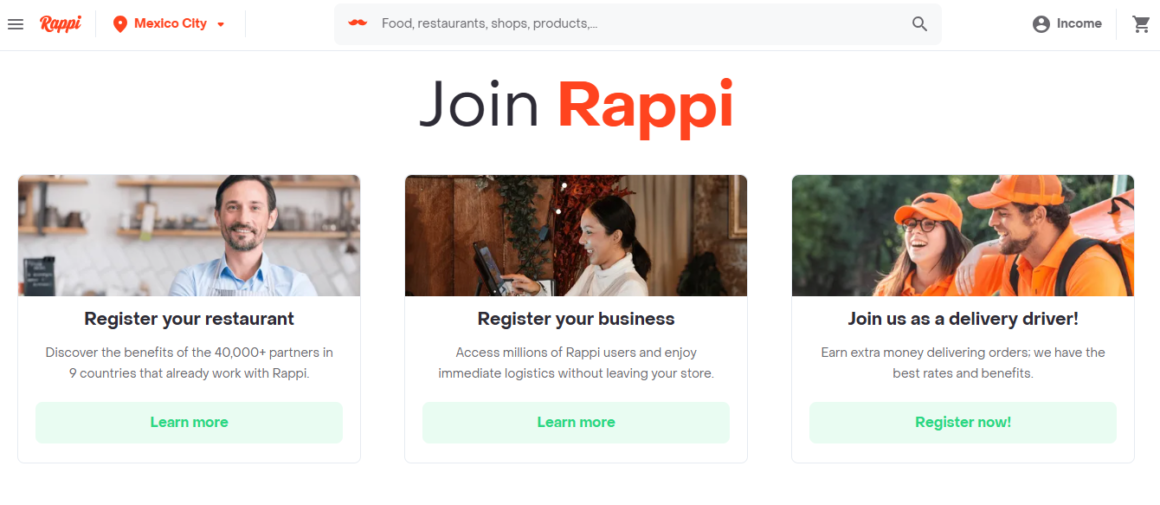
Rappi is the kind of company that Silicon Valley dreams about and labor lawyers dread. Founded in Bogotá in 2015 by Simón Borrero, Felipe Villamarin, and Sebastián Mejía. According to The Startup VC2, it grew from a Colombian startup into a nine-country super-app with annual revenues of millions by 2023 and a valuation of $5.25 billion. It operates in Argentina, Brazil, Chile, Colombia, Costa Rica, Ecuador, Mexico, Peru, and Uruguay, with around 350,000 couriers doing the actual work of keeping it alive. The company has 5,200 salaried employees. Its couriers, who ride through rain and traffic and shattered streets to deliver everything from sushi to pharmaceuticals, are not among them. They are called “partners.”
The word partner implies mutuality. What the arrangement actually delivers is something else. Reuters3 wrote that Rappi’s couriers, known in Colombia as rappitenderos, carry the company’s bright orange backpack, wear its brand, complete deliveries on its schedule, move according to its algorithm, and are penalized by that same algorithm when they don’t. But the moment one of them gets hit by a bus on Avenida Caracas, the company’s legal liability ends at the app’s login screen. They are independent contractors. Their injuries, their hospital bills, their funerals: those belong to them.
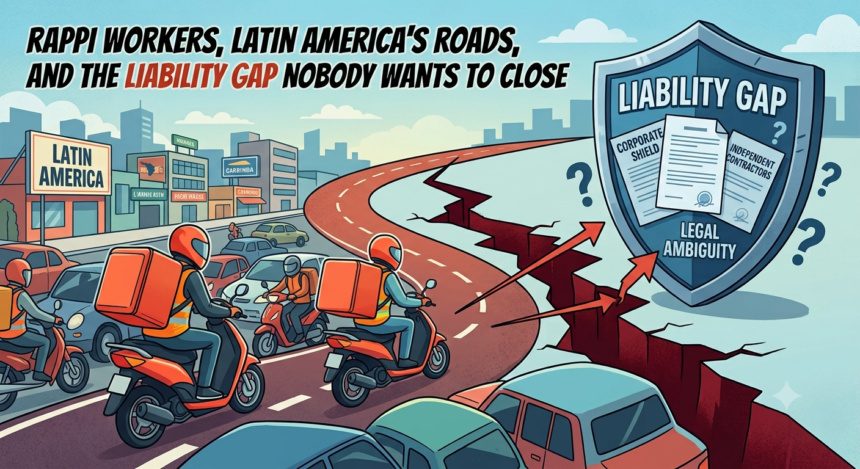
The story of Rappi’s accident liability gap is, at its core, a story about who gets to define the rules of a new economy, and who pays when those rules turn out to be a fiction dressed up in startup language.
The numbers out of Mexico are the kind that should end careers. Between 2020 and December 2024, Ni Un Repartidor Menos4 documented 453 deaths of delivery workers across the country. An average of 90 per year, all of them killed on the road while doing their jobs for apps like Rappi, Uber Eats, and DiDi.
El peligroso oficio de repartidor:
— #NiUnRepartidorMenos AC (@repartidorr) January 9, 2025
Cada año mueren atropellados 90 repartidores de Uber, Rappi y Didi
Ya existe la Ley General de Seguridad Vial a la cual la #CDMX no se quiere sumar.
Aquí todo aquel que es atropellado por un carro debe demostrar que el fue la víctima, los… pic.twitter.com/fm86Crya0N
Over the same six years, the collective also documented 47 additional deaths by robbery. In Mexico City alone, during one presidential term, at least 17,000 delivery workers were injured on the job, with 8,000 of those cases in the capital. That works out to roughly 2,833 workers whose lives were interrupted every year. Not through carelessness, but through the ordinary dangers of riding a motorcycle in a megacity against a clock set by an app.
Of all those accidents across all those years, Ni Un Repartidor Menos says criminal proceedings were initiated against the responsible parties in just three cases.
Three.
“We’ve shown more than 400 accidents on our social media, and maybe three or four have seen any justice,” Saúl Gómez, the group’s founder and spokesperson, told Mexican outlets. “If there’s no camera recording the accident, you’re finished.” He founded the collective in November 2018 after 22-year-old Uber Eats worker José Manuel Matías Flores was killed by a truck near Periférico in Mexico City. Nobody was held accountable. The pattern has not changed.
Part of the problem is structural and part of it is cultural. Structurally, delivery workers in Mexico had no legal employment classification until very recently, which meant there was no employer obligated to pursue compensation on their behalf, no occupational insurer assigned to their risk category, and no government body with clear jurisdiction over their deaths. Families were left to navigate a justice system that had never been built to handle this kind of case. Culturally, Gómez says, the worker is often blamed. “Some delivery workers perhaps don’t follow all the rules, and we all pay for it. But we’ve also raised our voices that authorities sometimes already come in with a prejudice against the courier.” He’s describing something older than apps: the way Latin American traffic law has always seemed to flow upward, protecting those with more horsepower and more money.
The Independent Contractor Trick
The legal architecture that leaves couriers unprotected is not unique to Latin America. According to The Guardian5, it is the same structure that Uber deployed in the United States, the same logic that Deliveroo used in the United Kingdom before British courts pushed back, and the same framework that Rappi has planted across nine countries with varying degrees of legal pushback. The idea is simple: classify workers as independent contractors, not employees, and the company is insulated from wage laws, benefit mandates, occupational health requirements, and accident liability.
In Colombia, Rappi’s home country, the company controls more than half of the delivery market and employs, in the contractor sense, around 150,000 couriers. In November 2022, Rest of the World6 reported that the Colombian Labor Ministry launched a formal investigation into Rappi over its approach to worker health and safety, and over whether the company had violated local laws by refusing to negotiate with the union Unidapp7. The investigation was not a minor administrative notice. It was the first time a Latin American government had formally challenged the company’s classification of its workers as something other than employees.
🚨 En Cali, desde las oficinas de Rappi:
— UNIDAPP Colombia (@UnidappC79395) October 2, 2025
Hoy #UNIDAPP acompaña al @MintrabajoCol en inspección sorpresa para verificar las condiciones de los repartidores.
✊🏽 La lucha por la dignidad laboral no se detiene.#Unidapp #Cali #InspecciónLaboral pic.twitter.com/rxqDsQgf6M
The investigation was significant for another reason: it came under the government of Gustavo Petro, Colombia’s first left-wing president, whose Labor Minister Gloria Inés Ramírez was a former union organizer. Ramírez told Reuters8 that the probe would examine whether Rappi was breaking occupational health and safety rules. The legal framework she was invoking, Law 1562 of 2012, Decree 1072 of 2015, already required Colombian employers to register their workers with an occupational risk insurer (ARL) and to ensure accident coverage. The problem was that Rappi’s couriers were not classified as workers. They were partners. The law, as written, did not quite reach them.
This is the gap. Not a loophole exactly, more a deliberate space left in the architecture of labor law by legislators who wrote those laws before gig platforms existed. Rappi and its peers did not create the space. They simply built their entire business model inside it.
What Happens When You Get Hurt
Jhonniell Colina has been riding for Rappi in Bogotá for years. He is also the president of Unidapp, the union of platform workers, which makes him something of a dual citizen in this world. Someone who knows both what it means to wait on a curbside for an order in the rain and what it means to sit across a table from company executives who would prefer he did not have a union at all.
He describes the accident question in terms that are both precise and devastating. “Out of 100 workers, maybe one actually has access to insurance, and usually only in the event of death,” Colina told WageIndicator9 in May 2026.
“Workers also lack basic protections such as paid sick leave, maternity or paternity leave, and comprehensive health coverage. Any interruption due to illness directly translates into lost income.”
This is the lived arithmetic of platform work: you ride until you can’t, and if you can’t, you don’t eat. An injury is not a pause. It is a crisis.
The informal support network that Rappi’s workers have built for themselves makes this clear. Rest of World10 reported in 2021 that after Rappi shut down one of its main pit stops in Bogotá during the pandemic, drivers found themselves scattered across the city with no company infrastructure to support them. “We take care of each other in our WhatsApp groups,” Jhonniell Colina said at the time. “Whatever problem we write about: if someone gets in an accident…” The sentence doesn’t need to be finished. When a platform worker gets hurt, the platform doesn’t come. The group chat does.
Those WhatsApp groups have become something more than mutual support networks. Researchers from Universidad de los Andes11 who conducted ethnographic research inside the groups during the 2020 pandemic lockdown found that couriers used them to share information about dangerous intersections, warn each other about zones where robberies were common, and coordinate collective action. Workers were essentially building the safety infrastructure that the company refused to provide. The fact that they managed to do so is a tribute to human solidarity. The fact that they had to is an indictment.
The Migrant Dimension
There is a reason Rappi’s couriers in Colombia, Chile, and Argentina skew so heavily Venezuelan. It is the same reason that immigrant workers are disproportionately represented in the most dangerous, most unprotected jobs in almost every country in the world: when you arrive without documents, without connections, without capital, you take what’s available.
It is, as Americas Market Intelligence12 has put it, an open secret that Rappi’s delivery force across much of South America is drawn primarily from the millions of Venezuelans who have fled their country’s collapse. In Colombia alone, Rappi estimated in 2023 that 40% of its couriers were migrants, many from the 2.8 million Venezuelans now living in the country. Think tanks have acknowledged that platform work was, in practice, a lifeline for these workers. “Rappi and other platforms like it probably saved the day for most of these migrant workers,” said Luis Fernando Mejía, director of the Bogotá think tank Fedesarrollo.
According to BluRadio Colombia13, Mejía also emphasized on the importance of improving employment conditions of such platforms.
They are new forms of employment opportunities. We need to start thinking about how to improve the conditions
#AlAire | "Son nuevas formas de oportunidad de empleo. Hay que empezar a pensar en cómo mejorar las condiciones": Luis Fernando Mejía (@LuisFerMejia), director de Fedesarrollo sobre plataformas como Rappi → #NoticiasDeLaMañana
— BluRadio Colombia (@BluRadioCo) July 6, 2019
That framing is not wrong. But it is incomplete. What platform work offered Venezuelan migrants was access to income in a country where their credentials weren’t recognized, their papers were often uncertain, and the formal labor market was largely closed to them. What it did not offer was protection. Migrants who worked for Rappi, like Yusneibi, a Venezuelan courier in Colombia who spoke to Rest of World14 in 2024 under her first name only because she feared retaliation, found themselves doubly exposed: to the dangers of the road and to the consequences of complaining about them. Yusneibi lost access to her account over a disputed charge, losing her income overnight. Imagine the same calculus applied to a road accident.
For migrants in particular, the absence of occupational insurance is not an abstract policy failure. It is a survival-level crisis. An injury that sidelines a Venezuelan courier in Bogotá does not trigger sick pay or workers’ compensation. It triggers a decision about whether the family eats that week.
Brazil’s Half-Solution
Brazil, which has the largest delivery app market in Latin America and where Rappi competes with the dominant iFood, has tried harder than most to legislate its way out of this problem. According to the Business and Human Rights Centre15, in January 2022, former President Jair Bolsonaro, not a figure generally associated with worker protection, signed a law requiring app companies to provide personal accident insurance for couriers, covering death, permanent disability, and temporary disability. When asked about the law, Rappi declined to comment. iFood said it already provided equivalent coverage.
Whether the law actually changed conditions on the ground is a separate question. The Brazilian gig economy has been locked in legislative gridlock for years over the fundamental question of worker classification. Mayer Brown16 reported that a 2024 reform bill that would have established a maximum 12-hour workday and social security contributions collapsed under pressure from platforms, and a replacement bill remains under debate. iFood, which controls more than 80% of Brazil’s delivery market, reportedly refused to concede on the question of payment for time logged into the app rather than time actively delivering.
Meanwhile, Rappi made headlines in Brazil in January 2024 for a different reason entirely: it began charging its couriers a weekly fee of $2.40 simply to use the app. Twelve workers told Rest of World they had not been informed of the new charge and discovered it only after finding an unexplained debt on their accounts. The fee was framed as a “use and licensing charge” following Rappi’s acquisition of Brazilian delivery firm BoxDelivery. Workers called it what it was: paying to work.
“I was working in December normally and this didn’t exist,” one São Paulo courier claimed. “When we came back to work in January, they were charging us.”
Rappi declined to comment on the matter.
Colombia’s Paper Law
In June 2025, Colombia passed Law 2466, a platform worker protection bill that was supposed to change the fundamental equation. The law established that platforms must contribute 60% of costs toward health and pension systems, with workers covering the remaining 40%, and that companies must fully assume occupational risk insurance. For the workers who have been pushing for this kind of protection since the first strikes of 2019, it was a significant moment. Six years after 100 rappitenderos burned their orange backpacks in front of Rappi’s Bogotá offices to demand health coverage, the law was finally on their side.
The problem is that the law exists mainly on paper. As of May 2026, Wage Indicator17 states that the regulation implementing Law 2466 had still not been issued and on 12 June, the International Labour Organisation adopted Convention 193 on Decent Work in the Platform Economy.
A technical working group has been meeting, representatives from the Labor Ministry, the ICT Ministry, the Health Ministry, platform companies, and unions, but remains deadlocked over the fundamental question of what defines an employment relationship on a digital platform. Companies argue that clarifying the boundary between contractor and employee is unnecessary. Unions disagree.
“We need to define the boundary,” Colina told WageIndicator. “Some argue that the employment relationship could be determined by whether a worker is connected to the app: when they are online, they are effectively working; when they log off, they are not.”
That is a reasonable position. It is also one that would fundamentally alter Rappi’s cost structure and is therefore one that Rappi’s lawyers and lobbyists are working to prevent.
In February 2026, following a court order requiring Rappi to respect workers’ rights to due process, the Platform Workers’ Union and Rappi reached a separate agreement that included a minimum payment of 3,050 Colombian pesos per completed delivery and a guaranteed kilometer rate after the fourth kilometer. Crucially, it also included steps toward safety coverage for approximately 120,000 delivery workers. Progress, clearly. But conditional progress, dependent on a company agreement rather than enforceable law.
Mexico’s New Law and Its Fine Print
Mexico, to its credit, moved faster than most. In December 2024, the country amended its Federal Labor Law to extend formal employment protections to platform workers. The first such law in Mexican history. The reform, which took effect in June 2025, requires platforms like Rappi, DiDi, and Uber to provide access to social security, paid vacations, year-end bonuses, and legal protections against unjustified dismissal to workers who meet certain thresholds of activity.
There is a catch. Workers qualify only if they meet at least one of two conditions: working 80 hours or more per month through the platform, or earning a certain minimum amount. For workers who split time across multiple platforms, which is common, or who work sporadically, the threshold may not be reached. Ni Un Repartidor Menos expressed concern about exactly this flexibility trap: workers want social security, but they do not want to sacrifice the scheduling freedom that is, for many of them, the only real benefit platform work offers over traditional employment.
Saúl Gómez in October 2024 said:
“Our concern lies in the lack of flexibility that the initiative could impose. We don’t want to be obligated to work a certain number of hours to have the right to social security, because this work allows us to combine it with other activities.”
The law also does nothing to address the criminal accountability gap. That 453 deaths were documented over five years, with only three cases resulting in any legal process, is not a problem a labor reform resolves. It is a problem with police, prosecutors, courts, and the cultural weight given to the life of a man on a motorcycle versus the life of a man in a car.
The IPO and the Stakes
There is a reason to follow this story very carefully right now. According to Yahoo! Finance18, Rappi’s CEO Simón Borrero announced in September 2024 that the company is preparing to go public, and as of June 2025, the company confirmed it was reinvesting 100% of its profits in preparation for an IPO expected in 2026.
According to Diario La República19, the Superintendence of Companies reported that Rappi posted $97,250 million in profit for 2024, with net income rising to $210,176 million over the course of last year’s fiscal year.
De acuerdo con la Superintendencia de Sociedades, Rappi registró una utilidad de $97.250 millones en 2024 y aumentó su beneficio neto a $210.176 millones durante el ejercicio del año pasado https://t.co/VkZvKv1Bwi
— Diario La República (@larepublica_co) July 16, 2026
When Rappi goes public, its valuation, already at $5.25 billion, will be tested against a simple question: how much does it cost to run this business?
Analysts have flagged the issue plainly: the company faces “significant and ongoing risk” from changing regulatory landscapes. Governments in Colombia and Brazil are “increasingly debating new legislation that would classify delivery drivers as employees, not independent contractors. Such changes could mandate minimum wages, social security contributions, and other benefits, which would dramatically increase Rappi’s operational costs.”
What that language means, stripped of the investment deck framing, is this: Rappi’s entire valuation is partly built on the assumption that it will not have to pay for the injuries and deaths of the people who run it. The liability gap is not a side effect of the business model. It is a load-bearing pillar.
When Rappitenderos burn backpacks outside the company’s offices, or when a collective in Mexico posts the name of another dead courier, they are doing more than protesting. They are making a factual argument about where the costs of the business actually live. They live in the bodies of the riders.
The trajectory is clear, even if the destination is still disputed. Mexico now has a law on the books. Colombia has a law that needs implementing. Brazil has been through multiple rounds of reform without achieving a stable framework. The region is moving toward formal recognition of platform workers as something more than independent contractors, and the platforms know it.
Rappi has, to its credit, moderated its posture in recent years. Americas Quarterly20 noted in January 2025 that the company has made dialogue and concessions to workers and regulators a “steady part of its operations.” The 2026 agreement with Unidapp in Colombia, the incremental movement on pay floors, the creation of the Defensoría al Repartidor. These are not nothing. But workers and observers are right to be skeptical of company-controlled mediators and voluntary agreements that can be revised at will.
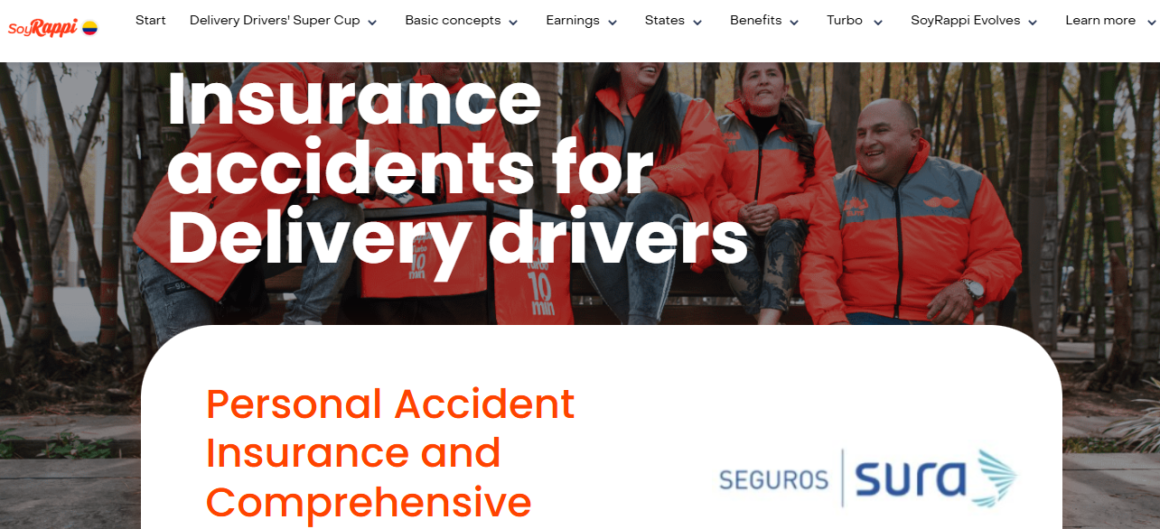
Rappi’s official site21 does mention benefits like accident insurence, but stories from employees tell a very different story.
Workers who contacted the DAR ombudsman told Rest of World22 in 2024 that they were often met with a chatbot, and that the system fell silent when they pushed for resolution. Yusneibi’s disputed debt reappeared after the ombudsman said it had been cleared. “I feel like it’s a form of fairwashing,” one worker told the publication.
The word is apt. Fairwashing: the performance of concern without the structural transfer of responsibility.
What the Road Takes
There is something important in the way workers have organized themselves in the absence of institutional support. The WhatsApp groups, the Facebook pages, the collectives like Ni Un Repartidor Menos and SINATRAPP, the union members who ride out after an accident to document what happened before the scene is cleared. These represent something real. An Equal Times23 investigation in 2025 described a video circulating in courier WhatsApp groups showing a rappitendero in a Bogotá parking lot being beaten by a group of men, never releasing his orange delivery box even as the blows landed. Police arrived. The assault continued anyway. The video became a document of exposure: here is what the orange backpack costs its bearer.
The app extracts labor. The road extracts blood. The algorithm keeps score. And the workers take care of each other in the group chats, which is both beautiful and an indictment of every institution that was supposed to protect them and didn’t.
The hardest thing about covering labor beats is the way the facts keep accumulating and the policies keep lagging behind. Ninety deaths per year in Mexico alone. Three prosecutions. A law that takes effect two years after it passes. An IPO that will make its founders billionaires. And somewhere in Mexico City, a 24-year-old named Armando is in a hospital bed, and the man who hit him is free, and the company whose backpack he was wearing when it happened has declined to comment.
The orange backpack moves through the city. The rider inside it is on his own.
Sources
- Telediario, www.telediario.mx/nacional/repartidores-de-aplicacion-en-mexico-90-mueren-atropellados-al-ano. Accessed 13 July 2026. ↩︎
- Team, The StartupVC. “Why Tech Startups in Colombia Are Thriving?” The StartupVC, 9 Sept. 2020, www.thestartupvc.com/startup-news/why-tech-startups-in-colombia-are-thriving/. Accessed 13 July 2026. ↩︎
- “Reuters.Com” www.reuters.com/world/colombias-rappi-app-draws-ire-venezuelan-migrant-couriers–trfn-2022-12-13/. Accessed 13 July 2026. ↩︎
- “#NiUnRepartidorMenos AC (@repartidorr) on X” 9 Jan. 2025, x.com/repartidorr/status/1877419668987695409. Accessed 24 July 2026. ↩︎
- The Guardian, www.theguardian.com/us-news/uber-files. Accessed 16 July 2026. ↩︎
- Zabludovsky, Karla. “Rappi drivers say a public defender’s office for gig workers is useless, not neutral” Rest of World, 30 Jan. 2024, restofworld.org/2024/rappi-mediator-service/. Accessed 16 July 2026. ↩︎
- “UNIDAPP Colombia (@UnidappC79395) on X” 2 Oct. 2025, x.com/UnidappC79395/status/1973769332258922952. Accessed 18 July 2026. ↩︎
- “Reuters.Com” www.reuters.com/world/colombias-rappi-app-draws-ire-venezuelan-migrant-couriers–trfn-2022-12-13/. Accessed 16 July 2026. ↩︎
- Robin, Mariana. “Colombia’s Gig Workers Wait in Limbo” 20 May 2026, wageindicator.org/what-we-do/news-stories/colombia-gig-workers-labour-reform/. Accessed 16 July 2026. ↩︎
- Yar, Cengiz. “Dreams of a delivery workers union crash into Latin American realities” Rest of World, 20 Sept. 2021, restofworld.org/2021/delivery-workers-union-latin-america/. Accessed 16 July 2026. ↩︎
- Taylor & Francis Online, www.tandfonline.com/doi/full/10.1080/25729861.2024.2343161. Accessed 16 July 2026. ↩︎
- Americas Market Intelligence, americasmi.com/insights/rappi-evolving-business-model-impact-latam-logistics/. Accessed 16 July 2026. ↩︎
- “BluRadio Colombia (@BluRadioCo) on X” “Son nuevas formas de oportunidad de empleo. Hay q, 6 July 2019, x.com/BluRadioCo/status/1147471508857602048. Accessed 18 July 2026. ↩︎
- Zabludovsky, Karla. “Rappi drivers say a public defender’s office for gig workers is useless, not neutral” Rest of World, 30 Jan. 2024, restofworld.org/2024/rappi-mediator-service/. Accessed 16 July 2026. ↩︎
- “Brazil: Law requiring app companies to hire insurance to protect their couriers in case of accidents is sanctioned – Business and Human Rights Centre” Business and Human Rights Centre , www.business-humanrights.org/en/latest-news/brazil-law-requiring-app-companies-to-hire-insurance-to-protect-their-couriers-and-in-case-of-accidents-is-sanctioned/. Accessed 16 July 2026. ↩︎
- 16 May 2025, www.mayerbrown.com/en/insights/publications/2024/11/brazil-employment-benefits-mobility-2024-highlights-and-2025-outlook. Accessed 16 July 2026. ↩︎
- Robin, Mariana. “Colombia’s Gig Workers Wait in Limbo” 20 May 2026, wageindicator.org/what-we-do/news-stories/colombia-gig-workers-labour-reform/. Accessed 16 July 2026. ↩︎
- Yahoo! Finance, finance.yahoo.com/quote/RAPP.PVT/profile/. Accessed 16 July 2026. ↩︎
- “Diario La República (@larepublica_co) on X” 16 July 2026, x.com/larepublica_co/status/2077794515188887742. Accessed 18 July 2026. ↩︎
- “Colombia’s First Unicorn Keeps Delivering” www.americasquarterly.org/article/colombias-first-unicorn-keeps-delivering/. Accessed 16 July 2026. ↩︎
- Rappi, soyrappi.com.co/. Accessed 18 July 2026. ↩︎
- Zabludovsky, Karla. “Rappi drivers say a public defender’s office for gig workers is useless, not neutral” Rest of World, 30 Jan. 2024, restofworld.org/2024/rappi-mediator-service/. Accessed 16 July 2026. ↩︎
- Buitrago, Alfonso. “Can platform workers in Colombia break free from the algorithm’s control?” Equal Times, 3 June 2025, www.equaltimes.org/can-platform-workers-in-colombia?lang=en. Accessed 16 July 2026. ↩︎