

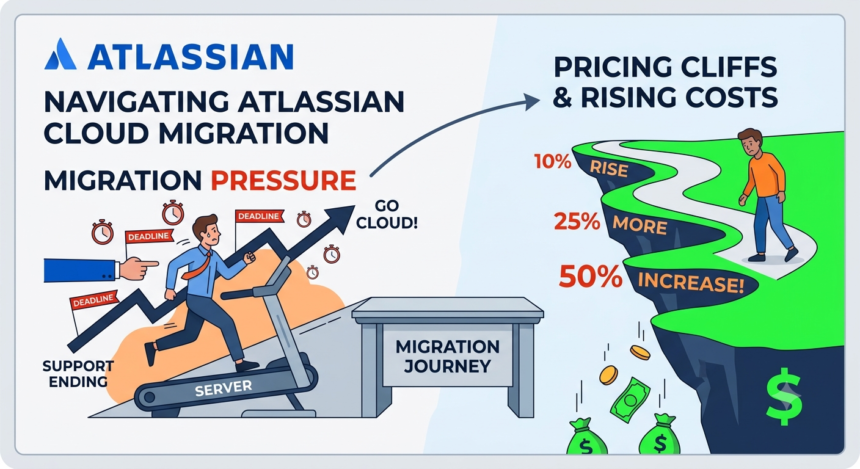

I spent a week reading Jira admins talk about their jobs the way people talk about a flood. Not a sudden one. The kind that rises an inch at a time, so slowly that you keep telling yourself you have another season before you have to move the furniture. Then one morning the water is at the door and you realize the calendar was never on your side.
That is what Atlassian’s cloud migration has become for a huge slice of its customer base. Not a single decision. A machine that manufactures deadlines, one after another, each one arriving with a press release that reads like customer care and a spreadsheet that reads like a threat.
Here is the shape of it. In 2020, Atlassian1 told the world it would stop selling new Server licenses by February 2021 and end all support for them by February 2024. That happened, on schedule, in February 2024. Then Atlassian raised prices on the on-premises product it was steering people toward next, Data Center, doubling list prices for new subscribers and hiking existing accounts with more than 500 users by about 15 percent.
Then, according to The Register2, this past September, Atlassian announced Data Center itself would die too. New subscriptions stop on March 30, 2026. Existing customers lose the ability to expand or add apps by March 30, 2028. Everything goes read-only on March 28, 2029. And in between all of that, in February of this year, Atlassian raised Data Center prices again, which, as reported by Valiantys3, was by roughly 15 percent across the board, with legacy pricing customers seeing hikes as steep as 40 percent. Some accounts over 5,000 users saw increases of 25 percent in a single renewal cycle.
Read that paragraph again slowly. A company killed its cheapest product, then made the replacement more expensive, then announced it would kill that one too, then raised its price one more time on the way out the door. Each step looks defensible in isolation. Stacked together, they form something closer to a funnel than a roadmap.
A Pattern, Not an Accident
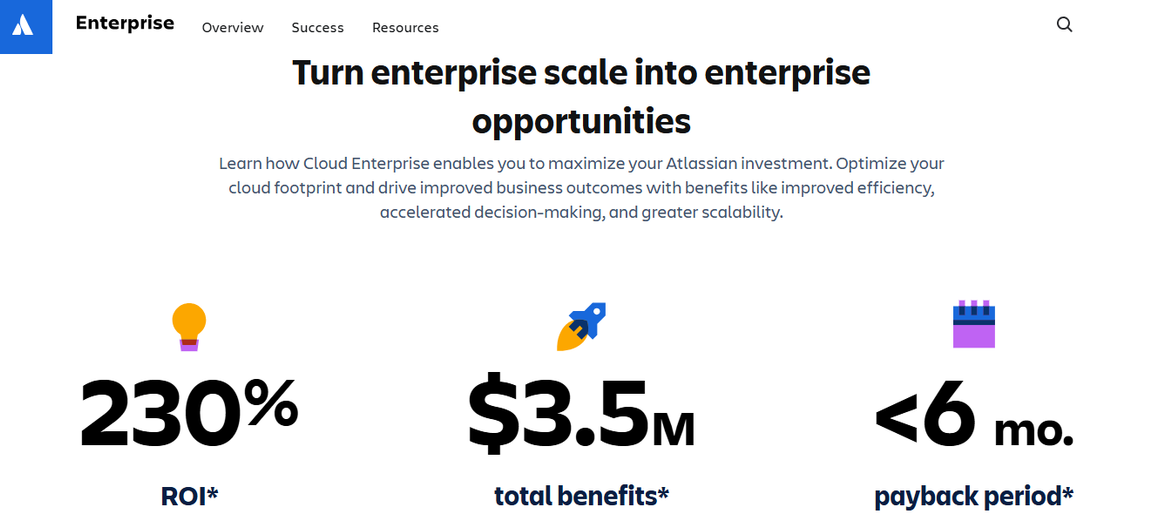
I want to be careful here, because it would be easy to write this as a simple villain story and it isn’t one. Atlassian is a public company with obligations to shareholders, and cloud software genuinely does solve real problems that on-premises software creates. Automatic updates. No patching at 2 a.m. Fewer servers humming in a closet somewhere waiting to be hacked. Atlassian’s own numbers back some of this up. Atlassian4 says it shipped more than 1,000 Cloud features in 2024 and that a Forrester study found enterprise Cloud customers saw 230 percent ROI over three years with payback in under six months. Those are real numbers from a real methodology, even if Atlassian5 commissioned the study.
But intent and effect are different things, and the effect on customers who cannot or will not move fast has been consistent for six years running. Sanchit Vir Gogia, chief analyst at Greyhound Research, put it plainly to Computerworld6 when the Data Center sunset was announced. Atlassian’s cloud licensing runs about 28 percent higher than equivalent Data Center pricing, he said, and that number does not even include add-ons like Atlassian Access, the identity and security layer that used to be optional and increasingly is not. Independent Atlassian consultant Rodney Nissen gave The Register7 nearly the identical figure from a different angle, estimating that customers moving from Data Center to Cloud should expect to pay around 28 percent more on average, and more once you factor in the extras that Atlassian frames as optional but that large organizations end up needing anyway.
Two analysts. Two different outlets. The same number, arrived at independently. That is not noise. That is a signal.
Atlassian gave its own explanation for all of this, and it is worth quoting because the phrase has become something of a small legend among people who administer Jira instances for a living. The company said the cloud-only decision reflected its internal principle, stated without euphemism, of “Don’t F— the Customer.” I read that phrase three times before I believed it was real corporate language and not a joke someone slipped into a trade publication. It is real. Atlassian said it. And I understand the spirit behind it, the idea that a unified cloud platform serves customers better in the long run than three parallel product lines each getting a third of the engineering attention. But if you are a hospital IT director staring down a mandatory migration off software you have run safely for a decade, that phrase reads less like a philosophy and more like a dare.
Gogia’s read on who gets hurt worst is the part that stuck with me longest. He told that while three quarters of Atlassian’s most complex accounts have already moved to cloud, the quarter that remain are precisely those where migration is least feasible. Banks. Healthcare systems. Defense contractors. Public agencies. The customers for whom “just migrate” is not a weekend project but a multi-year compliance exercise involving lawyers, auditors, and in some cases actual national security review. Atlassian’s own timeline gives these organizations three years. Gogia’s response to that number was blunt. “On paper, three years may look workable, but in reality, this is compressed for global enterprises used to five- to seven-year lifecycles.”
There is a second, quieter cost buried in that same reporting. Atlassian’s flagship AI product, an assistant called Rovo, along with its enterprise search feature and something the company calls the Teamwork Graph, only work on the cloud platform. Atlassian frames this as a feature. Migrate and you get AI. But it also means the deadline isn’t purely a licensing decision. It is a bet that customers will accept a forced migration in exchange for AI tools they may not have asked for, on a timeline set by Atlassian’s product roadmap rather than their own regulatory calendar. Gogia’s line on this was the sharpest thing anyone said to me in a week of reading through this material, secondhand though it was.
“For many CIOs, the deeper concern is that Atlassian’s corporate calendar, not their regulatory reality, is setting the agenda.”
Press releases tell you what a company wants said. Forums tell you what actually happened to actual people, in their own words, usually typed late at night after a bad meeting. So I went looking.
Back in 2020, when Atlassian first announced the death of Server licensing, customers wrote an open letter on the Atlassian’s community forum8, addressed directly to co-founders Mike Cannon-Brookes and Scott Farquhar. The signatories called themselves the “forgotten middle,” organizations too big for the free tier and too small to absorb enterprise Data Center pricing. One wrote that as a company of 90 employees operating in the EU
“The best solution for us would be to self-host Jira. This possibility is taken away from us.”
Another put it more plainly still.
“It’s too bad Atlassian has decided to get rid of the small customer. My company has been using Confluence for the last 3 years with 100 user licenses. Getting rid of the server tier is just ridiculous because there are many small places who just cannot afford the exorbitant prices the DC version give the customer.”
Someone in that same thread made an argument I have not been able to shake. Atlassian spent years telling its ecosystem that the Marketplace existed because Atlassian could not build everything itself, that a network of third-party developers would fill the gaps. Now, the poster wrote, the message had flipped entirely. Atlassian was suddenly claiming it could build everything customers needed, in the cloud, on its own timeline. The poster also noted the irony of a company built on agile methodology executing what amounted to a waterfall rollout, a single big-bang cutover dressed up in the language of gradual, organic transition.
On Hacker News9, when the same 2020 announcement hit the front page, one commenter did the arithmetic that Atlassian’s press release left out. Small IT shops, the commenter wrote, “have the technical know-how to administer data center versions of their products, but we can’t do shit if they force potential customers to pay for a minimum of 40 000 USD for a license per product.” The comment went on to note that many organizations run more than one Atlassian product at once, meaning the minimum spend effectively doubles or triples, turning a manageable software line item into what the commenter called a money sink impossible to justify in any normal budget cycle.
Five years later, the same forum, the same complaint, different decade of the migration. When The Register10 covered the Data Center sunset in September, it pulled two comments straight from Atlassian’s community boards. One customer explained they had deep integrations tying their systems to legacy infrastructure and had tested a cloud move extensively. It did not work. “For us this will mean: bye bye Atlassian,” they wrote, adding that an Atlassian employee had told them in March that there were no plans to end Data Center at all, a statement that aged badly within six months. A second customer summed up the emotional residue of the whole six-year arc in a single sentence.
“The way datacenter customers have been treated over the past few years with rising costs and now a relatively abrupt end-of-life announcement is frustrating.”
The Five Ways the Bill Gets Bigger After You Sign
The complaints about sticker price are the loud ones. The quieter problem, the one that actually blows up budgets eighteen months into a migration nobody is talking about publicly yet, showed up in a finance-oriented breakdown posted to Atlassian’s own community forum11 this month. The author, writing as a cost consultant, opened with a sentence that could serve as the thesis of this entire piece. She said:
If your team is anywhere on the road from Data Center to Atlassian Cloud, this one’s for you, because the number that gets your migration approved is rarely the number you end up paying.
She laid out five compounding cost drivers that most business cases never model. I found this part more useful than any vendor comparison chart I read all week, because it explains why a decision that looked fine on paper turns painful in year two.
The first is simple compounding. According to ONES.com12, Atlassian raises cloud list prices roughly every 12 to 18 months. The October 2025 increase alone was 5 percent on Standard, 7.5 percent on Premium, and up to 10 percent on Enterprise. Model that as a one-time bump, the way most spreadsheets do, and you understate your year-three costs, because each increase compounds on the base the last one created.
The second is Marketplace apps. On Data Center, apps are licensed to your overall user tier. On Cloud, they become individual per-user subscriptions stacked on top of your core bill, and many cost more per seat than their Data Center equivalents. For a hundred-user team, apps alone can add 35 to 75 percent to the base Jira license, and at enterprise scale the app bill alone can run $80,000 to $250,000 a year.
The third is feature repackaging, and this is the one that should make any Jira Service Management admin sit up straight. In its 2024 and 2025 changes, Atlassian moved most incident, problem, and change management capabilities out of the Standard tier and into Premium. Standard customers got a grace period. After it expired, access was revoked unless they upgraded. For teams that had built their entire ITSM workflow around those features, the forced move to Premium worked out to roughly a 124 percent per-agent increase for functionality they already had and had already paid for once.
The fourth is peak-usage billing. Atlassian charges based on the highest user count during a billing period, not the average. Organizations with seasonal contractors or high turnover can pay well above what their steady-state headcount would suggest, simply because someone forgot to offboard a batch of temporary accounts before the billing snapshot.
The fifth is the migration itself. Enterprise transitions typically run 18 to 24 months, and for most of that window an organization is paying for Data Center and Cloud simultaneously. That overlap is rarely in the original budget line at all.
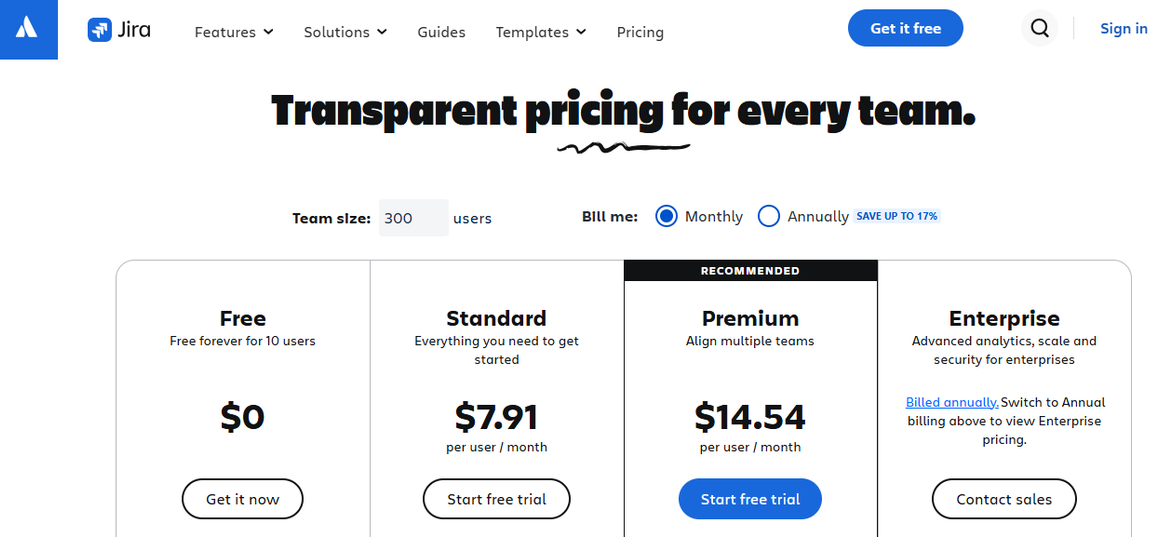
None of these five items is hidden, exactly. Every one of them is documented somewhere in Atlassian’s public pricing pages. But they live in five different places, they compound at five different rates, and they never appear together in the single comparison that most approval decks are built around. That, more than any individual price hike, is the actual mechanism of the pricing cliff. It is not one cliff. It is a staircase that looks like a ramp from the top.
The Counterargument, Honestly Stated
I don’t want to pretend there isn’t a real case for Atlassian’s direction, because there is one, and dismissing it would make this piece dishonest. Forrester’s commissioned research found a composite enterprise organization moving to Cloud Enterprise saw a net present value of $2.4 million over three years, with admin satisfaction up 41 percent and a 90 percent drop in reliability-related support tickets. Jeff Green, CTO at a Texas-based government software company, told TechTarget13 that the forced migration actually simplified his engineering roadmap. “We’re developing for cloud now, and a migration actually frees up blockages we’d seen trying to integrate cloud tools with on-premises deployments,” he said.
Tom Petrocelli, an analyst at Amalgam Insights, offered the coldest and probably most accurate read on Atlassian’s actual leverage. Atlassian, he said, has “more than enough customers eager or willing to migrate to cloud, and if you don’t like it, that’s too bad.” He is probably right, in the narrow business sense. A company does not need every customer to be happy. It needs the majority of its revenue to keep growing, and with 90 percent of new customers already choosing cloud, Atlassian has decided the remaining holdouts are a rounding error worth writing off.
Forrester analyst Charles Betz saw a narrower risk, one aimed specifically at the middle of the market. The danger, he told is “alienating midmarket enterprises,” companies with a genuine, if diminishing, need to keep some resources on premises. Not the giants who can absorb any price. Not the startups who never touched a server in the first place. The ones in between, who built real infrastructure around Atlassian a decade ago and now find themselves priced out of staying and rushed toward leaving.
Here is my honest take, for what it’s worth after a week living inside other people’s frustration. This is not really a story about one company being greedy. Every SaaS company on earth wants you off perpetual licenses and onto a subscription, because a subscription is predictable revenue and a perpetual license is a one-time check. What makes the Atlassian case worth writing about is the choreography. A deadline followed by a price hike followed by another deadline followed by another price hike, each one dressed in language about customer value and platform investment, stacked over six years with the precision of a metronome.
Somewhere in Malta or Ghana or Plano, Texas, there is an IT director right now building a spreadsheet, trying to model a total cost of ownership against a company whose pricing has changed materially four separate times since 2020 and shows no sign of holding still. Gogia’s line keeps coming back to me. Atlassian’s corporate calendar has become the thing setting the agenda. Not the customer’s regulatory reality, not their budget cycle, not the actual complexity of their infrastructure. A release schedule, dressed up as inevitability.
Maybe that is simply what modern software vendorship looks like now, in every category, from every company. Maybe Atlassian is just further along the curve than most and got caught being candid about it in a phrase that will follow them for years. Either way, the forums tell you what the press releases never will. There is a specific, recurring sound a person makes when they realize the flood was never seasonal. It rises in every thread I read this week, from 2020 straight through to a post published one day before I sat down to write this. Same water. Same door. Different year.
Sources
- To, Tiffany. “Farewell Server, Hello Cloud” Inside Atlassian, 15 Feb. 2024, www.atlassian.com/blog/company-news/farewell-to-server. Accessed 20 Sept. 2026. ↩︎
- Anderson, Tim. “Atlassian goes cloud-only, customers face integration issues” 9 Sept. 2025, www.theregister.com/software/2025/09/09/atlassian-goes-cloud-only-customers-face-integration-issues/391022. Accessed 20 Sept. 2026. ↩︎
- “Atlassian Data Center Price Changes in 2026” Valiantys, 16 Jan. 2026, www.valiantys.com/en/resources/atlassian-data-center-price-changes-in-2026. Accessed 20 Sept. 2026. ↩︎
- To, Tiffany. “Farewell Server, Hello Cloud” Inside Atlassian, 15 Feb. 2024, www.atlassian.com/blog/announcements/farewell-to-server. Accessed 20 Sept. 2026. ↩︎
- “The Total Economic Impact™ of Atlassian Cloud Enterprise | Atlassian” Atlassian , www.atlassian.com/enterprise/forrester-cee-total-economic-impact. Accessed 21 Sept. 2026. ↩︎
- Swain, Gyana. “Atlassian says its ‘Don’t F— the Customer’ principle drove cloud-only decision” 10 Sept. 2025, www.computerworld.com/article/4054807/atlassian-says-its-dont-f-the-customer-principle-drove-cloud-only-decision.html. Accessed 21 Sept. 2026. ↩︎
- Anderson, Tim. “Atlassian goes cloud-only, customers face integration issues” 9 Sept. 2025, www.theregister.com/software/2025/09/09/atlassian-goes-cloud-only-customers-face-integration-issues/391022. Accessed 21 Sept. 2026. ↩︎
- Willson, David. “An Open Letter: Atlassian’s Forgotten-Middle re:The Discontinuation of Server Licenses” Atlassian Community , 19 Oct. 2020, community.atlassian.com/forums/Jira-articles/An-Open-Letter-Atlassian-s-Forgotten-Middle-re-The/ba-p/1510036/page/2. Accessed 21 Sept. 2026. ↩︎
- “Atlassian moving to cloud-only, will stop selling server licenses” Hacker News, news.ycombinator.com/item?id=24805748. Accessed 21 Sept. 2026. ↩︎
- Anderson, Tim. “Atlassian goes cloud-only, customers face integration issues” 9 Sept. 2025, www.theregister.com/software/2025/09/09/atlassian-goes-cloud-only-customers-face-integration-issues/391022. Accessed 21 Sept. 2026. ↩︎
- Elevatic, Elena. “Atlassian Cloud Migration: What Your Per-User Price Isn’t Telling You” Atlassian Community , 14 July 2026, community.atlassian.com/forums/App-Central-articles/Atlassian-Cloud-Migration-What-Your-Per-User-Price-Isn-t-Telling/ba-p/3261471. Accessed 21 Sept. 2026. ↩︎
- Scott. “Atlassian Pricing 2026: Complete Cost Guide” 22 May 2026, ones.com/blog/atlassian-pricing-complete-cost-guide/. Accessed 21 Sept. 2026. ↩︎
- Brush, Kate. “Atlassian cloud shift quickens with Data Center price hikes” TechTarget, 20 Oct. 2020, www.techtarget.com/searchitoperations/news/252490839/Atlassian-cloud-shift-quickens-with-Data-Center-price-hikes. Accessed 21 Sept. 2026. ↩︎


