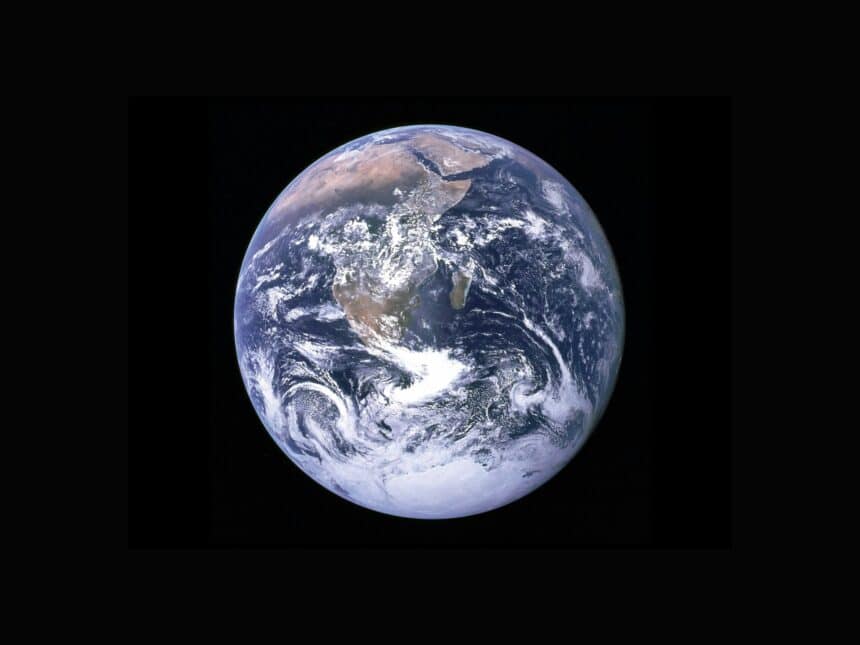

The story of Earth is epic. Spanning 4.6 billion years, the planet’s evolution has created everything we know—from the air we breathe to the life forms that inhabit every inch of its surface. For me, diving into Earth’s history is like opening the ultimate mystery novel—each layer of rock and each climate shift is a new chapter in our planet’s story.
Studying Earth’s evolution isn’t just for geologists or scientists. It helps us all understand how life began, why some species survived and others didn’t and how we can adapt to change in the future. Whether you’re a student, a nature lover or just someone curious about the world beneath your feet, exploring Earth’s journey gives us a perspective on our place in the universe.
From Dust to Planet: How Earth Was Born
Let’s wind back the clock to 4.6 billion years ago. Earth’s birth began in a giant cloud of gas and dust called the solar nebula. Through gravitational collapse, particles started to clump together and form larger bodies that would become the planets. Earth in its early state was a molten ball of rock constantly bombarded by space debris.
View this post on Instagram
Over time, heavier elements sank to the core, and lighter materials formed the crust. This process, called differentiation, gave Earth its basic shape—core, mantle and crust. I love that without these early processes, we wouldn’t have the stable landmasses or magnetic field that protect life today.
For me, learning about this period showed just how wild and crazy Earth’s early years were and how stability emerged from that chaos over billions of years.
Tectonic Shifts and Volcanic Fury: Shaping the Earth’s Crust
As the crust cooled, something amazing happened—plate tectonics started to shape the planet’s surface. These giant plates float on the semi-liquid mantle below and are responsible for mountain building, earthquakes and volcanic activity. I was amazed to find out that even today, continents are still moving 2.5 cm per year—the same rate your fingernails grow!
Volcanic eruptions played a big role early on, releasing gases like carbon dioxide and water vapor into the atmosphere. These gases would become the building blocks of our atmosphere and oceans, both of which are essential for life.
Learning about these massive forces made me appreciate the landscapes we take for granted—every mountain range and ocean trench has a story written in stone.
Breathing Life: The Atmosphere and Oceans Evolve
Earth’s atmosphere and hydrosphere (its water systems) weren’t always life-friendly like they are today. In fact, the early atmosphere was toxic and oxygen poor, made up mostly of methane, ammonia and volcanic gases. Over time, water vapor condensed to form oceans, and simple life forms like cyanobacteria began to thrive in them.
Here’s where it gets amazing: about 2.5 billion years ago, these tiny organisms started producing oxygen through photosynthesis and gradually changed the atmosphere. This event, known as the Great Oxygenation Event, allowed for the evolution of more complex life. Without it, humans—and most modern life—couldn’t exist.
View this post on Instagram
Earth’s oceans also developed currents and cycles distributing heat and nutrients around the globe. These systems are still vital today, supporting everything from coral reefs to global weather patterns.
For me, learning how life altered the planet’s systems really drove home the interconnectedness of Earth’s evolution and life’s resilience.
Life Explodes: The Cambrian Period and Beyond
Fast forward to about 541 million years ago, and we arrive at the Cambrian Explosion—a time when life diversified at an incredible rate. Complex organisms with shells, eyes and limbs began to appear in the oceans. It’s mind-blowing that most major animal groups we know today trace their roots back to this time.
Land didn’t stay empty for long. Plants colonized it 470 million years ago, followed by insects and then amphibians. Dinosaurs ruled for millions of years before an asteroid impact wiped them out 66 million years ago and made way for mammals and eventually humans.
Each of these evolutionary milestones is tied to changes in Earth’s climate, atmosphere and geology. It’s a reminder that our environment shapes life—and life shapes the environment in return.
Earth Today: A Dynamic and Changing Planet
Today, Earth is still evolving. Ice ages come and go, sea levels rise and fall, and tectonic plates move. Human activity is now a significant force shaping the climate, biodiversity and geology.
When I think about Earth’s journey, I’m struck by its resilience and fragility. Our planet has gone through massive transformations, and yet it’s still a unique home for life in the universe. Understanding its past gives us the tools to protect its future.
View this post on Instagram
Final Thoughts: Why Earth’s Evolution Matters
Learning about Earth has made me more aware of the planet’s complexity and beauty. We often think of Earth as static, but in reality, it’s a dynamic living system always evolving. Whether it’s through studying rock layers, watching a volcano erupt or seeing a fossil up close, we’re all connected to Earth’s vast and ongoing story.
By learning about Earth’s evolution, we not only satisfy our curiosity—we also get insight into how to live sustainably and adapt to future changes. After all, the more we know where we come from, the better we can shape where we’re going.