
Scale AI built a $14 billion empire on the backs of thousands of workers it called contractors. Now, with lawsuits mounting, a Department of Labor investigation that appeared and vanished, and a Meta acquisition reshaping everything, the people who actually trained your AI still haven’t been paid what they are owed.
In a coastal city in the southern Philippines, thousands of young workers log on each morning to help teach machines how to think. They are called Taskers. They label photographs, annotate text, rate responses from large language models, and sometimes, without much warning, they are handed the worst that humanity has ever produced online: images of abuse, prompts describing violence, scenarios designed to push AI guardrails to their limit. For this, some have earned as little as thirty cents for four hours of work. When they asked where their money went, they were often removed from the platform entirely.
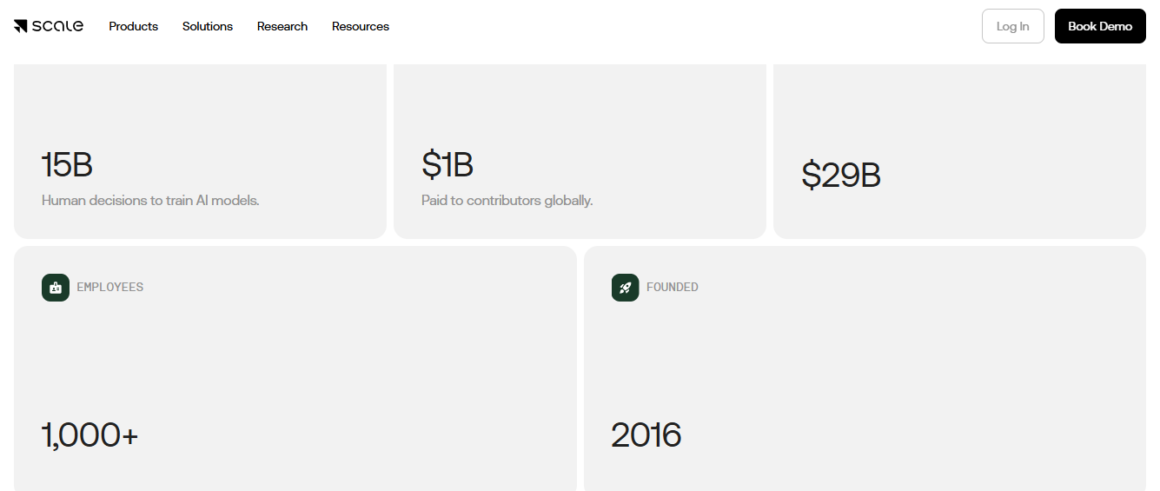
This is the origin story of Scale AI1, a San Francisco company founded in 2016 by Alexandr Wang, a then-19-year-old MIT dropout who turned the unglamorous business of data labeling into one of Silicon Valley’s most celebrated unicorns. The company raised money from the best firms in the business, hit a $14 billion valuation in May 2024, signed contracts with the Pentagon, and became the invisible infrastructure behind models built by OpenAI, Meta, Microsoft, and Anthropic. According to Reuters2, Meta then acquired a 49 percent stake in Scale in June 2025, making Wang its first-ever chief AI officer. By every Silicon Valley metric, Scale AI is a triumph.
But the people who built that triumph are a different matter entirely.
A Business Model Built on “Flexibility”
Scale AI’s core product has always been human judgment, packaged and sold to AI companies that need clean, labeled data to train their models. The company collects that judgment through a sprawling network of contractors it calls contributors, Taskers, or workers, depending on the platform. There are three main platforms: Remotasks, which handles international labor, particularly in the Philippines and other parts of the Global South; Outlier AI, a subsidiary launched in 2023 that recruits educated, English-speaking workers in the United States and Europe; and the broader Scale platform that serves enterprise clients.
Scale AI3 claims to have tens of thousands of contributors working across more than 9,000 cities and towns in the United States alone. Globally, the number runs into the hundreds of thousands. None of them, the company insists, are employees. They are all independent contractors. That classification is the fulcrum around which every dispute, every lawsuit, and every regulatory investigation in the past two years has turned.
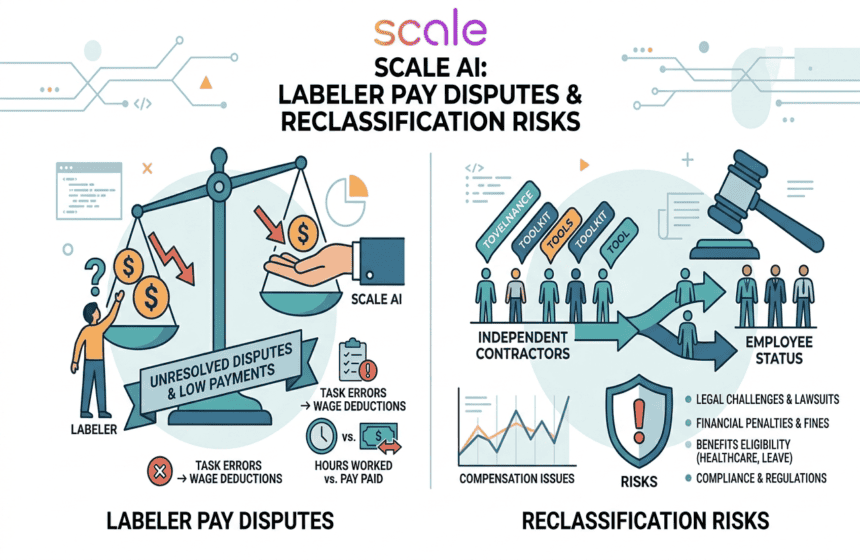
The contractor model is not, on its face, unusual. Gig platforms from Uber to Fiverr have built massive businesses on similar foundations. But there is something functionally different about how Scale runs its labor. Workers, the lawsuits allege, have no control over work assignments, payment rates, subject matter, or deadlines. They are required to download specific software. They are monitored, including browser activity and mouse movements. They are prohibited from taking breaks. They are not paid for mandatory training periods that can stretch across days. When they ask questions on internal Slack channels about missing wages, they are removed. That is not flexibility. That is employment without the protections that employment law requires.
On a typical day, she worked about ten hours but said she was only compensated for five, partly because the time she spent reviewing instructions and training was not paid.TechCrunch, reporting on Amber Rogowicz’s lawsuit, January 2025
The Complaints Pile Up, From Manila to Reddit
The paper trail begins in the Philippines. In August 2023, The Washington Post4 published a damning investigation into Scale’s Remotasks platform, interviewing 36 current and former workers. All but two said their payments had been delayed, reduced, or canceled after completing tasks. A 23-year-old Filipino worker named Charisse told the Post that Remotasks paid her just thirty cents for four hours of work. As reported by NextShark5, a worker named Jackie said he received $12 for three full days of effort, having expected $50. Benz, a 36-year-old, had accumulated more than $150 in earnings when he was suddenly removed from the platform and never saw the money.
Scale’s response was clinical. A spokesperson stated that delays or interruptions to payments were “exceedingly rare” and that pay rates reflected a living wage. But the Post had accessed an internal messaging platform for Remotasks supervisors, and notices of late or missing payments were commonplace, not rare. Around the same time, the gig labor research group Fairwork6 published its own assessment: Remotasks scored a 1 out of 10, the lowest possible rating, for failure to meet minimum standards on fair pay and fair contracts.
The company operates what researchers call a geography-based pricing model. A worker writing Finnish text for AI training could earn nearly 14 times what a Marathi-language worker earns for the same type of task. Portuguese writers based in Portugal were offered up to $8.20 an hour. Portuguese writers from Brazil could make $3.97 for identical work. Rest of World7 found that Scale’s job listings set pay based on regional cost-of-living rather than task complexity, a system that penalizes workers precisely because they live in poorer places and have fewer alternatives.
Meanwhile, the complaints were arriving in the United States too. On Reddit, an Outlier AI community with thousands of members became a clearinghouse for worker experiences. Inc. Magazine8 reported in late 2024 that the forum filled with posts about unpaid training, vanishing tasks, and sudden account deactivations without explanation. Across LinkedIn and YouTube, people were warning others off the platform.
In the United States, the recruiting pitch for Outlier was aggressive and inconsistent. Journalist Emilie Friedlander received four separate LinkedIn recruiting messages from Outlier in the span of a few weeks, with the advertised hourly rate changing each time, from $21 per hour to $40 per hour, then shifting again. The messages appeared automated and carried a “sponsored” tag. She did not follow up. Others were not so cautious, and many spent days in unpaid onboarding before tasks dried up or accounts were suspended without explanation.
The company also fired more than 500 workers at once without the legally required 60 days’ notice. That mass termination, in August 2024, prompted its own federal lawsuit filed in the Northern District of California in October 2024. Scale classified all those workers as independent contractors when the layoff was convenient, but the lawsuit argues that any reasonable reading of the relationship makes them employees, and the WARN Act protections that were violated apply to employees.
Three Lawsuits in Five Weeks
Between December 2024 and late January 2025, Scale AI was hit with three separate lawsuits in rapid succession, each adding a new dimension to the company’s labor problems. Read together, they tell a comprehensive story of what it means to be a worker inside Scale’s ecosystem.
- December 10, 2024 The first class action complaint is filed against Scale alleging widespread wage theft and worker misclassification under California labor law. Lead plaintiff Steve McKinney seeks to represent similarly situated workers. Represented by Clarkson Law Firm.
- January 3, 2025 Former worker Amber Rogowicz files a PAGA suit alleging misclassification, below-minimum-wage pay, unpaid overtime, unpaid breaks, and failure to cover business expenses. Her claim: working ten-hour days but being paid for only five.
- January 17, 2025 Six plaintiffs file a class action in Northern California alleging that Scale and Outlier subjected them to severe psychological trauma by requiring them to review violent, sexual, and abusive content without warning, safeguards, or promised mental health support.
The third lawsuit deserves extended attention because it addresses a dimension of this story that goes beyond wages. The plaintiffs allege that taskers working on AI safety projects for Meta and Google were required to write disturbing prompts related to violence, suicide, bestiality, and child abuse as a routine part of their jobs. They were told mental health counseling would be provided. It never was. Several developed PTSD, depression, anxiety, and sleep disorders. One described a pervasive sense of helplessness. Another said the work had permanently damaged his social relationships.
This is not an isolated problem. The Register9 stated that content moderation and AI training work has triggered similar litigation before: Facebook faced a lawsuit in 2018 from content moderators claiming psychological harm, and in 2020, more than 200 Facebook moderators wrote an open letter about the mental health toll of the work. In Kenya, former employees of Sama, another AI data company, sued over psychological harm from labeling toxic content for OpenAI. Scale AI’s workers appear to be the latest in a growing line of people harmed by the industry’s demand that humans absorb its darkest material so that AI systems appear clean.
Those who viewed images of traumatic events such as rapes, assaults on children, murders, and fatal car accidents developed PTSD. Some of the images presented appeared to depict real-life events. Court complaint, Outlier AI class action, January 2025
The Department of Labor Steps In, Then Steps Back Out
In August 2024, the U.S. Department of Labor opened a formal investigation into Scale AI. The probe centered on potential violations of the Fair Labor Standards Act, including unpaid wages, misclassification of employees as independent contractors, and illegal retaliation against workers who raised concerns.
Scale’s spokesperson Joe Osborne did what company spokespeople do: he pushed back on the framing. The investigation, he said, had been launched under the Biden administration, whose regulators, he implied, had misunderstood Scale’s business model. The company, he said, provides more flexible work opportunities in AI than any other employer, and feedback from contributors is “overwhelmingly positive.” Scale was working cooperatively with the DOL, and conversations were productive. The company strongly disputes allegations that it underpays or mistreats contributors, insisting that more than 90 percent of payment inquiries are resolved within three days.
Then, in May 2025, the investigation was dropped. Quietly. Without explanation.
TechCrunch10 confirmed the DOL had closed its investigation based on a source directly familiar with the matter. The timing coincided with a broader shift in the Trump administration’s approach to gig worker classification. On May 1, 2025, the DOL announced it was no longer enforcing a Biden-era rule that had made classifying workers as independent contractors more difficult. The rule’s suspension was a gift to the entire gig economy, and Scale AI appears to have been a particular beneficiary.
There is also the question of political proximity. Wang attended Trump’s inauguration in January 2025. Scale AI’s former managing director, Michael Kratsios, was confirmed in March 2025 as the new director of the White House’s Office of Science and Technology Policy. None of this proves coordination. But as one Substack writer covering the story put it, when a federal labor investigation into a company whose former executive now runs the president’s science office is quietly dropped with no public explanation, some skepticism is warranted.
The private lawsuits, however, did not go away. Those are harder to shelve.
What “Misclassification” Actually Means
To understand what is at stake in the reclassification debate, it helps to be clear about what the contractor label does and does not provide. In California, where most of these lawsuits are filed, the legal standard for determining whether a worker is an employee is the ABC test, embedded in Assembly Bill 511. Under AB5, a worker is presumed to be an employee unless the company can prove all three of the following: the worker is free from control and direction in performing the work; the work is outside the usual course of the company’s business; and the worker is customarily engaged in an independently established trade or occupation.
Scale AI fails this test rather obviously, at least on the face of the complaints. Workers have no control over assignments, pay, subject matter, or deadlines. They must use company-specified software. Their activity is monitored. They cannot take unauthorized breaks. They are terminated for asking about working conditions. Data labeling is not incidental to Scale’s business; it is Scale’s business. And the workers are not running independent enterprises with multiple clients. They are on a single platform, with access determined entirely by Scale.
If the courts agree, the financial consequences for Scale could be severe. Reclassification would mean back pay for overtime, reimbursement for business expenses, provision of meal and rest breaks, sick leave, and potentially benefits. Across tens of thousands of workers, over years of operations, that arithmetic becomes very large very quickly. It is, in part, why companies fight these cases so aggressively and why the arbitration clauses embedded in every contractor agreement matter so much. Scale’s terms of service require all disputes to go to binding arbitration, stripping workers of the right to join a class action or collective lawsuit. The December 2024 complaint anticipates a motion to compel arbitration.
The Broader Industry Implicated
Scale AI is not alone in this. AlgorithmWatch12 reported in 2025 that Surge AI, another San Francisco-based data annotation startup, is now facing similar misclassification suits. Workers there allege unpaid training and near-impossible time limits that reduce effective pay below minimum wage. The complaint reads almost identically to the Scale AI filings. Across the industry, AI data companies have built their economics on a single shared assumption: that training AI is not really a company’s core business, even when it is. The legal system is beginning to push back on that assumption.
The major clients who depend on Scale bear their share of responsibility here. As of March 2025, Scale AI’s customers included Meta, OpenAI, Anthropic, Microsoft, Cohere, Accenture, SAP, Deloitte, the White House, and the U.S. military. AlgorithmWatch contacted several of those companies for comment on their relationship with Scale. None responded. Amazon, Google, and Meta have all declined to disclose which human annotation services they use in developing their AI models. The opacity is deliberate; it makes labor conditions downstream nearly impossible to audit or challenge.
There is something worth sitting with in this arrangement. The companies that produce the most sophisticated, ethically scrutinized AI systems in the world, systems tested for bias, alignment, and safety, are built on a labor supply chain that, in many cases, does not meet basic minimum wage requirements and exposes workers to traumatic content without protection. The gap between what these companies say about responsible AI and how they source the human intelligence that makes it possible is, to put it plainly, embarrassing.
The Grounded / Independent Review stated:
“It will classify you as an independent contractor to avoid every legal protection you would otherwise be entitled to. It will require unpaid or underpaid onboarding work before every project. It will ask for your most sensitive personal documents before you earn a single dollar.”
The Grounded, independent review of Outlier AI, 2025
The Meta Deal and What It Changes
In June 2025, The Information13 reported that Meta announced it would acquire a 49 percent stake in Scale AI for what reports estimated at $14.3 billion, making it one of the largest acquisitions in AI infrastructure. Wang stepped into the role of Meta’s first chief AI officer. The deal sent shockwaves through the data labeling industry, with some of Scale’s other clients reportedly reconsidering their relationships over concerns about data confidentiality and strategic leakage.
Meta Aims to Bolster AI Effort, Paying $14.3 Billion for 49% Stake in Scale AI
— The Information (@theinformation) June 15, 2025
A key question for Scale AI following the deal is the future of its existing customer base, which includes major tech firms like Alphabet, Microsoft, Amazon, Nvidia, and OpenAI. Explore the…
For the workers, the deal changed almost nothing. The lawsuits continue. The arbitration clauses remain in place. The DOL investigation had already been dropped by the time the Meta deal was announced. Wang became a billionaire many times over. The Filipino workers who processed his company’s early data have no claim on any of that value.
There is a reasonable argument that scale and complexity justify some form of contractor relationship in this industry. AI data work is episodic, project-based, and genuinely variable in ways that certain types of traditional employment are not. Workers in multiple countries with different legal systems create real compliance complexity for any single employer. And some workers do value the flexibility, particularly those who use Outlier as supplementary income alongside other jobs.
But there is a difference between a flexible, fairly compensated contractor arrangement and one in which the company controls every meaningful condition of work, does not pay for mandatory training, monitors activity continuously, removes workers who ask about their pay, and exposes them to psychologically damaging content without support. The former is a legitimate labor model. The latter is employment with the costs stripped out. The legal system’s job is to distinguish between the two, and that process is now underway.
What Comes Next
The private lawsuits moving through California courts are the most likely path to any actual accountability. According to TechCrunch14, the December 2024 class action and the January 2025 PAGA suit are both challenging Scale’s contractor classification directly, and if either succeeds, it would establish precedent that could reshape how AI data companies across the industry classify their workers. Scale will almost certainly attempt to push both cases into individual arbitration, which is precisely why the PAGA mechanism matters: under California law, PAGA actions can proceed even when individual arbitration clauses apply, because the state is the real plaintiff.
The psychological harm lawsuit is perhaps the most novel and, for the broader AI industry, the most consequential. If courts find that AI training companies have a duty of care toward contract workers exposed to traumatic content, the entire practice of farming out content moderation and safety training to low-paid contractors without psychological support becomes legally untenable. That would force a restructuring of how the industry handles the darkest parts of its data pipeline, something it should have done on its own long ago.
At the federal level, the picture is cloudier. The Trump DOL’s suspension of the Biden contractor classification rule and the dropped investigation into Scale both signal an environment where federal enforcement of worker classification is unlikely to gain traction. The political geography has been decided, at least for now.
That leaves the workers themselves in a familiar position. Organizing is difficult when you are a contractor with no recognized workplace, no union rights, and an arbitration clause blocking collective legal action. The Reddit forums and Glassdoor reviews are, for many of them, the only channels available. It is not nothing, those documented complaints have attracted journalists, regulators, and eventually lawyers. But it is a thin reed to lean on.
In a perfect world, it would be completely the opposite. You would have low-resource languages being paid more.Milagros Miceli, researcher, Distributed AI Research Institute, speaking to Rest of World
The Machine Needs Humans. It Always Has.
There is a persistent myth in the AI industry that the goal is to eliminate human labor from the loop. The cleaner the automation, the better. But the truth is that the current generation of large language models depends on human feedback at every stage of development. RLHF, reinforcement learning from human feedback, the technique that made ChatGPT and its successors usable, is built on tens of thousands of human judgments about what good and bad AI outputs look like. Those judgments are Scale’s product. They are made by Taskers.
The machine needs humans. And right now, it is getting them cheap, unprotected, and with no recourse when the work is done. That is the bargain at the center of the AI boom. It is not a technical problem or an oversight. It is a choice, made repeatedly, by executives and investors who understood exactly what they were buying when they funded platforms built on contractor misclassification in places where workers had no meaningful alternative.
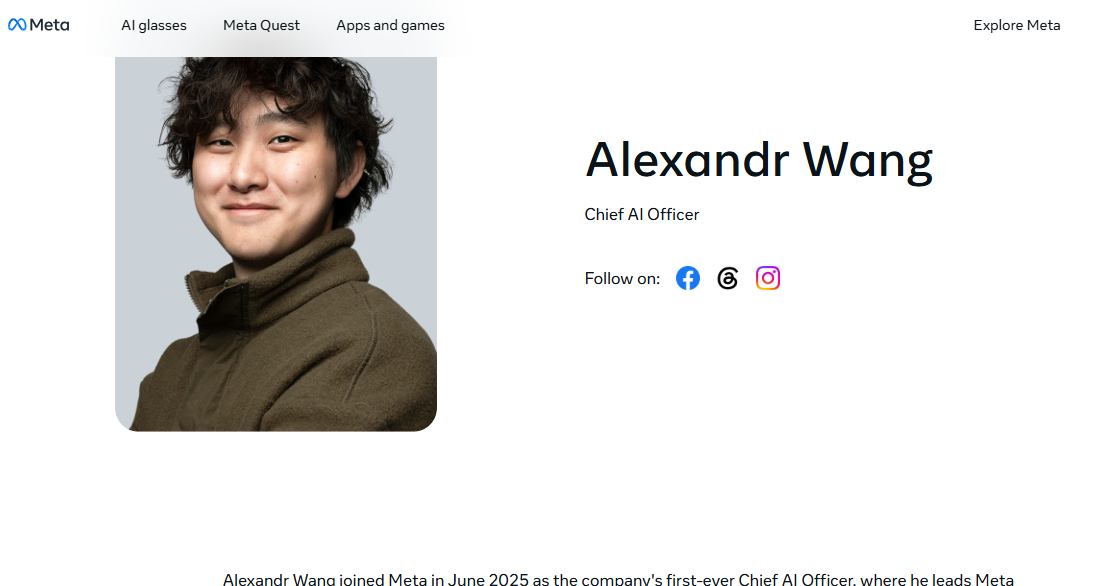
Wang is now at Meta15, running AI strategy for one of the most powerful technology companies in the world. The workers who trained his models are still on the forums, comparing payment dates, warning each other about new projects, asking whether this one will actually pay. Some of them are still waiting for money they earned in 2024.
The AI boom will produce more unicorns. It will continue to need more Taskers. The question is whether the legal, regulatory, and public pressure building around Scale AI is enough to change the terms on which those workers are brought into the machine. The courts will decide the narrow legal question. The broader question, about what we think human labor is worth when it is powering a fourteen-billion-dollar enterprise, is one the industry still has not answered honestly.
Sources
- “About Scale AI | Reliable AI for Critical Decisions” Scale AI, scale.com/about. Accessed 22 May 2026. ↩︎
- “Reuters.Com” www.reuters.com/business/finance/meta-finalizes-investment-scale-ai-valuing-startup-29-billion-2025-06-13/. Accessed 22 May 2026. ↩︎
- “About Scale AI | Reliable AI for Critical Decisions” Scale AI, scale.com/about. Accessed 17 June 2026. ↩︎
- 28 Aug. 2023, www.washingtonpost.com/world/2023/08/28/scale-ai-remotasks-philippines-artificial-intelligence/. Accessed 22 May 2026. ↩︎
- “Multi-billion-dollar SF start-up Scale AI accused of exploiting Filipino workers” NextShark.com, 29 Aug. 2023, nextshark.com/scale-ai-start-up-exploits-filipino-workers. Accessed 22 May 2026. ↩︎
- 16 May 2025, fair.work/wp-content/uploads/sites/17/2025/05/fair.work/wp-content/uploads/sites/17/2025/05/Fairwork-Cloudwork-Report-2025-FINAL.pdf. Accessed 22 May 2026. ↩︎
- Deck, Andrew. “Scale AI is on a hiring spree for speakers of under-represented languages” Rest of World, 29 Aug. 2023, restofworld.org/2023/scale-ai-language-training-hiring/. Accessed 22 May 2026. ↩︎
- “Inc.Com” www.inc.com/sam-blum/its-a-scam-accusations-of-mass-non-payment-grow-against-scale-ais-subsidiary-outlier-ai.html. Accessed 22 May 2026. ↩︎
- Claburn, Thomas. “Scale AI, Outlier sued over mental toll of AI model safety” 24 Jan. 2025, www.theregister.com/2025/01/24/scale_ai_outlier_sued_over/. Accessed 16 June 2026. ↩︎
- Rollet, Charles. “The Department of Labor just dropped its investigation into Scale AI” TechCrunch, 9 May 2025, techcrunch.com/2025/05/09/the-department-of-labor-just-dropped-its-investigation-into-scale-ai. Accessed 16 June 2026. ↩︎
- “Worker classification and AB 5 frequently asked questions” FTB.ca.gov, www.ftb.ca.gov/file/business/industries/worker-classification-and-ab-5-faq.html. Accessed 19 June 2026. ↩︎
- Bird, Michael. “The AI Revolution Comes With the Exploitation of Gig Workers” AlgorithmWatch, algorithmwatch.org/en/ai-revolution-exploitation-gig-workers/. Accessed 16 June 2026. ↩︎
- “The Information (@theinformation) on X” 15 June 2025, x.com/theinformation/status/1934336361063948640. Accessed 19 July 2026. ↩︎
- Rollet, Charles. “Scale AI hit by its second employee wage lawsuit in less than a month” TechCrunch, 9 Jan. 2025, techcrunch.com/2025/01/09/scale-ai-hit-by-its-second-employee-wage-lawsuit-in-less-than-a-month/. Accessed 17 June 2026. ↩︎
- “Alexandr Wang, Chief AI Officer” www.meta.com/about/leadership/alexandr-wang/?srsltid=AfmBOoqI8yz3bw8s0KFpNfToFO8rh66vXvG6WwPQoNztqCI06BePzl-O. Accessed 17 June 2026. ↩︎