


There is a line from the old internet that people still repeat whenever platforms start charging for something that used to be free. “If you’re not paying for the product, you are the product.” For two decades, Facebook and Instagram built the most profitable advertising machine in history on the back of that exact logic. Users posted their lives. Meta sold their attention. Everyone understood the arrangement, even if they never said so out loud.
That deal is now being renegotiated. And the terms are a lot worse for the people on the posting end.
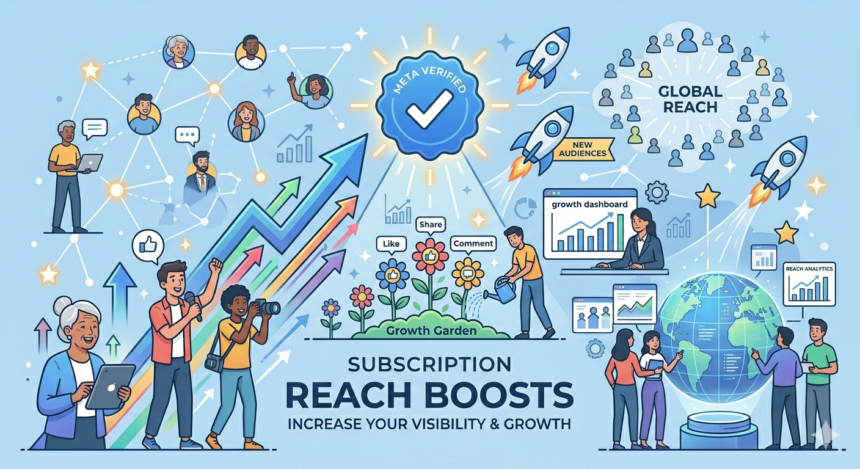
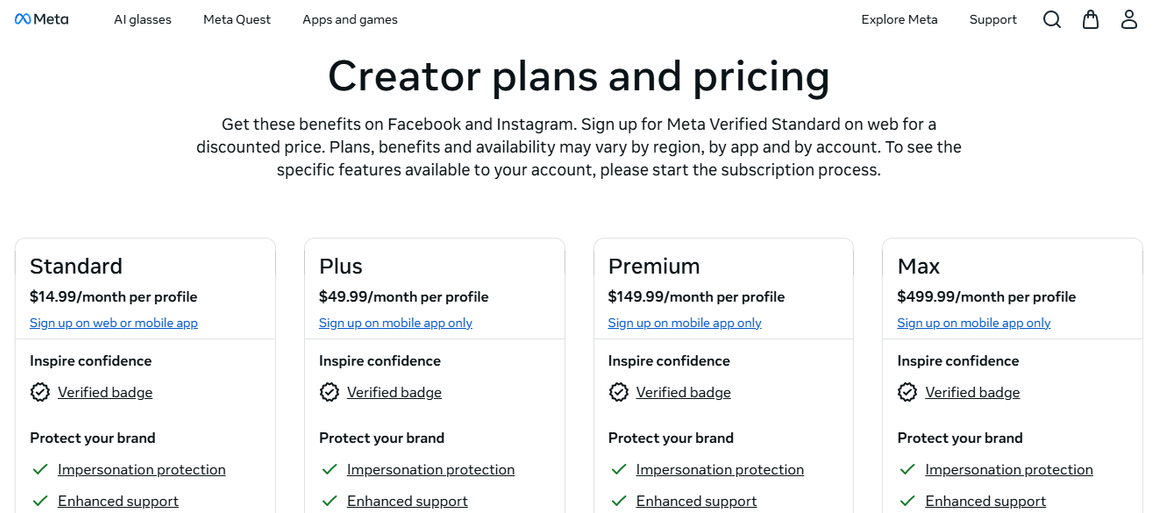
In 2023, Meta launched Meta Verified1, a paid subscription program for Facebook and Instagram that offered creators and businesses a blue badge, account protection, and, critically, what the company described as improved visibility.
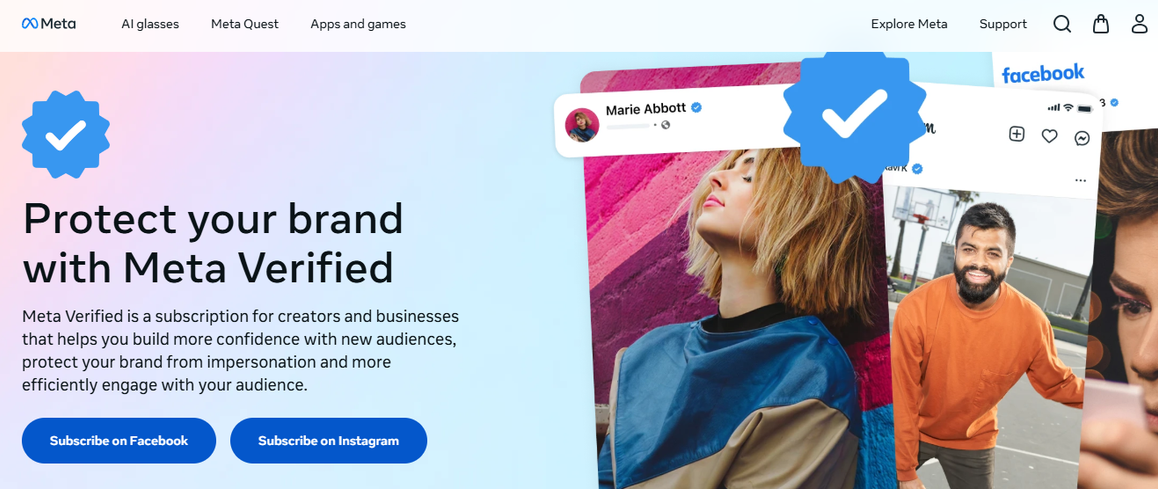
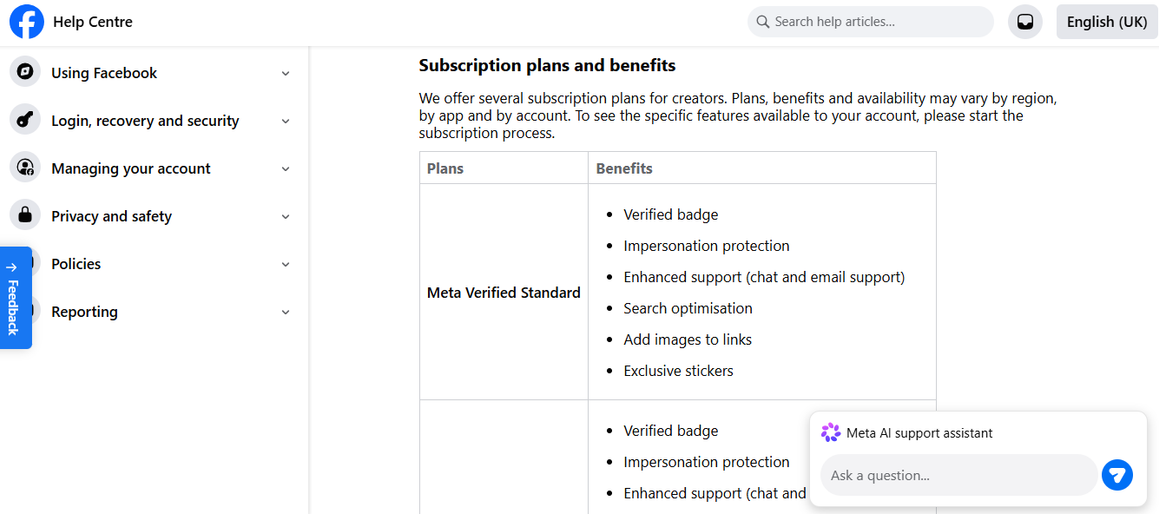
The pitch was simple: pay a monthly fee and the algorithm would work harder for you. Search placement. Comment prominence. Recommendations to new audiences. The blue tick stopped being a symbol of journalistic or civic legitimacy. It became a product tier. And now, in May 2026, TechCrunch2 reported that Meta has gone considerably further, launching a sprawling subscription architecture called Meta One that prices algorithmic advantage on a sliding scale up to $49.99 a month. This is not a cosmetic change. It is a structural reshaping of how visibility works on two of the largest media platforms on earth.
The question worth asking is not whether Meta has the right to charge for reach. It clearly does. The question is what it means when reach is no longer earned through content quality but purchased through a subscription portal. And what it means for the millions of small creators and businesses who built their entire presence on a platform that promised, for years, that the best content would rise.
The Architecture of the Arrangement
Meta Verified launched as a verification bundle for individual creators, initially available in the United States, Australia, and New Zealand with a waitlist for access. The early pricing sat at $11.99 a month on the web and $14.99 on mobile, with the price difference explained by the cut Apple and Google take from in-app purchases. By 2024, the program expanded globally and added business tiers.
The reach benefit was always stated carefully. Meta’s promotional language used words like “may,” “in some areas,” and “improved visibility” rather than hard guarantees. Verified accounts were described as receiving elevated search rankings, better placement in comments, and more favorable in-feed recommendations. Meta said specifically that subscribers with smaller followings would see a more noticeable impact since their baseline audience was smaller. The company also noted that reach benefits would only apply to content that followed recommendation guidelines.
That careful hedging mattered. It gave Meta room to promise visibility without committing to deliver it. And when independent testers ran the numbers, the results were mixed at best.
Buffer3 ran a two-week test on Instagram with a consistent posting schedule. Their finding was that reach actually declined slightly during the trial period, while engagement and profile visits increased. The writer concluded plainly that Meta Verified had no measurable impact on content performance. “I’m pretty sure these numbers have everything to do with the content itself rather than some sort of algorithmic boost from being verified,” she wrote.
The Seasoned Marketer4 tested it for a small business and traced a 1,000-view uptick in January to a specific story series they ran, not to verification. After accounting for their growth trend, they estimated Meta Verified may have contributed roughly 200 additional views. They were not even confident about that. The piece ended bluntly:
“We did not experience anything that was promised to us, did not see any increased visibility, and had to spend countless hours trying to get someone to fix our issues.”
They described the subscription as “an $83 ripoff” after a price jump from $71.99 to $83 a month for both platforms within a single month.
On Reddit, the reaction followed a consistent pattern. Forum threads from 2025 and 2026 as documented by News Nest5 showed creators split between those who swore by the protection features and those who warned others off it. One recurring complaint: “paid to be ignored.” Another influencer reported losing followers after subscribing. The security angle resonated for larger accounts with real impersonation risk. The reach angle landed hollow for nearly everyone else.
When the Boost Got Real
Something shifted in late 2024 and early 2025. According to tracking by HasMeta6, Meta added a confirmed algorithmic boost for verified creators to Facebook, a move described as “significant and confirmed by Meta.” The site estimated a 10 to 15 percent increase in organic reach for verified creators. For an account reaching 50,000 people a month, that translates to 5,000 to 7,500 additional impressions for $15 a month. For a creator reaching fewer than 5,000 people, the boost was described as not significant enough to matter.
This is where the structural problem becomes visible. A modest percentage boost is worth more in absolute terms to people who already have large audiences. The creators who most need reach, the ones building from scratch, the small businesses on a tight marketing budget, get the least out of paying. The creators who could afford not to pay, because their content already reaches large audiences organically, capture the most value from the subscription. It is a regressive system designed to look meritocratic.
Meanwhile, Facebook was simultaneously deepening penalties on external links. By 2025, posts containing links to outside websites were receiving 70 to 80 percent less reach than native content, up from 60 percent in 2024. The logic is straightforward: every click that takes a user off Facebook is a lost advertising impression. But the effect on small businesses that used Facebook as a traffic channel to their own websites was brutal. Their organic distribution collapsed. And the solution Meta offered them was to pay for a subscription.
In December 2025, that pressure became explicit. Meta ran a test that limited some unverified business account holders to sharing just two links per month in organic Facebook posts. The notification to affected users said that unused posts would not roll over. The only way to avoid the limit was to subscribe to Meta Verified. A Meta spokesperson confirmed the test was designed to “understand whether the ability to publish an increased volume of posts with links add additional value for Meta Verified subscribers.” In other words: Meta was testing how many users would pay for a capability they previously had for free.
Social media specialist Matt Navarra told Inc.7 that the test crossed a line. “This isn’t really about verification as much as about bundling survival features behind a subscription,” Navarra said. “If you’re a creator or a business, I think the message is essentially if Facebook is a part of your growth or traffic strategy, that access now has a price tag attached to it. And that’s new in its explicitness, even if it’s been the direction of travel for a while.”
“Tests like this underline why building a business that’s overly dependent on any one platform’s goodwill is incredibly risky.”
Meta One and the Explicit Sale of Attention
In May 2026, Meta made the direction explicit. The company launched Meta One, a unified subscription brand spanning Instagram, Facebook, and WhatsApp. The tiers started at $2.99 a month for WhatsApp Plus and $3.99 for Instagram Plus and Facebook Plus. Cosmetic upgrades with story tools and profile customization. But the creator tiers told the more significant story.
Meta One Essential, at $14.99 a month, covered the verified badge, impersonation protection, and an enhanced link profile. Meta One Advanced, at $49.99 a month, was something else entirely. The Advanced plan offered featured placement in the Facebook feed, higher positioning in Facebook and Instagram search results, a bold “Follow” button on Reels, automatic follow invitations sent to people who engage with your content, links in posts and Reels to drive traffic to external sites, enhanced profile display, and deeper competitive analytics.
Read that list again slowly. Featured placement in the feed. Higher search rankings. Automatic follow invitations. These are not perks. These are the core levers of platform discoverability, put behind a $49.99 monthly paywall.
Wersm9 described the Advanced plan plainly: “The upcoming Meta One Advanced plan reads almost like an algorithmic advantage package.” The Next Web10 noted that at $49.99 a month, the subscription “could effectively become a third line in the marketing budget” for anyone competing seriously on Meta platforms.
Neowin11 was direct about what it meant:
“Meta One Advanced is particularly interesting because it directly affects your reach.”
The reach tier did not emerge from nowhere. Instagram Plus, even at $3.99 a month, already included a “weekly Story spotlight” for additional views. Stories is still one of the highest-engagement surfaces on Instagram. A spotlight that puts your Story in front of non-followers is, stripped of the marketing language, a paid reach boost for what was previously a free, algorithm-dependent process.
The Revenue Math
Meta’s advertising business brought in $55 billion in a single quarter in early 2026, growing 33 percent year over year. Non-advertising revenue came in at $1.29 billion, about 2.3 percent of total. Subscriptions, hardware, and all other products fit into that 2.3 percent.
The reason Meta is pushing subscriptions is not that advertising is failing. It is that advertising growth is slowing as Meta’s apps have saturated global markets. Social Media Today12 estimated that Meta Verified had approximately 7 million subscribers by mid-2025, generating roughly $93 million per month across Facebook and Instagram. That is real money for a revenue stream that did not exist until 2023. But it is less than 0.2 percent of quarterly advertising revenue. The subscriptions are, for now, rounding error.
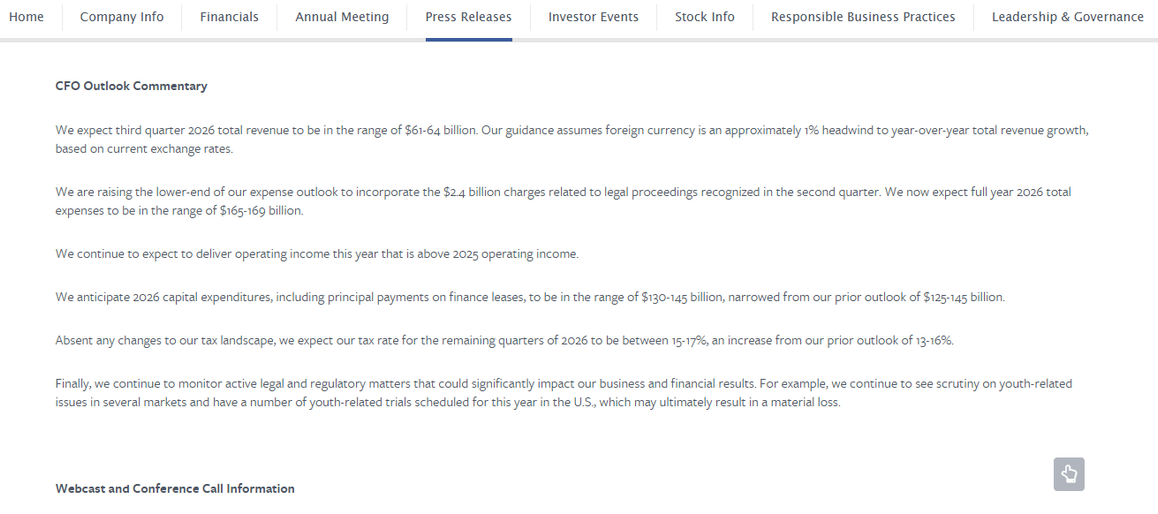
According to Reuters13, Meta plans to spend between $130 billion and $145 billion on capital expenditures in 2026, most of it on AI infrastructure.
The subscription push is partly designed to offset that burn. Meta One Plus at $7.99 and Meta One Premium at $19.99 add paid tiers for AI usage. Meta One Premium matches ChatGPT Plus at $19.99, positioning Meta as a direct competitor in the AI subscription market. The bet is that users who already live inside Instagram and Facebook will pay less for AI access there than they would for a standalone product.
What this means for the creator economy is that Meta is not just building a subscription business alongside its advertising business. It is building a system where a creator’s relationship to the algorithm has multiple price points, and the free tier gets progressively less favorable.
The Suppression Question
This is the part Meta does not talk about directly. When a paid subscription offers higher search rankings and featured placement in feeds, the implicit corollary is that unverified accounts rank lower and get featured less. Meta has never confirmed this, and Instagram CEO Adam Mosseri stated in January 2025 that the algorithm does not suppress reach because of advertising status. But that statement addressed paid advertising, not subscriptions, and it left the subscription question carefully unaddressed.
Research from RBB Communications14 noted that between 2018 and 2025, Facebook referrals as a percentage of web traffic to publisher websites dropped more than 75 percent. That collapse predates Meta Verified. But the subsequent introduction of paid search ranking and paid feed placement does not make the picture more favorable for non-subscribers.
The logic runs like this. If a verified creator and an unverified creator post equally strong content, and the verified creator’s content is served to more non-followers through search, through recommended posts, and through featured placement, the unverified creator is not being actively suppressed. They are just losing in a competition where one side paid for a structural advantage. The distinction matters legally. It does not matter much practically.
Coalition Technologies15 described this dynamic with notable candor:
“Large businesses face increasing pressure to verify as Meta tests warnings for non-verified accounts.”
Warnings to non-verified accounts are a separate pressure mechanism from algorithmic penalties, but they serve the same behavioral goal. They push businesses toward subscribing.
The precedent from Twitter is instructive. After Elon Musk made the verified badge a purchasable product on X, what happened to the non-purchasing majority was predictable. Their comments were less prominent. Their search ranking shifted. The badge inflated for buyers and deflated in meaning for everyone else. One Medium16 analysis of the pattern noted that the concern among small business owners on Meta was that “not paying will put them at a disadvantage.” If your competitors subscribe and gain the boost, your organic reach shrinks by comparison. You are not being penalized. You are just falling behind.
What the Support Actually Delivered
One of the core promises of Meta Verified was access to real human support. For any creator or small business that has tried to recover a disabled account or resolve a policy dispute through Meta’s standard channels, this was the most emotionally resonant selling point. The prospect of talking to an actual person was worth money.
The reality proved more complicated. In July 2025, TechCrunch17 reported on a wave of mass account bans affecting tens of thousands of users. A petition demanding that Meta resolve the problem reached over 25,500 signatures. Meta Verified subscribers discovered that their premium support access was either not functioning or delivering no results. A petition circulated. Reddit threads filled with organizing tips and expressions of rage.
In Reddit threads from that period, users described Meta Verified representatives as “extremely unhelpful” and offering “canned responses.” Some users who signed up specifically to get help during the ban wave were put on a waitlist rather than gaining immediate access. One user reported that a Meta representative said the company was overwhelmed with a malware issue and overloaded with support tickets. At least one user paid for Meta Verified during an account crisis and received nothing usable in return.
The $49.99 Meta One Advanced plan now includes “access to human support for Instagram and Facebook pages.” The Next Web18 observed the timing bluntly:
“Getting a human being to respond when something goes wrong on your business page has historically been nearly impossible, and Meta is now charging $49.99 a month for the privilege.”
Who This Actually Serves
There are creators and businesses for whom Meta Verified makes sense. Anyone with a large audience and real impersonation risk gets genuine value from the monitoring and protection features. Anyone whose livelihood depends on their account and who has lived through the experience of being locked out with no human to call understands why paying for access to a real support agent is rational, even if the support is unreliable.
The Buffer19 review made this point honestly: if losing access to your Instagram account meant losing income, paying every month is worth serious consideration. The impersonation protection is real. The support, imperfect as it is, beats nothing.
But the reach promise is a different matter. The evidence from independent tests across multiple experiments is consistent: for small and mid-sized accounts, the measurable boost from Meta Verified is either marginal or undetectable. Sierra Exclusive’s20 analysis captured the dynamic precisely: “Meta has commercial motives to encourage the adoption of Verified. Initially, advantages might be more visible; over time, they might minimize the uplift as verification becomes more common.”
That last sentence is important. If enough accounts eventually pay, the competitive advantage disappears and Meta simply collects subscription revenue from everyone who panicked. The equilibrium point is a world where all serious creators pay, reach returns to baseline, and Meta has successfully converted the creator layer of its platform from a free participant into a paying customer.
What is happening with Meta Verified is not unique to Meta. It is the maturation of a model that social platforms have been moving toward for years. Snap’s Snapchat+ hit 16 million paying subscribers, more than doubling since early 2024. Discord Nitro, Telegram Premium, X Premium. The major platforms have all concluded that advertising revenue alone is insufficient and that power users will pay for enhanced access if the alternative is invisibility.
The difference with Meta is scale. Facebook and Instagram are not niche platforms where a paid tier feels like a fan club membership. They are the infrastructure of online commerce for millions of small businesses across the world. The decline is structural, not personal. The algorithm shifted toward AI-recommended content and away from following-based distribution. Organic reach dropped across the board. And then Meta introduced subscriptions that sold back some of what had been organically available.
There is a playbook here that is worth naming. Reduce the value of the free tier gradually. Introduce paid tiers that restore some of what was removed. Call the restored functionality a new benefit rather than what it is: a surcharge on the status quo ante. The link restriction test on Facebook is the clearest example. Facebook business pages used to post as many links as they wanted. Then Meta tested restricting them to two per month unless they paid for Meta Verified. The subscription did not offer a new capability. It offered a fee to avoid a newly imposed limit.
This is not illegal. It is not even unusual. Platforms routinely tighten what the free tier offers and expand what the paid tier provides. But the scale at which it is happening on Meta, across platforms that collectively reach three billion daily active users, gives it a different weight than a streaming service bumping its price.
The small food blogger who built a following on Instagram over six years, the independent bookshop that grew its Facebook community through patient daily posting, the ceramics maker whose Reels started getting traction through sheer quality. These are the people who built the engagement that made Meta’s advertising machine worth $55 billion a quarter. They are now being offered a subscription to maintain access to the distribution channel they built on. That is the arrangement as it actually exists. Whether you think it is fair depends entirely on whose side of the transaction you are on.
Sources
- “Meta Verified: Get the verified badge on Instagram & Facebook” www.meta.com/meta-verified/. Accessed 18 June 2026. ↩︎
- Perez, Sarah. “Meta launches Instagram, Facebook, and WhatsApp subscriptions, with more to come, including AI plans” TechCrunch, 27 May 2026, techcrunch.com/2026/05/27/meta-officially-launches-instagram-facebook-and-whatsapp-subscriptions-with-more-to-come-including-ai-plans/. Accessed 18 June 2026. ↩︎
- Lang, Kirsti. “I Got Meta Verified on Instagram — Here’s My Honest Review” 2 Apr. 2026, buffer.com/resources/meta-verified-review-instagram/. Accessed 21 Aug. 2026. ↩︎
- The Seasoned Marketer, theseasonedmarketer.com/meta-verified-increase-reach/. Accessed 22 Aug. 2026. ↩︎
- Hoffman, Camila. “Meta Verified: I Paid to Find Out — And the Results Weren’t What I Expected” NEWS NEST, 27 Jan. 2026, news-nest.com/2026/01/27/meta-verified-i-paid-to-find-out-and-the-results-werent-what-i-expected/. Accessed 22 Aug. 2026. ↩︎
- Hash Meta, hashmeta.com/insights/facebook-algorithm-changes-2025. Accessed 22 Aug. 2026. ↩︎
- “Inc.Com” www.inc.com/bruce-crumley/how-metas-link-limit-in-facebook-posts-will-cost-small-business-marketers/91281099. Accessed 22 Aug. 2026. ↩︎
- McMahon, Liv. “Facebook tests £9.99 monthly subscription for sharing more than two links” 18 Dec. 2025, www.bbc.com/news/articles/cp9kv3lezgro. Accessed 22 Aug. 2026. ↩︎
- Desreumaux, Geoff. “Meta Launches Plus Subscriptions for Facebook, Instagram and WhatsApp” WeRSM – We are Social Media, 27 May 2026, wersm.com/meta-launches-plus-subscriptions-for-facebook-instagram-and-whatsapp/. Accessed 22 Aug. 2026. ↩︎
- Stan, Alina Maria. “Meta launches AI chatbot subscriptions at $7.99 and $19.99” 27 May 2026, thenextweb.com/news/meta-ai-chatbot-subscription-meta-one-pricing. Accessed 22 Aug. 2026. ↩︎
- “Neowin” www.neowin.net/news/meta-launches-paid-whatsapp-facebook-and-instagram-tiers-more-subscriptions-to-come/. Accessed 22 Aug. 2026. ↩︎
- Hutchinson, Andrew. “Meta’s next subscription package could boost Instagram performance” Social Media Today, 29 Mar. 2026, www.socialmediatoday.com/news/metas-next-subscription-package-could-boost-instagram-performance/816048/. Accessed 22 Aug. 2026. ↩︎
- “Reuters.Com” www.reuters.com/business/meta-narrows-annual-capex-forecast-ai-buildout-grows-2026-07-29/. Accessed 22 Aug. 2026. ↩︎
- “Meta Organic Social Strategy: What 2026 Changed” Rbb Communications, rbbcommunications.com/blog/meta-organic-social-media-strategy-2026/. Accessed 22 Aug. 2026. ↩︎
- Coalition Technologies, coalitiontechnologies.com/blog/is-being-meta-verified-worth-it. Accessed 22 Aug. 2026. ↩︎
- Medium, medium.com/@jarrod-reque/why-organic-social-media-growth-is-so-difficult-today-c16da4969317. Accessed 22 Aug. 2026. ↩︎
- Perez, Sarah. “Meta users say paying for Verified support has been useless in the face of mass bans” TechCrunch, 2 July 2025, techcrunch.com/2025/07/02/meta-users-say-paying-for-verified-support-has-been-useless-in-the-face-of-mass-bans/. Accessed 22 Aug. 2026. ↩︎
- Stan, Alina Maria. “Meta launches AI chatbot subscriptions at $7.99 and $19.99” 27 May 2026, thenextweb.com/news/meta-ai-chatbot-subscription-meta-one-pricing. Accessed 22 Aug. 2026. ↩︎
- Lang, Kirsti. “I Got Meta Verified on Instagram — Here’s My Honest Review” 2 Apr. 2026, buffer.com/resources/meta-verified-review-instagram/. Accessed 22 Aug. 2026. ↩︎
- “Does Meta Verified Increase Reach” Sierra Exclusive Industries, 24 Sept. 2025, sierraexclusive.com/does-meta-verified-increase-reach/. Accessed 22 Aug. 2026. ↩︎


