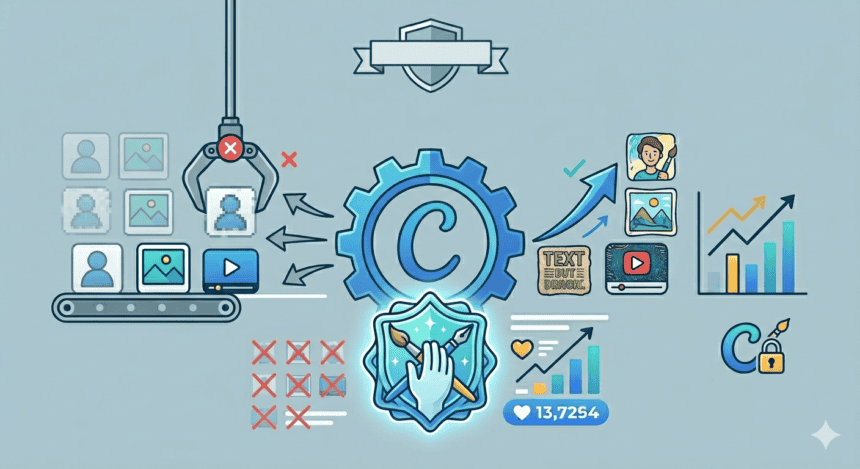

It starts with a scroll. You pull up Etsy or Creative Market on a Tuesday morning, coffee going cold beside your keyboard, and there is your work. Your layout. Your carefully chosen font pairing. The color story you spent three weeks testing. Someone else’s name is on it. The price is half of yours. And the listing has 400 five-star reviews.
- A Platform Built on Shared Elements
- The Originality Problem
- When Plagiarism Is Obvious
- Canva’s Position: Helpful Until It Isn’t
- The DMCA Hamster Wheel
- The Economics of Theft
- The Grey Zone of ‘Inspiration’
- What Canva Creators Earn, and What They Risk
- Legal Protection Exists, But It’s Expensive
- The AI Layer
- What Creators Are Actually Doing
- A Structural Problem Without a Structural Solution
- The Part That Nobody Wants to Acknowledge
- Where Things Stand
This is not a hypothetical. It is a scene that plays out daily across the vast digital marketplace that has grown up around Canva, the Australian design platform that now claims more than 220 million monthly active users in 190 countries. Canva has done something remarkable: it democratized graphic design. It handed a drag-and-drop toolkit to every small business owner, freelancer, solopreneur, and side hustler on the planet. And in doing so, it also built the conditions for one of the most frustrating and legally murky intellectual property disputes of the digital economy era.
The template economy is enormous. A single well-designed Canva template pack, sold on Etsy at $15 to $25 a pop, can generate thousands of dollars in passive income per month for its creator. One seller profiled by Kajabi,1 named Katya Varbanova, a former bank employee who pivoted to template design, sold 255 packs in a few days during a presale alone. Her template business grew to reach over 13,000 customers. According to IssueWire2, there are roughly 2.8 billion dollars in Etsy revenue flowing through that marketplace annually, and a meaningful slice of it belongs to template sellers. This is real money. This is people’s livelihoods. And it is under constant threat.
The theft does not always look like theft. Sometimes it looks like inspiration. Sometimes it looks like a coincidence. And sometimes, as the designers will tell you, it looks exactly like what it is: your work with a different name on it.
A Platform Built on Shared Elements
To understand why Canva’s plagiarism problem is so gnarly, you first have to understand how Canva works. The platform offers an enormous library of design elements: photos, illustrations, icons, fonts, video clips, and pre-built templates. As Canva’s Content License Agreement3 explains, users get non-exclusive licenses to use these elements. That word, non-exclusive, is doing heavy lifting. It means that when you build a stunning template using Canva’s stock illustration of a botanical motif, every other Canva user on earth has the exact same right to use that same illustration.
This creates a foundational ambiguity at the heart of the Canva creator economy. Canva’s help pages4 state that if you are the creator of an original design, you are generally also its copyright holder. But that ownership is subject to third-party rights when you have used licensed content from Canva’s library. You cannot claim copyright ownership of a stock photo you used; you only have a license to it. The original arrangement, the creative decisions about layout, typography, color, and composition, those belong to you. But a design built substantially from shared pool elements exists in a hazy legal middle ground.
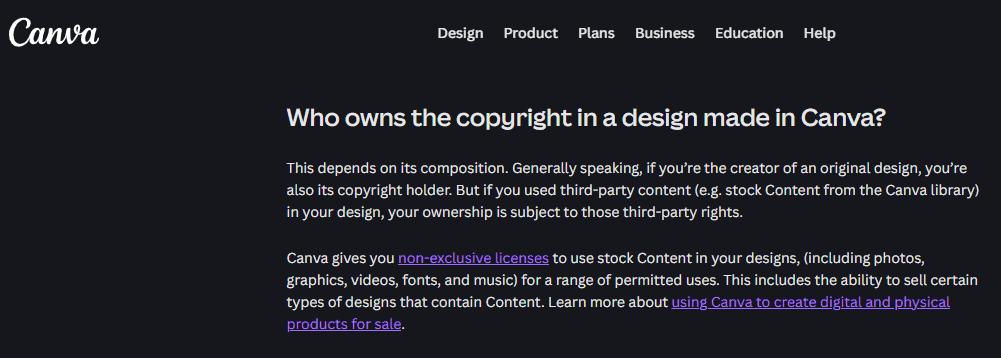
The practical upshot of this is that when someone copies your template, the legal challenge of proving infringement is genuinely complicated. Brand Diplomacy5 summarizes the position well: while you may not be able to copyright the entire design when it incorporates Canva’s licensed elements, copyright protection can still apply to the original elements you contributed. But demonstrating where Canva’s library ends and your originality begins is not a straightforward task in a cease-and-desist letter, let alone a courtroom.
The Originality Problem
Here is the thing that nobody in the Canva creator space wants to say out loud, because it sounds harsh and it is slightly unfair: the platform’s design infrastructure actively produces similarity.
When you sit down to build an Instagram template pack in Canva, you work from the same font menu as the person in Manila doing the same task, and the same as the one in Manchester and the one in Mumbai. You pull from the same element library. You work within the same grid system. The design decisions you make are constrained by what the platform makes available. This does not make your work less creative. But it does mean that aesthetic convergence is built into the system. Two designers working independently, both chasing the same market trend, both using Canva Pro, can end up with something that looks startlingly similar without either one having copied the other.
This is where the community argument gets heated. On forums and in Facebook groups for Canva sellers, you see the same debate cycling through endlessly. One creator posts: my design was stolen. A chorus of supporters agrees. Then a dissenter asks: Are you sure they copied you, or did you both just use the same stock elements? The original poster gets angry. And both sides have a point.
The distinction that matters legally is the one between copying and independent creation. According to Justia6, copyright law provides protection for original works of authorship. If your designs are sufficiently original and were independently created, you may have valid copyright even if the result is similar to another design. The standard is substantial similarity combined with access to the original. Proving both in the context of a design built from shared platform assets is a challenge that even experienced IP attorneys approach with caution.
When Plagiarism Is Obvious
Then there are the cases where the line is not blurry at all.
In March 2023, Manoela Muraro of Your Social Team7 published a public statement that ran to several hundred words and barely contained her fury. She had discovered that a competitor, Carissa Kruse-Fox, a wedding photographer who ran a membership called Wedding-Preneurs Content Club, had distributed several of Your Social Team’s Canva templates to her own paying members. The copies included not just the template designs but also an almost exact reproduction of their product called “99 Caption Templates for Reels,” replicating the name, the price point, and even word-for-word copy from the emails that Muraro’s company sent exclusively to its own subscribers.
Muraro did not mince words.
“She pirated our copyrighted materials and breached her contract with us. It is unlawful to sell or distribute other people’s digital products as your own. Whoever said that copy is the highest form of flattery has clearly never had their hard work blatantly stolen from them.”
This case illustrates a particularly painful variant of the problem. Kruse-Fox had been a paying member of Muraro’s own membership programs. She had legitimate access to the templates as a customer. The theft was not the hack of an outsider; it was the betrayal of an insider. And this is common. In a world where template subscriptions and digital product memberships are popular, customers regularly receive working copies of templates as part of their purchase. The terms of those purchases typically prohibit redistribution. But enforcing those terms against customers scattered across the internet is another matter entirely.
Canva’s Position: Helpful Until It Isn’t
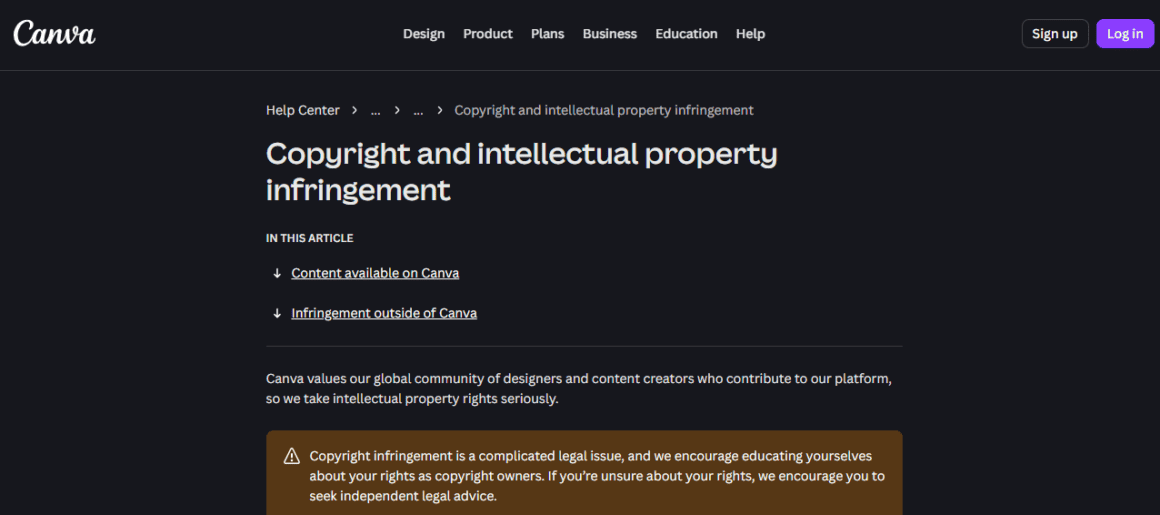
Canva is not indifferent to the plagiarism problem. The platform’s help center states explicitly that it values its global community of designers and content creators, and that it takes intellectual property rights seriously. It processes DMCA takedown notices in accordance with the Digital Millennium Copyright Act. It has a dedicated process for Canva Creators reporting originality concerns about templates through the Creators Support form.
But there is a sentence buried in that help page that stops every creator cold.
“Unfortunately, Canva is unable to assist our community with any infringement of their work that has occurred outside of Canva (e.g., on an online marketplace).”
This is where the rubber meets the road. The vast majority of commercial template sales do not happen inside Canva’s own marketplace. They happen on Etsy, Creative Market, Creative Fabrica, Gumroad, personal websites, and social media. When someone takes your template design from any of those places and reproduces it elsewhere, Canva will not help you. The problem has left the building, and you are on your own.
This is a rational policy for a company that cannot police the entire internet. But it leaves creators in a genuinely difficult position. As Landry Legal PLLC8 notes, adhering to licensing terms is critical for selling designs commercially, but the enforcement infrastructure when those terms are violated by third parties is thin. You can send a DMCA notice to Etsy. You can send a cease-and-desist letter. You can hire a lawyer. All of those things cost time and money that most independent template creators simply do not have in reserve.
The DMCA Hamster Wheel
The DMCA takedown process is the standard first line of defense. It requires you to identify the infringing work, submit a formal notice to the platform hosting it, and wait. If your claim is valid and documented, the platform removes the content. The infringer can then file a counter-notice, at which point you have a choice: escalate to a lawsuit or let it go.
In practice, PPM9 reported that many creators describe the DMCA process as a “depressing hamster wheel of gloom,” a phrase coined by Australian illustrator James Fosdike to describe his experience fighting design theft on Teespring. Every time he got a stolen design removed, new ones appeared. The process of reporting, waiting, confirming removal, and then finding the same design re-uploaded under a different listing consumed hours of his working week. He was effectively unpaid labor for a platform’s moderation queue.
This experience is not unique to Fosdike or to any one platform. In the Bambu Lab forum10, a designer who had filed copyright claims against sellers using their 3D design noted:
“As a small creator I feel nothing will be done.”
Others in that thread described a community approach where multiple users would simultaneously report an infringing listing to increase the pressure on the platform. This is the grassroots copyright enforcement system that creators have built for themselves in the absence of a better one.
On the Etsy Sellers community board11, a template designer described discovering that Etsy had deactivated several of their own original listings, citing policy violations, while competitors with nearly identical products remained visible in search results. The asymmetry stings: the original creator bore the compliance burden while the copycats faced no consequence.
“These are handmade templates that took me several hours to design,” she wrote. “That’s not fair to me.”
The Economics of Theft
It is worth pausing to understand why template theft is so economically rational for bad actors. The digital product economy runs on near-zero marginal cost. Once a template exists, copying and selling it costs nothing except a listing fee. The original creator spent hours, sometimes days, developing the concept, testing the layout, refining the typography, writing the listing copy, and photographing the mockups. The copier spends twenty minutes.
The financial damage can be substantial. Amanda and Frank Mountain, who run Lola Designs in York and create artwork for greetings cards, told the BBC12 that they had lost an estimated £100,000 in sales to design theft. More than 50 of their designs had been stolen and placed on thousands of products sold by third parties.
“It wasn’t just one design here and there. It’s mass industrial copying,” Amanda Mountain said. “There’s a piece of me in every design I do, so it feels like every time someone does this, they’re taking a piece of me.”
The greeting card world is adjacent to the Canva template world, but the economics are identical. Design theft is not a minor nuisance. It is a direct revenue transfer from creator to thief, executed at scale, and largely invisible until the damage is already done.
For Canva creators whose entire income stream flows through template sales, the threat is existential. Research on legal protection of digital design works points to factors that make copyright violation in this space so persistent: the profit motive of bad actors, low barriers to copying, limited awareness of copyright among buyers, and the high cost of enforcement relative to likely recovery. The legal system was designed for an era when creating and distributing a copy of a work required physical infrastructure. Digital products broke that friction entirely.
The Grey Zone of ‘Inspiration’
Let’s be honest about something that gets glossed over in the righteous forum posts: the line between inspiration and plagiarism in graphic design has never been clean. Design has always built on itself. Modernism begat minimalism. Swiss grid systems influenced everything. Every era has its dominant aesthetic, and working designers absorb that aesthetic and work within it.
The Canva template economy is no different. There are categories, niches, and visual languages: the airy botanical wedding invitation pack, the bold sans-serif social media kit for female entrepreneurs, the earth-toned coaching workbook. Any designer entering one of these niches is working in a tradition. They are going to make something that resembles what came before, because that resemblance is what buyers are searching for.
This creates genuine grey zones where a copyright claim might be technically arguable but morally wrong to bring. Copyright law generally does not protect ideas, methods, or general aesthetic approaches, only specific original expressions. You cannot own the concept of a neutral-toned minimalist template. You can own the specific arrangement of elements in your specific version of that template. The problem is that in a crowded niche, specific arrangements converge.
A designer who runs a small but successful Canva template shop on Creative Market and prefers not to be named here stated that she receives messages roughly once a month from other designers accusing her of copying their work.
“Sometimes I look at what they’re showing me and I genuinely cannot see the similarity they’re describing. We both used the same Canva font. We both chose a muted palette. But the layouts are completely different. I’ve never seen their work before. Other times I look and I feel a bit sick, because I can see why they’re upset, even if I’m certain I didn’t copy them.”
This is the texture of the problem. It is not always villains on one side and victims on the other. Sometimes it is two creators who independently converged on the same visual solution, and now they are fighting each other while the platform collects its transaction fees.
What Canva Creators Earn, and What They Risk
The Canva Creators program13 offers a different model from the Etsy route: rather than selling templates directly to end users, creators upload their work to Canva’s marketplace, and they earn royalties each time a Canva user incorporates a template or element in their project. According to Canva’s help documentation14, the royalty amount depends on content performance, meaning download and use rates drive the payout. The appeal is passive income with no customer service obligations. But the risk of having your work replicated by other creators within the same walled garden is, if anything, higher than in external marketplaces.
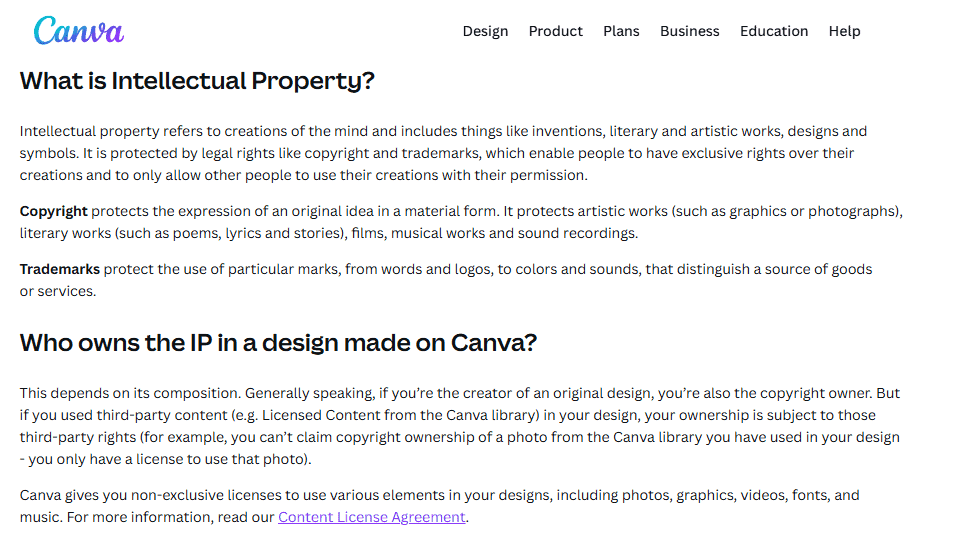
Inside Canva’s platform, the detection of copied templates has its own dedicated process. Canva’s intellectual property policy15 routes originality complaints through the Creators Support form rather than the standard DMCA notice process. This is sensible: template similarity disputes within a platform require human judgment that an automated DMCA workflow cannot provide. But the process is opaque to most creators, and the outcome of submitting a complaint is not guaranteed.
What is particularly galling about the creator-side experience is the asymmetry of consequence. If someone builds a template business on Canva’s marketplace by copying the work of a dozen original creators, they may earn royalties for months before a complaint is filed and investigated. The original creators lose income they will never recover. Any eventual de-listing of the copied templates is prospective, not retrospective. Nobody audits and compensates for what was stolen while the copies were live.
Legal Protection Exists, But It’s Expensive
The formal legal tools available to creators are real but unevenly accessible. Copyright registration with the U.S. Copyright Office provides the strongest protection available: a public record of ownership, eligibility for statutory damages, and the ability to sue for attorney’s fees. Without registration, you can still bring a copyright infringement claim, but your remedies are limited to actual damages, which, in the case of a $15 template with unclear market harm, may not justify the cost of litigation.
The Copyright Claims Board, a smaller-claims tribunal established by the CASE Act of 2020 and operational since 2022, was specifically designed to give individual creators a route to enforcement without the prohibitive cost of federal litigation. Plagiarism Today16 has tracked cases where the CCB has awarded photographers and designers damages in the $1,500 range. That is not a windfall. But for a template creator whose income from a stolen design pack might run to a few thousand dollars, it can represent meaningful enforcement.
The reality for most creators, however, is that they do not register their copyrights in advance. Registration costs money and time, and template sellers produce dozens or hundreds of designs per year. Registering each one is impractical. Group registration options exist but carry their own administrative burdens. And the irony is that the creators who most need registration protection are precisely those building small side businesses who are least likely to invest in legal infrastructure proactively.
As Gold City Ventures17 notes, registering designs before a dispute is the right approach, but it is rarely done when selling printables or digital templates. Most creators only think about registration after the theft has already happened, which limits their options significantly.
The AI Layer
The plagiarism problem was already serious before generative AI entered the picture. Now it has acquired a new dimension that nobody has fully figured out.
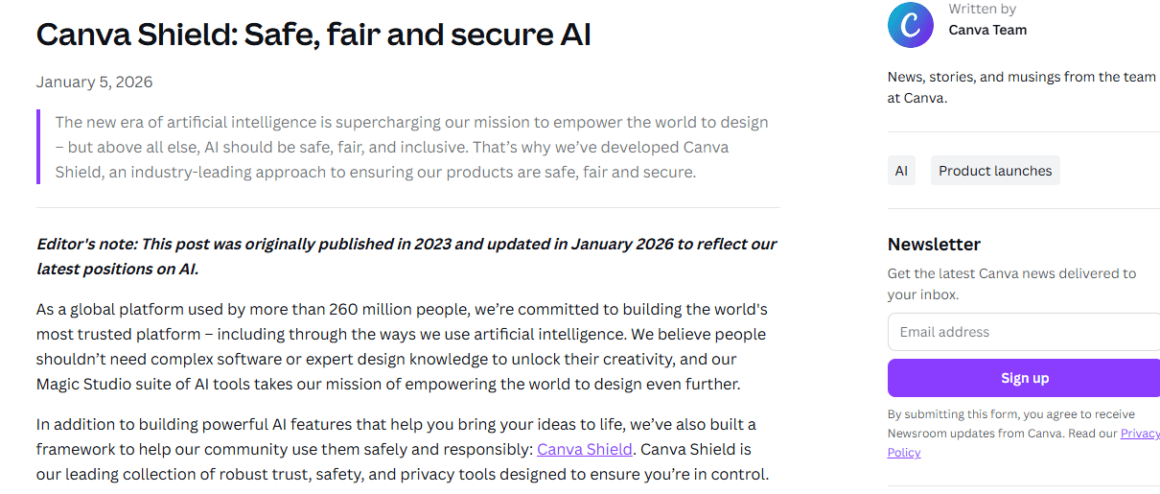
In 2023, Canva launched Magic Studio, its suite of AI-powered design tools. As Plagiarism Today’s18 analysis noted, Canva committed to training its AI systems on its own in-house library of licensed templates and elements rather than scraping creators’ external work. It has promised $200 million over three years to creators who opt in to having their work used for AI training. The opt-in default is protective, but the long-term implications for individual creator styles and aesthetics are still unclear.
The deeper concern is subtler than direct AI copying. If a generative AI trained on thousands of Canva templates can produce a design that closely resembles any individual creator’s distinctive style, the question of attribution and compensation becomes almost unanswerable. Style is not copyrightable. A tool that learns your style and produces near-infinite variations of it without copying any single template does not, technically, infringe your copyright. But it does effectively devalue the uniqueness of what you built.
Canva’s copyright ownership help page addresses AI-created works with a caution: users may be limited in their ability to stop other people from using or copying AI-generated designs. The company recommends seeking local legal advice. That is honest guidance. It is also a signal that the law has not caught up with what the technology can do.
What Creators Are Actually Doing
Talk to template creators long enough, and you realize that the formal legal system is largely not the primary strategy. The primary strategy is community surveillance and public pressure.
Facebook groups devoted to Canva sellers function partly as neighborhood watch programs. When a member spots a suspicious listing, they post screenshots. Others check the same seller for more copies. A coordinated reporting campaign goes out to Etsy, or wherever the listing lives. Social media callout posts warn buyers. The goal is to make theft economically unattractive through reputational damage and platform removal, because legal action is rarely viable.
Watermarking preview images is another common tactic, though copiers increasingly use image editing to remove or crop watermarks. Limiting the editable elements available in the template before purchase helps, too, though it also makes the product less attractive. Some creators register their most commercially important designs with the U.S. Copyright Office, accepting that they cannot register everything, but wanting documented ownership of their flagships.
What does not work is expecting the platforms to fix it for you. Canva itself acknowledges that copyright infringement is a complicated legal issue and encourages creators to educate themselves about their rights and seek independent legal advice. That is a reasonable position for a platform to take, but it is cold comfort when your income is being siphoned by a copier who is betting, correctly, that you lack the resources to pursue them through proper legal channels.
A Structural Problem Without a Structural Solution
The honest conclusion to reach after spending time with this issue is that there is no clean fix available. The plagiarism problem in the Canva template economy is not a bug in the system. It is an emergent property of a design platform that runs on shared assets, combined with a creator economy that runs on digital products with zero marginal cost to copy, combined with a legal system whose enforcement mechanisms are priced beyond the means of most independent creators.
The platforms that host these template sales, Etsy, Creative Market, and Gumroad, are not incentivized to spend heavily on proactive infringement detection. They profit from both the original listing and the copy. Their DMCA processes exist because the law requires them, not because the platforms have an independent interest in policing design originality. Canva’s own marketplace has a dedicated complaints process, but it is reactive, not preventive.
The Copyright Claims Board represents genuine progress, but it requires creators to know it exists, to have registered their works in advance, and to navigate a quasi-judicial process while running their businesses. For a solo designer in a regional city managing an Etsy shop between freelance commissions and family obligations, that is a meaningful ask.
What might actually help? Technology that makes copying detectably different from original creation, perhaps through watermarking embedded in template files rather than visible in images. Stricter identity verification for sellers on major marketplaces, making the theft of someone else’s work carry real-world consequences for real-world people. Platform-level originality checking before listings go live, similar to YouTube’s Content ID system, which flags potentially infringing uploads before they can earn revenue. None of these things exists at scale for template markets today. All of them would require platforms to absorb costs and friction that currently fall entirely on creators.
The Part That Nobody Wants to Acknowledge
There is one more layer to this story that tends to get buried under the more dramatic theft narratives, and I think it deserves a clear look.
The template market is, in many ways, a race to the aesthetic middle. The best-selling Canva template packs tend to track the same dominant design trends simultaneously, because those are the trends that buyers are searching for. Creators who want to sell templates are functionally designing for the same target market using the same platform tools, chasing the same search terms. The convergence is not always malicious. Sometimes it is just the market doing what markets do: selecting for similar solutions to similar problems.
This does not excuse the clear-cut cases of plagiarism. Reproducing someone else’s template and selling it is theft. Joining someone’s membership to access their work and then redistributing it to your own audience is a betrayal that goes beyond design similarity into fraud. The Muraro case is not ambiguous, and neither are the thousands of cases where someone lifts a design wholesale and lists it on a competing marketplace.
But in the grey zone, where template aesthetics converge through independent parallel development, creators would benefit from more honesty about where their designs are genuinely distinctive versus where they are working within a shared visual language that nobody owns. The energy spent on plagiarism accusations that turn on font choices and color palettes could be better spent on developing the genuinely differentiated work that is much harder to copy and much easier to protect.
The template creator who builds a distinctive visual identity, a recognizable style, a niche that is genuinely their own rather than a variation on this month’s trending aesthetic, is harder to copy and better positioned to enforce their rights when copying does occur. That is not a counsel of resignation. It is a practical observation about where the law’s protection actually reaches, and where it does not.
Where Things Stand
Canva will keep growing. The template economy will keep growing with it. The financial incentives that drive design theft are not going away, and the legal and technological infrastructure for stopping it remains inadequate. Creators are building businesses on a platform where the terms of creative ownership are genuinely unclear, where the enforcement tools are costly and slow, and where the platforms that profit from their work bear limited responsibility for protecting it.
The person sitting at their kitchen table, building template packs after the kids are in bed, hoping to turn creative skill into financial independence, deserves better than the current situation. They deserve a clear copyright law that accounts for the specific nature of platform-based design work. They deserve enforcement mechanisms proportionate to their scale. They deserve platforms that take originality seriously before a design goes live, not just after a complaint arrives.
Until those things exist, the playbook remains what it has always been. Document everything. Register your most valuable work. Build community. Watch the search results. Send the DMCA notices. And keep designing work distinctive enough that anyone looking at the copy and the original knows, without question, which came first.
Some fights you win. Some you document and move on from. The creative work itself is the only asset that compounds over time, and no one can take that.
Sources
- “How To Make Money Selling Canva Templates” Kajabi, 3 Mar. 2026, www.kajabi.com/blog/how-to-make-money-selling-canva-templates. Accessed 17 Apr. 2026. ↩︎
- IssueWire, www.issuewire.com/pdf/2025/11/www.issuewire.com/pdf/2025/11/printify-reveals-how-to-effectively-sell-canva-templates-on-etsy-for-digital-income-IssueWire.pdf. Accessed 17 Apr. 2026. ↩︎
- “Canva” www.canva.com/policies/content-license-agreement/. Accessed 17 Apr. 2026. ↩︎
- “Canva” www.canva.com/help/copyright-design-ownership/. Accessed 17 Apr. 2026. ↩︎
- Diplomacy, Brand. “Can I Copyright My Canva Design?” Brand Diplomacy, 7 July 2023, www.branddiplomacy.com/post/can-i-copyright-my-canva-design. Accessed 17 Apr. 2026. ↩︎
- Justia, 10 May 2023, answers.justia.com/question/2023/05/10/i-sell-items-on-etsy-with-designs-i-have-961256. Accessed 17 Apr. 2026. ↩︎
- Muraro, Manoela. “Public Statement re: our digital products being distributed without our authorization — Your Social Team” Your Social Team, 9 May 2023, yoursocial.team/blog/public-statement-digital-products-plagiarism. Accessed 17 Apr. 2026. ↩︎
- Landry, James. “Navigating Copyright and Canva: Ensuring Your Designs Are Legally Compliant” Landry Legal PLLC, 22 Feb. 2024, landrypllc.com/navigating-copyright-and-canva-ensuring-your-designs-are-legally-compliant/. Accessed 17 Apr. 2026. ↩︎
- Abrams, Hannah. “Teespring Has a Stolen Designs Problem” Print & Promo Marketing, 18 July 2018, printandpromomarketing.com/article/teespring-has-a-stolen-designs-problem/. Accessed 17 Apr. 2026. ↩︎
- “Etsy copyright claims, anyone have experience?” Bambu Lab Community Forum, 2 Nov. 2024, forum.bambulab.com/t/etsy-copyright-claims-anyone-have-experience/109225. Accessed 17 Apr. 2026. ↩︎
- “Discussion” Etsy Community, community.etsy.com/t5/Technical-Issues/Etsy-deactivated-a-bunch-of-Canva-templates-I-made-myself/m-p/146045407. Accessed 17 Apr. 2026. ↩︎
- Gerrard, Joe. “York design company loses £100k to online theft” 9 Jan. 2025, www.bbc.com/news/articles/c2exerzwv0eo. Accessed 17 Apr. 2026. ↩︎
- “Canva” www.canva.com/creators/templates/. Accessed 17 Apr. 2026. ↩︎
- “Canva” www.canva.com/help/canva-creators-program/. Accessed 17 Apr. 2026. ↩︎
- “Canva” www.canva.com/policies/intellectual-property-policy/. Accessed 17 Apr. 2026. ↩︎
- Bailey, Jonathan. “Canva Launches New Suite of AI-Powered Design Tools” Plagiarism Today, 4 Oct. 2023, www.plagiarismtoday.com/2023/10/04/canva-launches-new-suite-of-ai-powered-design-tools/. Accessed 17 Apr. 2026. ↩︎
- Gold City Ventures, goldcityventures.com/how-to-protect-your-printable-designs-from-being-copied-or-stolen-a-must-read-guide/. Accessed 17 Apr. 2026. ↩︎
- Bailey, Jonathan. “Canva Launches New Suite of AI-Powered Design Tools” Plagiarism Today, 4 Oct. 2023, www.plagiarismtoday.com/2023/10/04/canva-launches-new-suite-of-ai-powered-design-tools/. Accessed 17 Apr. 2026. ↩︎