


Microsoft’s Xbox gaming division lost $623 million in revenue last quarter. Its CFO demanded profit margins nearly double the industry average. Phil Spencer, a lifelong gamer, couldn’t deliver those numbers without destroying what Xbox stood for. So he left. His replacement is an AI executive and former Instacart COO whose career was built on profitability through cost-cutting. This is the story of how greed, not gaming, is now driving every decision at Xbox.
- Key Takeaways
- What Really Led to Phil Spencer’s Departure From Xbox
- The Sales Slump That Sparked Big Changes at Xbox
- Meet Asha Sharma and What Her Background Means for Xbox
- The People Behind the Numbers: How Profit Pressure Led to 15,000 Xbox Job Losses
- The Game Pass Price Jump That Shook Xbox’s Relationship With Players
- Microsoft’s AI Push and the Backlash That Followed
- Xbox’s AI Future Is Here, and Many Developers and Players Are Not Ready for It
- The Reaction to Asha Sharma’s Appointment
- How Microsoft Manipulates Users Into Accepting AI: Lock-In, Fatigue, Acceptance
- What Might Happen Next
Key Takeaways
• Phil Spencer retired from Xbox after 38 years at Microsoft. He was replaced by Asha Sharma, an AI executive with no gaming background.
• Xbox gaming revenue dropped 9% ($623 million) in the holiday 2025 quarter. Hardware revenue fell 32%.
• Bloomberg reported Microsoft’s CFO imposed a 30% profit margin target on the gaming division
• Microsoft laid off over 15,000 gaming employees between 2024 and 2025, while closing studios that produced award-winning games.
• Game Pass Ultimate’s price was hiked 50% to $29.99/month. An IGN poll found 45% of readers planned to cancel.
• Sharma’s career at Instacart was built on achieving profitability through labor cost-cutting. Her appointment signals that AI-driven cost reduction is coming to Xbox.
• Microsoft’s forced AI integration strategy (Copilot) has faced massive consumer backlash, with “Microslop” trending globally in January 2026.
What Really Led to Phil Spencer’s Departure From Xbox
On February 20, 2026, Microsoft1 announced that Phil Spencer, the public face of Xbox for more than a decade and a 38-year company veteran, was retiring. Xbox President Sarah Bond was also stepping down. Their successor would be Asha Sharma, formerly COO of Instacart and head of Microsoft’s CoreAI division.
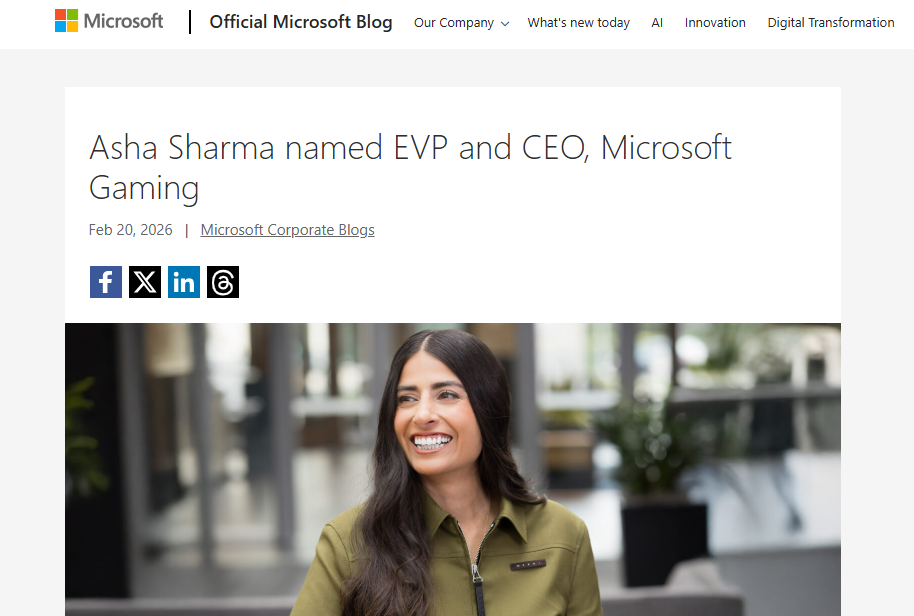
Officially, this was presented as Spencer’s decision. Satya Nadella’s memo said Spencer informed him in “Fall 2025” and the transition was “approached with intention.”
On paper, it sounded orderly. Strategic. Even calm.
But timing matters.
According to CNBC2, by fall 2025, Spencer had already overseen more than 15,000 layoffs across Microsoft. Several Xbox studios had been shut down, including teams behind critically praised titles. High-profile projects were canceled mid-development. Game Pass prices rose by 50 percent, triggering significant subscriber backlash and cancellations. Around the same time, a Bloomberg3 report revealed that CFO Amy Hood had set a 30 percent “accountability margin” target for the gaming division, nearly double the standard margin in much of the games industry.
That number changed everything.
Based on reporting from Kotaku4, Xbox had been under heavy internal pressure to deliver unusually high profit margins. The Gamer put it bluntly, noting that no matter how supportive Spencer appeared publicly, if Microsoft demanded cuts and cancellations, he had little room to resist.
For years, Spencer had positioned himself as a player-first executive. He rebuilt Xbox’s reputation after the troubled Xbox One launch. He championed Game Pass as a value-driven ecosystem. He pushed for major acquisitions like Bethesda and Activision Blizzard to secure long-term content pipelines. His brand was built on trust with players and developers.
But trust does not override spreadsheets.
Once gaming was expected to behave like a high-margin enterprise software unit, the culture shifted. Studios became line items. Subscription growth became the priority metric. Long development cycles, creative risks, and uneven hit rates, all normal in gaming, looked inefficient under a strict margin lens.
At some point, leadership alignment breaks.
Spencer was a gamer running a gaming division. Increasingly, that division was being asked to optimize like a cloud service business. If the mandate became hitting a finance target first and nurturing creative output second, then his job changed in a fundamental way.
Executives rarely say they are pushed out. Companies rarely frame departures as philosophical splits. “Retirement” and “planned transition” are cleaner narratives.
But replacements speak louder than memos.
Asha Sharma’s background is not in game development or console strategy. It is in operations, platforms, and AI products. That signals a shift in priorities. It suggests Microsoft sees Xbox less as a traditional console publisher and more as a technology platform integrated with AI, services, and broader ecosystem plays.
Spencer did not publicly rebel. He did not issue a dramatic statement. He simply stepped away.
Maybe it was exhaustion after years of restructuring and public scrutiny. Maybe it was a disagreement over direction. Maybe it was both.
One thing is clear. When creative leadership collides with financial engineering, one side usually wins. In this case, the spreadsheets appear to have had the final word.
His departure was not just about a person leaving a job. It may have marked the moment Xbox stopped being led by a gamer and started being led by a systems operator.
And that tells you far more about Microsoft’s priorities than any internal memo ever could.
The Sales Slump That Sparked Big Changes at Xbox
To understand why Microsoft made such a dramatic leadership change, you have to look at the numbers.
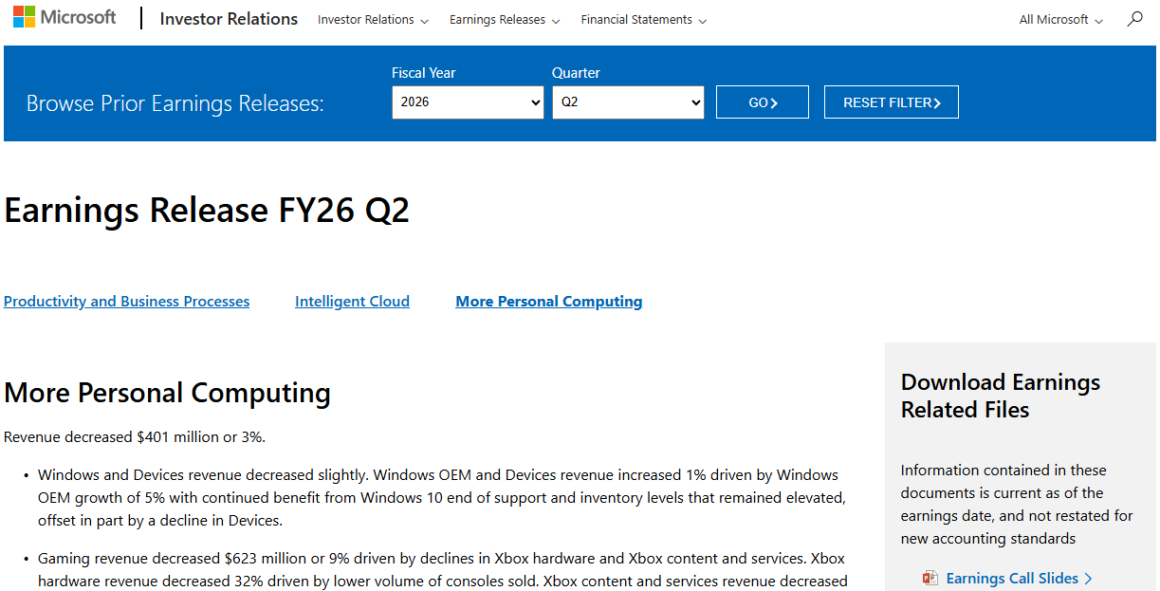
In its Q2 FY2026 earnings report covering October through December 2025, Microsoft5 revealed that Xbox gaming revenue had dropped by 623 million dollars. That is a 9 percent year-over-year decline, bringing total gaming revenue down to 5.96 billion dollars. Hardware revenue fell even harder, plunging 32 percent. Even content and services revenue, which includes Game Pass, slipped by 5 percent. Internally, management described the results as well below expectations.
For a company that prides itself on steady growth, those figures are not minor fluctuations. They are warning signs.
Microsoft also disclosed an impairment charge tied to its gaming division. In simple terms, that means the company admitted that certain gaming assets are no longer expected to generate the returns originally projected. It is an accounting signal that the future does not look as profitable as once hoped.
The 75 Billion Dollar Bet on Activision Blizzard
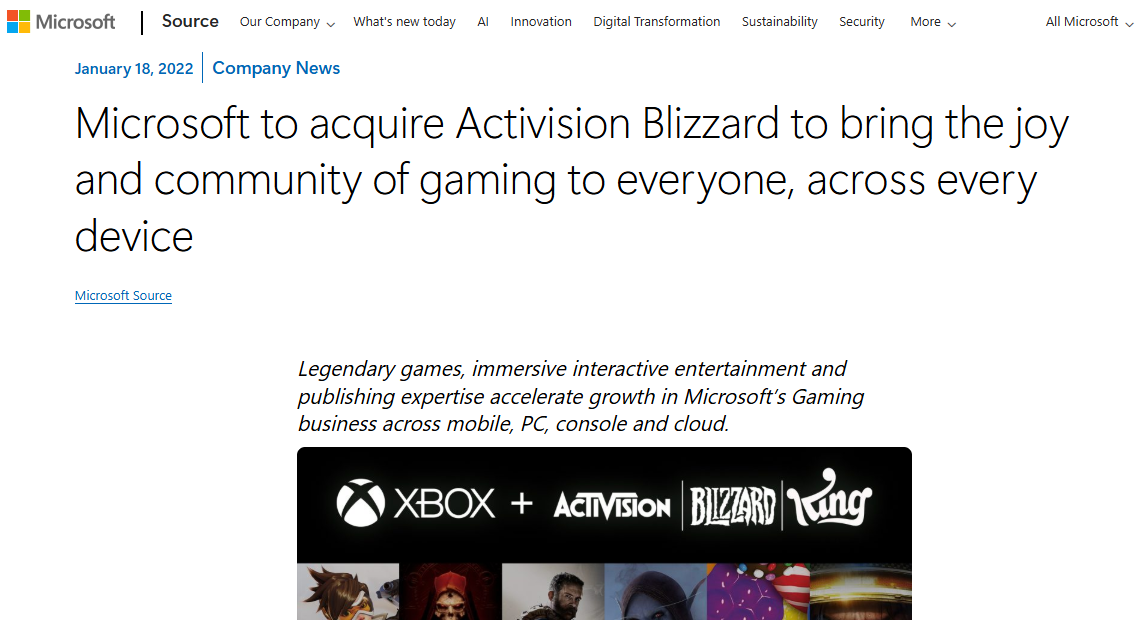
In 2023, Microsoft6 closed its 75 billion dollar acquisition of Activision Blizzard, the largest gaming deal in history. The expectation was clear. This purchase would transform Xbox into a dominant content powerhouse, fueled by franchises like Call of Duty.
But the payoff has not matched the price tag.
Call of Duty: Black Ops 7 underperformed compared to past entries. According to industry tracker Circana7, it ranked only fifth among the year’s best-selling games, trailing competitors like Battlefield 6 and others. On the PlayStation US store, it failed to break into the top five, ending a decade-long streak of Call of Duty titles dominating the platform.
For a franchise considered one of gaming’s safest bets, that shift matters.
The Margin Target That Changed the Conversation
In October 2025, Bloomberg8 reported that Microsoft CFO Amy Hood had imposed a 30 percent accountability margin target on the Xbox division. That figure stood out because it is close to double the average operating margin in much of the gaming industry.
Microsoft later pushed back on the exact percentage, calling the number incorrect. But what followed painted a clear picture. Thousands of layoffs. Studio closures. Canceled projects. A significant Game Pass price increase. These are not the moves of a division investing in long-term creative growth. They are the moves of a division being pushed to meet a financial benchmark.
PC Gamer9 reported that this margin expectation had been in place since at least 2023, noting that recent layoffs and cancellations appeared tied to what it described as a seemingly unachievable target.
All of this unfolded while Microsoft as a whole posted 81.3 billion dollars in quarterly revenue, up 17 percent year over year. CEO Satya Nadella received a 96.5 million dollar compensation package for the fiscal year 2025.
The company is not short on cash. The pressure is not about survival. It is about priorities.
When revenue declines, blockbuster acquisitions underperform, and financial targets tighten, leadership changes rarely happen in isolation. The numbers do not just explain the shift at Xbox. They frame it.
Meet Asha Sharma and What Her Background Means for Xbox
Asha Sharma’s appointment starts to make more sense when you look closely at her track record and what it suggests about Microsoft’s priorities.
Sharma served as COO of Instacart from 2021 to 2023. In that role, she oversaw marketplace operations, logistics, growth, and marketing. Instacart described her as an exceptional operator with a talent for building strong teams in high-growth environments.
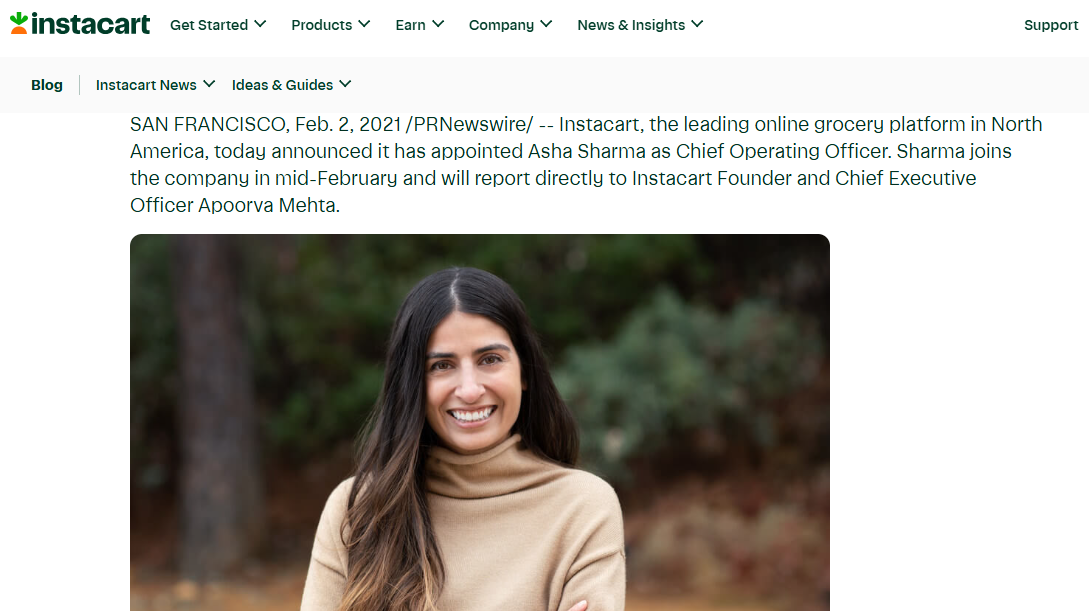
According to reporting from the Sunday Guardian10, she managed a 30 billion dollar plus gross merchandise value P and L and helped guide the company to profitability ahead of its IPO.
That word, profitability, is key.
Instacart’s financial turnaround was important for investors, especially as it prepared to go public in September 2023. But the path there was not smooth. Quartz11 reported that in the lead-up to the IPO, Instacart reduced minimum batch pay for small orders from 7 dollars to 4 dollars. For many of the 600,000 gig workers who handled shopping and deliveries, that translated into immediate income pressure. Strikes followed.
Medium12 reported that the Gig Workers Collective published an open letter accusing Instacart of systematic pay cuts, tip misappropriation, and using algorithms that made worker earnings harder to predict. In 2025, Human Rights Watch13 released a report naming Instacart alongside Uber, Lyft, and DoorDash as companies that unilaterally set pay rates through opaque and constantly shifting algorithmic systems. Fortune14 later reported that Instacart agreed to a 46 million dollar settlement related to the classification of more than 300,000 workers as independent contractors.
From a Wall Street perspective, the company became leaner and more predictable. From a worker’s perspective, the experience was far more contentious.
That history is part of the context surrounding Sharma’s move to Xbox.
She is not a game designer. She has not run a development studio. She has never shipped a major console title. Her expertise lies in operational efficiency, pricing strategy, subscriber growth, and data-driven decision-making. Those skills align closely with a subscription service model like Game Pass, where retention, margins, and cost control are central.
Seen through that lens, the appointment signals less about creative direction and more about financial discipline. Microsoft did not choose a studio visionary or a long-time console executive. It chose an operator known for steering a platform business toward profitability under intense market scrutiny.
The question now is whether that same playbook can work in gaming, an industry driven as much by creative risk and player trust as by balance sheets.
Sharma was not brought in to design the next hit franchise. She was brought in to run a complex platform business. What that means for the future of Xbox will depend on how far operational logic is allowed to shape a creative industry.
The People Behind the Numbers: How Profit Pressure Led to 15,000 Xbox Job Losses
It is easy to talk about margins and quarterly targets. It is much harder to talk about the people who lose their jobs when those targets are not met.
Over the past two years, Microsoft’s gaming division has gone through wave after wave of layoffs and studio closures. By 2025, more than 15,000 gaming-related roles had reportedly been eliminated. For an industry built on creativity and long development cycles, that scale of reduction is not just restructuring. It is a cultural shock.
One moment in particular captured the tension between creative success and corporate math.
In May 2024, the BBC15 reported that Microsoft closed Tango Gameworks, the studio behind Hi Fi Rush. The decision stunned players and developers alike. Hi Fi Rush had won a BAFTA and appeared on numerous year-end top ten lists. Aaron Greenberg, Microsoft’s own VP of Xbox marketing, had called it a breakout hit that met all key measurements and expectations.
Yet the studio was shut down anyway.
Tango was not alone. Arkane Austin, known for Dishonored and Prey, was also closed, along with Alpha Dog Games and Roundhouse Studios. Years of talent and institutional knowledge disappeared almost overnight.
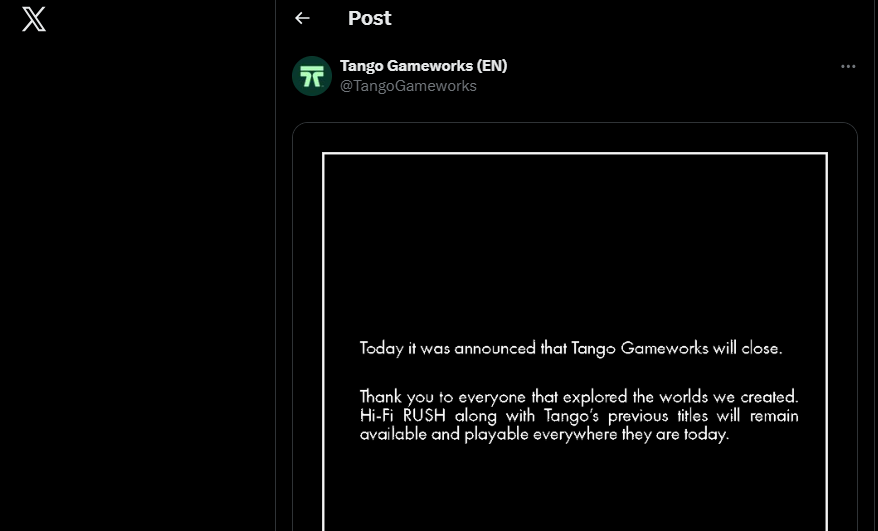
When Bloomberg16 asked Xbox President Sarah Bond why Hi Fi Rush’s apparent success was not enough to save Tango, her response was widely criticized for avoiding specifics.
Industry analyst Nick Schaden later suggested that creative wins may not have aligned with short-term financial projections. In his view, if a sequel pitch or future roadmap did not meet aggressive revenue targets, the studio’s fate was likely sealed.
Whether that interpretation is entirely accurate or not, the broader pattern is clear.
The Layoff Timeline
January 2024: 1,900 gaming employees laid off
May 2024: Tango Gameworks, Arkane Austin, and Alpha Dog Games closed
September 2024: 650 additional Xbox-related cuts
July 2025: More than 9,000 employees were laid off globally in the largest single wave
By the end of 2025: Over 15,000 gaming jobs eliminated
Several major projects were also canceled, including the Perfect Dark reboot, Everwild, and the MMO project known internally as Project Blackbird.
For developers, these were not abstract business moves. They were years of work erased. Teams dissolved. Careers disrupted.
Players felt it too. One viral Reddit post captured the community’s rage:
“They killed the one studio that actually delivered something fresh and successful.”
That sentiment reflected a broader fear that originality was being sacrificed in favor of safer, more predictable returns.
When a company pushes hard toward higher profit margins, costs are examined line by line. In gaming, the highest costs are people and long development timelines. Cutting those costs may improve short-term financial optics. But it can also hollow out the creative engine that makes a platform worth investing in.
Behind every percentage point of margin improvement are designers, artists, engineers, and support staff who helped build the world’s players’ love. The numbers may look cleaner on a balance sheet. The human impact is far messier.
The Game Pass Price Jump That Shook Xbox’s Relationship With Players
For years, Xbox Game Pass was widely seen as one of the best values in gaming. For a flat monthly fee, players could access a large library of titles, including new releases on day one. It was the centerpiece of Xbox’s strategy and a major reason many players stayed loyal to the brand.
That is why the October 1, 2025, price increase hit so hard.
According to The Verge17, Microsoft raised the cost of Game Pass Ultimate by 50 percent, moving it from 19.99 dollars to 29.99 dollars per month. At nearly 360 dollars per year, the subscription suddenly costs more than buying an Xbox Series S outright. At the same time, Microsoft restructured its tiers. Day one access to new releases was limited to Ultimate subscribers, while those on the 14.99 dollar tier could wait up to a year for the same games.
The structure changed. The value calculation changed. And for many players, the trust changed.
Microsoft justified the increase by pointing to added perks such as Ubisoft Plus Classics, Fortnite Crew benefits, and upgraded cloud gaming features. On paper, the bundle looked bigger. But many subscribers did their own math.
One widely shared Reddit comment captured the mood:
“$360 a year is the cost of buying five full-price games at $70 each. I don’t see five Game Pass releases I actually want annually. There’s no savings anymore.”
For longtime subscribers who had joined because it felt like an unbeatable deal, the new pricing felt like a shift from value to extraction.
The backlash was immediate.
An IGN18 poll of more than 10,000 readers found that 45 percent said they would not subscribe at the new price. Only 30 percent planned to continue with Ultimate.

Retailers felt it too. GameStop reportedly continued selling prepaid codes at older prices for a period, and players rushed to stack subscription cards before the increases fully took effect.
Online forums filled with frustration. One Pure Xbox commenter bluntly questioned:
“They’re full of sh*t. Who was asking for a 50% cost increase, some old Ubisoft games and some Fortnite nonsense?”
Some industry observers suggested the move was not accidental. Windows Central’s Jez Corden19 speculated that Microsoft may have anticipated losing hundreds of thousands, possibly even millions, of subscribers but calculated that higher revenue per remaining user would offset the churn. In that view, the increase was not a mistake. It was a deliberate financial decision.
From a business perspective, the strategy may make sense. From a community perspective, it marked a turning point.
Game Pass had been framed as a player-first revolution. The price hike made it feel like a traditional premium subscription service. For millions of gamers, that shift changed the emotional equation. It was no longer just about access to games. It was about whether Xbox still felt like it was on their side.
Microsoft’s AI Push and the Backlash That Followed
The leadership shakeup at Xbox did not happen in a vacuum. It sits inside a much larger shift at Microsoft, one defined by an aggressive push into artificial intelligence.
Over the past two years, Microsoft has woven Copilot into nearly every major product it owns. Windows. Office. Edge. Outlook. Notepad. Paint. File Explorer. Even LG smart TVs and the Windows taskbar. AI has gone from being an optional tool to something that feels built into the walls.
What stood out to many users was not the overwhelming demand. It was the sense that this rollout was mandatory.
PCWorld20 reported on Microsoft’s claim that it introduced Copilot Mode in Edge because it had “heard you wanted Copilot Mode at work.” The response from parts of the IT community was blunt. One professional said that not a single IT admin they knew had asked for it. Another user wrote that if Microsoft truly believed that feedback, it might be operating inside an echo chamber.
The frustration was less about AI itself and more about how it was being inserted everywhere, whether people found it useful or not.
Then came the moment that turned criticism into a viral punchline.
In late December 2025, Satya Nadella published a year-end blog post encouraging readers to move beyond what he called the debate of “slop versus sophistication.” The word “slop” had just been named Merriam-Webster’s21 Word of the Year, referring to low-quality AI-generated content flooding the internet.
Instead of calming the conversation, the post poured fuel on it.
Within hours, the nickname “Microslop” began trending across X, Reddit, Instagram, and LinkedIn. Fast Company22 shared a post declaring that the author would be calling the company MicroSlop for the rest of 2026, which racked up nearly 200,000 views. The term stuck because it captured a growing perception that Microsoft was prioritizing AI volume over AI quality.
The situation became even more awkward when The Information reported that Nadella had privately told engineering managers that certain Copilot integrations, including Gmail and Outlook features, did not work well and were not particularly smart. Public optimism and private skepticism collided in a way that was hard to ignore.
By 2026, Windows Central23 reported that Microsoft was planning to streamline or remove some Copilot integrations in built-in apps like Notepad and Paint, following user pushback. The rollout, once described as bold and forward-looking, was now being characterized as haphazard, with AI buttons added to nearly every surface possible.
The pattern is familiar. A major corporate priority. Rapid deployment. Strong marketing language. Then user resistance.
For many consumers, the frustration is not with AI as a concept. It is with a feeling like unpaid beta testers in a company-wide experiment.
When viewed alongside the changes at Xbox, the Copilot backlash suggests something broader about Microsoft’s direction. The company is moving quickly toward an AI-first future. The question is whether customers, gamers included, feel they are being brought along or simply pushed forward.
That tension now defines not just Windows and Office, but the broader Microsoft brand.
Xbox’s AI Future Is Here, and Many Developers and Players Are Not Ready for It
When Microsoft24 introduced Muse in February 2025, it was not just showing off a new tool. It was revealing where Xbox is headed.
Muse is a generative AI model developed with Ninja Theory. On paper, it is designed to help with game creation. In practice, the reaction was immediate and tense. An official Xbox YouTube video explaining Muse drew around 1,500 dislikes on just 18,000 views. For a platform that once prided itself on close ties with its community, that ratio spoke volumes.
Developers did not hold back.
Multiple AAA developers told Wired the tool was “aimed at shareholders rather than actual developers.” One anonymous developer went even further:
“Nobody will want this. They don’t CARE that nobody will want this.”
That anger was not subtle. It was raw.
Satya Nadella, however, saw something different. Pure Xbox25 reported him describing Muse as a “wow moment” and said he expected Microsoft to build “a catalog of games” using and generated by the model. From a corporate perspective, Muse represents scale and efficiency. From a creative perspective, many fear it represents replacement and dilution.
The timing mattered. High-profile creators across gaming and manga were already criticizing AI-generated creative work. The broader cultural debate over authorship and automation was in full swing. Muse walked straight into that storm.
The Reaction to Asha Sharma’s Appointment
When Asha Sharma was named to lead Xbox, the community response was immediate and skeptical.
The Escapist26 reported that gamers examined her Xbox profile and found an account apparently created just a month before her appointment, with 29 games played but minimal achievements. One commenter described it as “a PR campaign to make her look like a young female version of Phil Spencer.”
Windows Central noted that her social media responses had “drawn ire and accusations that they are AI-generated.” On ixbt.games27, some of the most upvoted reactions included:
“Gaming just unlocked the AI skill tree” and “Xbox is dead.”
Sharma’s opening memo tried to calm those fears. She promised “great games” and said Xbox would “not chase short-term efficiency or flood our ecosystem with soulless AI slop.” It was a direct attempt to address the anxiety.
But as Outlook Respawn28 pointed out,
“Her background means she will be judged on what Xbox actually ships, not on what she promises in a memo.”
That sentence captures the mood perfectly. Trust is no longer automatic. It has to be earned.
How Microsoft Manipulates Users Into Accepting AI: Lock-In, Fatigue, Acceptance
Many critics argue that Microsoft’s broader AI strategy follows a pattern.
First comes lock-in. Xbox users have years of digital purchases, achievements, and social connections tied to the platform. Walking away is not easy.
Then comes fatigue. AI features appear everywhere. Even when users disable them, updates can bring them back. A Remio.ai29 analysis found that “standard ‘Don’t allow’ policies are failing or merely redirecting users to public versions of the tool.”
Finally comes normalization. Features that once felt optional become defaults. Prices adjust. In some regions, Microsoft 365 users saw costs rise to fund Copilot features they never asked for. The controversy around LG smart TVs in late 2025, where Copilot was reportedly force-installed via firmware with no delete option, became a symbol of that concern.
Whether intentional or not, the effect feels the same to many users. They feel pushed, not persuaded.
What Might Happen Next
If current patterns continue, AI will likely become more embedded in Xbox’s development process. Asset generation, testing, localization, and narrative support could increasingly rely on automation. Game Pass tiers may bundle AI features as added value. Future Xbox hardware could blur the line between console and Windows PC, bringing Copilot-style integration directly into the gaming experience.
At the same time, hardware sales have declined, and content revenue has faced pressure. Efficiency becomes the easiest lever to pull. AI promises efficiency.
Developers are not resisting because they dislike innovation. Many are worried about authorship, job security, and the long-term creative health of the industry. A PC Gamer30 report showed that more than half of developers now believe generative AI is bad for gaming. One developer told PC Gamer:
“I’d rather quit the industry than use generative AI.”
Players are frustrated for different reasons. Some feel they are being forced into features they never requested. A Hakia31 analysis highlighted a Reddit discussion with over 15,000 upvotes and 2,200 comments where users said they felt they had “no control of devices I own.”
Cybernews32 summarized the tension bluntly: “Microsoft has a problem: it’s ‘all in’ on AI, but nobody actually wants its poor and annoying AI products.”
Techdirt33 put it even more directly:
“A great way for billionaires like Nadella to diffuse this growing animosity is to, you know, stop doing that.”
The leadership change at Xbox is not just about replacing one executive with another. It reflects a deeper shift in what Microsoft believes gaming should become.
Phil Spencer symbolized a gamer-led era focused on rebuilding trust and growing a platform through content. Asha Sharma arrives with a background in operational efficiency and AI integration.
The tension now is clear. Is Xbox first and foremost a creative ecosystem for players and developers, or is it a platform optimized for margins and automation?
The answer will not come from press releases. It will come from the games that ship, the studios that survive, and the number of players who decide to stay.
Sources
- “Asha Sharma named EVP and CEO, Microsoft Gaming” The Official Microsoft Blog, 20 Feb. 2026, blogs.microsoft.com/blog/2026/02/20/asha-sharma-named-evp-and-ceo-microsoft-gaming/. Accessed 22 Feb. 2026. ↩︎
- Novet, Jordan. “Microsoft laying off about 9,000 employees in latest round of cuts” 2 July 2025, www.cnbc.com/2025/07/02/microsoft-laying-off-about-9000-employees-in-latest-round-of-cuts.html. Accessed 22 Feb. 2026. ↩︎
- “Bloomberg” Are you a robot?, www.bloomberg.com/news/articles/2025-10-23/microsoft-pushes-xbox-studios-to-hit-higher-profit-margins. Accessed 22 Feb. 2026. ↩︎
- Shepard, Kenneth. “Microsoft Reportedly Pushing Xbox To Make Unprecedented Profit” 23 Oct. 2025, kotaku.com/xbox-microsoft-price-hike-game-pass-layoffs-new-console-2000638546. Accessed 22 Feb. 2026. ↩︎
- “FY26 Q2 – More Personal Computing Performance – Investor Relations – Microsoft” Investor Relations, www.microsoft.com/en-us/investor/earnings/fy-2026-q2/more-personal-computing-performance. Accessed 22 Feb. 2026. ↩︎
- Norman, Linda. “One year on: Microsoft’s acquisition of Activision Blizzard is fueling gaming innovation and competition” Microsoft On the Issues, 15 Oct. 2024, blogs.microsoft.com/on-the-issues/2024/10/15/one-year-activision-blizzard/. Accessed 22 Feb. 2026. ↩︎
- “Video Game Industry Consumer Data & Analytics Tools” Circana, www.circana.com/industries/video-games. Accessed 22 Feb. 2026. ↩︎
- “Bloomberg” Are you a robot?, www.bloomberg.com/news/articles/2025-10-23/microsoft-pushes-xbox-studios-to-hit-higher-profit-margins. Accessed 22 Feb. 2026. ↩︎
- Carpenter, Lincoln. “Microsoft executives have been expecting the Xbox division to achieve 30% profit margins—almost double the industry average—since 2023” PC Gamer, 23 Oct. 2025, www.pcgamer.com/gaming-industry/microsoft-executives-have-been-demanding-30-percent-profit-margins-from-the-xbox-division-almost-double-the-industry-average-since-2023/. Accessed 22 Feb. 2026. ↩︎
- Ahmad, Amreen. “Who is Asha Sharma? Everything You Need to Know About Indian-Origin Executive Appointed Microsoft Gaming CEO to Lead Xbox Strategy” 21 Feb. 2026, sundayguardianlive.com/trending/who-is-asha-sharma-everything-you-need-to-know-about-indian-origin-executive-appointed-microsoft-gaming-ceo-to-lead-xbox-strategy-check-net-worth-171541/. Accessed 22 Feb. 2026. ↩︎
- Quartz, qz.com/instacart-goes-public-while-slashing-minimum-pay-rates-1850850616. Accessed 23 Feb. 2026. ↩︎
- Medium, gigworkerscollective.medium.com/deleteinstacart-b1e138ed88f3. Accessed 23 Feb. 2026. ↩︎
- “The Gig Trap” Human Rights Watch, 12 May 2025, www.hrw.org/report/2025/05/12/the-gig-trap/algorithmic-wage-and-labor-exploitation-in-platform-work-in-the-us. Accessed 23 Feb. 2026. ↩︎
- McGlauflin, Paige. “Instacart CEO says its IPO was for employees as the grocery delivery service lets workers sell their stocks” Fortune, 20 Sept. 2023, fortune.com/2023/09/20/instacart-ceo-fidji-simo-ipo-stock-employees/. Accessed 23 Feb. 2026. ↩︎
- Gerken, Tom. “Microsoft axes four game studios including Hi-Fi Rush developer” 7 May 2024, www.bbc.com/news/articles/c72p5epzj2no. Accessed 23 Feb. 2026. ↩︎
- “Bloomberg” Are you a robot?, www.bloomberg.com/news/articles/2025-10-23/microsoft-pushes-xbox-studios-to-hit-higher-profit-margins. Accessed 23 Feb. 2026. ↩︎
- The Verge, www.theverge.com/news/789424/xbox-game-pass-premium-essentials-ultimate-price-increase-changes. Accessed 23 Feb. 2026. ↩︎
- IGN, www.ign.com/articles/cancellations-anger-and-frantic-subscription-stacking-the-internet-reacts-to-microsofts-xbox-game-pass-price-hike. Accessed 23 Feb. 2026. ↩︎
- Corden, Jez. “Why Microsoft’s enshittification of Xbox, Surface, and even Windows itself — are all by design” Windows Central, 3 July 2025, www.windowscentral.com/gaming/xbox/microsoft-has-made-it-impossible-to-be-a-fan. Accessed 23 Feb. 2026. ↩︎
- Dirscherl, Author: Hans-Christian. “’No one asked for this’: Microsoft’s Copilot AI push sparks social media backlash” PCWorld, www.pcworld.com/article/2995972/no-one-asked-for-this-microsofts-copilot-ai-push-sparks-social-media-backlash.html. Accessed 23 Feb. 2026. ↩︎
- “2025 Word of the Year: Slop” Merriam-Webster, 14 Dec. 2025, www.merriam-webster.com/wordplay/word-of-the-year. Accessed 23 Feb. 2026. ↩︎
- “Fastcompany.Com” www.fastcompany.com/91471196/satya-nadella-microsoft-microslop-ai. Accessed 23 Feb. 2026. ↩︎
- Bowden, Zac. “Copilot everywhere? Not for long. Microsoft dialing it back on Windows 11” Windows Central, 30 Jan. 2026, www.windowscentral.com/microsoft/windows-11/microsoft-is-reevaluating-its-ai-efforts-on-windows-11-plans-to-reduce-copilot-integrations-and-evolve-recall. Accessed 23 Feb. 2026. ↩︎
- Hughes, Alyssa. “Introducing Muse: Our first generative AI model designed for gameplay ideation” Microsoft Research, 19 Feb. 2025, www.microsoft.com/en-us/research/blog/introducing-muse-our-first-generative-ai-model-designed-for-gameplay-ideation/. Accessed 23 Feb. 2026. ↩︎
- Gilbert, Fraser. “Microsoft CEO: Xbox’s New AI Model Is A ‘Wow’ Moment, But Great Games Must Be The Focus” Pure Xbox, 24 Feb. 2025, www.purexbox.com/news/2025/02/microsoft-ceo-xboxs-new-ai-model-is-a-wow-moment-but-great-games-must-be-the-focus. Accessed 23 Feb. 2026. ↩︎
- The Escapist, www.escapistmagazine.com/news-is-asha-sharma-a-fake-gamer/. Accessed 23 Feb. 2026. ↩︎
- “DDoS-Guard” 21 Feb. 2026, ixbt.games/en/news/2026/02/21/asa-sarma-v-xbox-igroki-predrekaiut-konec-epoxi-konsolei-microsoft.html. Accessed 23 Feb. 2026. ↩︎
- “New Xbox CEO Asha Sharma Promises No “Soulless AI Slop” in First Statement to Staff” Outlook Respawn, 21 Feb. 2026, respawn.outlookindia.com/gaming/gaming-news/xboxs-new-ceo-promises-no-ai-slop-on-her-very-first-day-out. Accessed 23 Feb. 2026. ↩︎
- Johnson, Olivia. “Microsoft Copilot Forced Integration: The Reality of the Backlash” Remio, 12 Dec. 2025, www.remio.ai/post/microsoft-copilot-forced-integration-the-reality-of-the-backlash. Accessed 23 Feb. 2026. ↩︎
- Wilde, Tyler. “Over 50% of game developers now think generative AI is bad for the industry, a dramatic increase from just 2 years ago: ‘I’d rather quit the industry than use generative AI’” PC Gamer, 29 Jan. 2026, www.pcgamer.com/gaming-industry/more-than-half-of-game-developers-now-think-generative-ai-is-bad-for-the-industry-a-dramatic-increase-from-just-2-years-ago-id-rather-quit-the-industry-than-use-generative-ai/. Accessed 23 Feb. 2026. ↩︎
- “Why Microsoft’s AI Struggles Are a Masterclass for Developers” Hakia, hakia.com/news/microsoft-copilot-adoption-challenges/. Accessed 23 Feb. 2026. ↩︎
- Cyber News, cybernews.com/ai-news/microsoft-ai-microslop-copilot/. Accessed 23 Feb. 2026. ↩︎
- Mon. “Microsoft CEO Laments Criticism Of “AI Slop,” Causing The Whole Internet To Double Down On Criticism Of “Microslop”” Techdirt, 12 Jan. 2026, www.techdirt.com/2026/01/12/microsoft-ceo-laments-criticism-of-ai-slop-causing-the-whole-internet-to-double-down-on-criticism-of-microslop/. Accessed 23 Feb. 2026. ↩︎


