
I remember the first time I heard the phrase Discovery Mode. It sounded harmless. Almost optimistic. It felt like something designed for musicians who were tired of shouting into the digital void.
- What Spotify Discovery Mode Actually Is: The Algorithmic Mechanics behind Promotion
- Reduced Royalties as Promotion Fees
- The Rise of Algorithmic Pay-to-play
- A Growing Revenue Stream for Spotify
- The Prisoner’s Dilemma of Streaming Promotion
- The Invisible Impact on Collaborators and the Listener Experience
- The Future of Music Discovery: The Price of Algorithmic Attention
In theory, it promised a simple trade. Artists could signal to Spotify that certain songs mattered to them. The algorithm would then consider that signal when deciding what to recommend. The catch was subtle. Spotify would take a larger cut of royalties from those promoted streams.
That trade looks small on paper. But once you step back and look at the ecosystem around it, Discovery Mode starts to resemble something much older than streaming. It looks like payola.
Only now the payment flows through an algorithm.
The moment music promotion became an algorithmic game
Streaming changed the power structure of music. When radio dominated, promotion meant persuading programmers. When blogs ruled, it meant convincing writers. On streaming platforms, the gatekeeper is code.
Spotify built an empire on that promise. Its algorithms sort billions of songs into personalized listening sessions that feel almost magical. Listeners open the app, and music appears that seems to match their mood. That magic hides a complicated system of signals and incentives.
When Discovery Mode arrived, Spotify described it as a promotional tool that does not require upfront payment. Instead of charging artists directly, the platform takes a commission from the royalties generated by promoted streams. According to Spotify1 documentation, the commission is about 30 percent on streams generated in Discovery Mode contexts such as Radio or Autoplay.
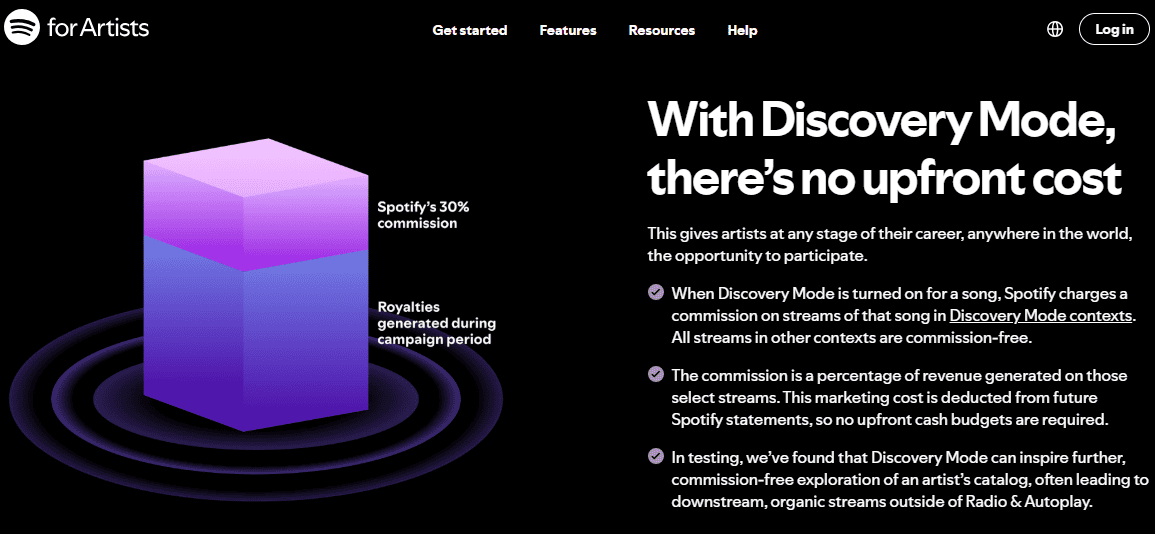
That phrasing matters. Spotify does not call it advertising. It calls it a promotional recording royalty rate.
Yet functionally, the system behaves like a promotion fee. The artist gives up a portion of their earnings in exchange for greater visibility in algorithmic recommendations.
In other words, the algorithm has a tollbooth.
For years, Spotify marketed itself as the great democratizer of music. Any artist could upload a song and reach the world. The algorithm would do the rest.
That promise helped build the largest streaming service on the planet. As of 2024, Spotify2 reported more than 600 million users globally, including over 230 million paying subscribers. Millions of artists depend on the platform for exposure and income.
But the economics behind discovery have changed. In 2020, Spotify3 introduced a program called Discovery Mode, described as an audience development tool. At first glance, it sounded simple. Artists could signal which tracks mattered most to them. The algorithm would give those songs more opportunities in recommendation systems.
The cost was subtle but real. Artists who participate accept lower royalties on certain streams in exchange for algorithmic promotion.
On the surface, it looks like a marketing feature. In practice, it functions as something more complicated. Discovery Mode has effectively created a system where musicians pay for visibility using their own streaming revenue.
That shift raises a deeper question about the future of music platforms. If discoverability itself becomes a commodity, then the algorithm is no longer just a curator. It becomes a marketplace.
What Spotify Discovery Mode Actually Is: The Algorithmic Mechanics behind Promotion
Spotify Discovery Mode launched publicly after a beta period that began in late 2020. The program allows artists and labels to opt specific tracks into promotional campaigns inside Spotify’s recommendation ecosystem.
Instead of paying an upfront advertising fee, artists agree to accept a reduced royalty rate for streams generated in Discovery Mode contexts. According to Spotify Support, the platform applies a 30 percent commission to recording royalties from streams that occur through Discovery Mode placements, particularly in Radio and Autoplay recommendations.
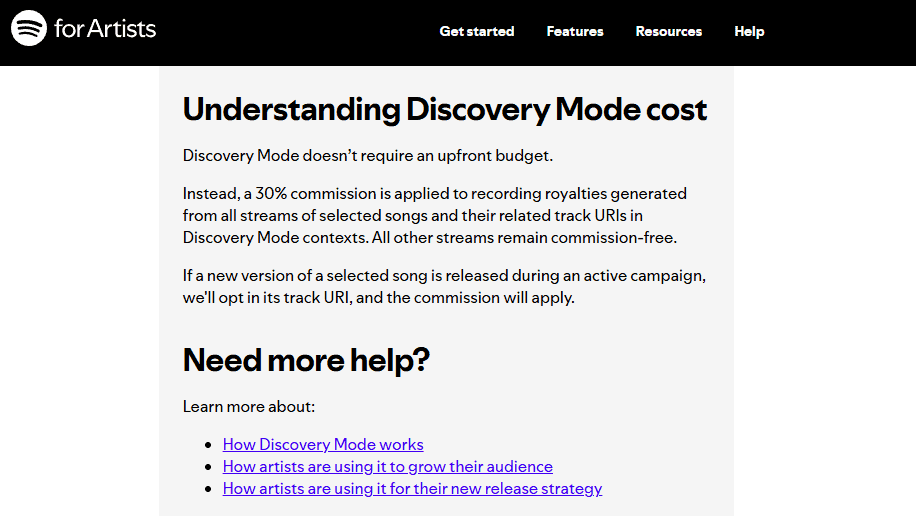
If a listener later streams the same song from a playlist, library, or search result, the artist receives the normal royalty rate. Only streams generated through Discovery Mode’s promotional contexts are affected.
The model is unusual compared with traditional advertising. Most digital marketing systems require an upfront payment. Discovery Mode works in reverse. Spotify takes its promotional fee from the artist’s future royalties.
In simple terms, the platform is not selling advertising space. It is selling algorithmic attention.
To understand why Discovery Mode matters, it helps to look at how Spotify’s recommendation engine works.
Much of listening on Spotify does not come from direct searches. It comes from algorithmic discovery tools such as Radio, Autoplay, Discover Weekly, and personalized mixes. These recommendation systems analyze listening history, engagement patterns, and behavioral signals to decide which songs appear next.
Discovery Mode injects a promotional signal into that system.
When an artist enrolls a track, Spotify’s algorithm prioritizes it in certain personalized listening environments where users are likely to encounter new music. These include Radio sessions, Autoplay queues, and algorithmically generated mixes.
Spotify still claims that listener taste determines final recommendations. But the presence of a promotional signal means some songs enter the recommendation pool with an advantage.
The results can be significant. According to The Guardian’s4 report, songs enrolled in Discovery Mode campaigns have shown about 50 percent increases in saves, 44 percent increases in playlist additions, and roughly 37 percent increases in artist follows during early campaign periods.
Those engagement boosts are the core selling point of the program. For artists struggling to break through algorithmic noise, Discovery Mode offers the possibility of faster discovery.
But those gains come at a cost.
Reduced Royalties as Promotion Fees
Streaming royalties are already small by design. The streaming economy distributes subscription and advertising revenue across a massive pool of songs. That revenue is then divided based on each track’s share of total streams. After labels, distributors, and collaborators take their cuts, the amount that reaches the artist can be very small.
iMusician5 estimates that Spotify pays an average of about $0.003 to $0.005 per stream to rights holders, though the exact figure varies by territory, subscription type, and licensing agreements. The important point is that the payout is already measured in fractions of a cent.
Discovery Mode reduces that number further for streams that occur through its promotional contexts.
Under the program, artists or labels opt specific songs into algorithmic promotion. If a listener hears that song through Spotify Radio or Autoplay and the stream is attributed to the Discovery Mode campaign, Spotify takes a 30 percent commission from the recording royalty associated with that stream.
To understand the impact, consider a simplified example. If an independent artist receives about $0.004 per stream under a normal royalty rate, a Discovery Mode stream would drop that payout to about $0.0028 after the 30 percent commission.
On an individual play, the difference looks trivial. The gap between $0.004 and $0.0028 is only a fraction of a cent. But streaming economics operate at a massive scale.
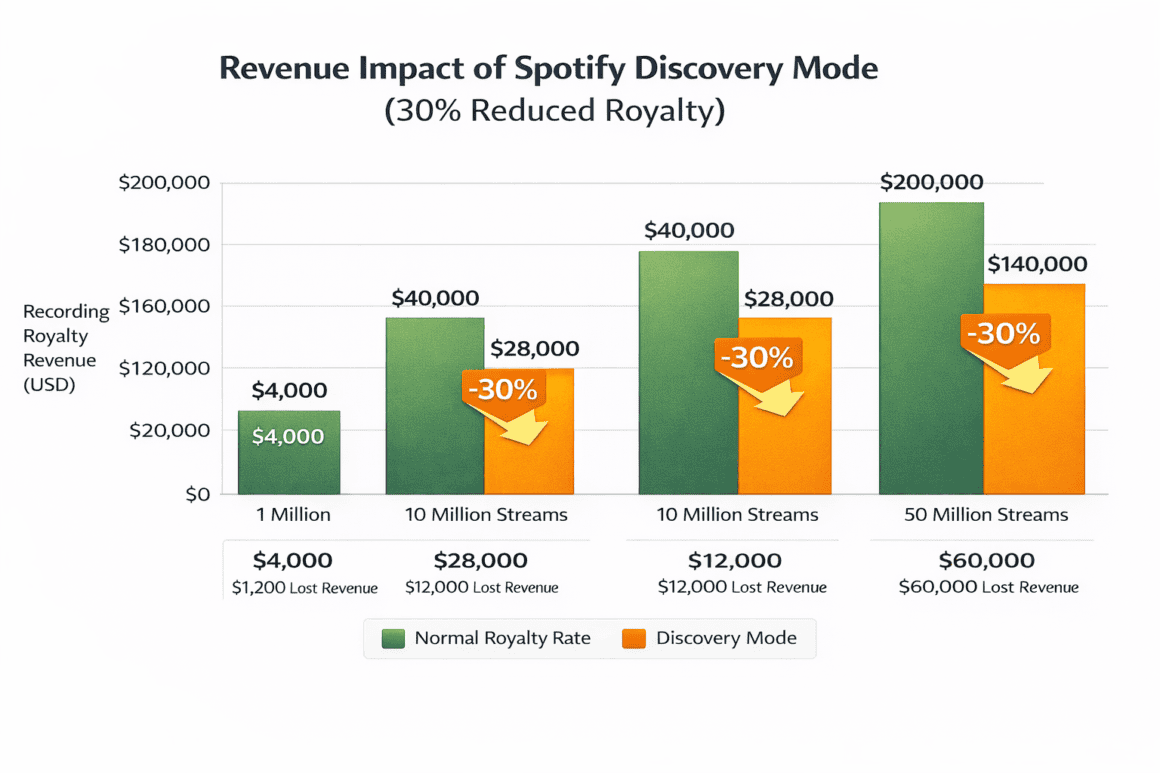
A song that reaches one million streams at $0.004 per play generates about $4,000 in recording royalties before distributor and collaborator splits. If all of those streams came through Discovery Mode contexts with a 30 percent reduction, the payout would drop to about $2,800.
At ten million streams, the difference grows to roughly $12,000. At fifty million streams, the reduction would approach $60,000. For artists who rely heavily on algorithmic discovery tools, those numbers are no longer abstract.
Another layer complicates the picture. Discovery Mode does not affect all listening sessions equally. The reduced royalty rate applies only to streams generated through specific algorithmic environments such as Radio and Autoplay. If listeners later stream the track through playlists, searches, or their personal library, the normal royalty rate applies.
Spotify’s argument is that the extra exposure generated by the program can create downstream listening. A listener might encounter a song through Discovery Mode, add it to a playlist, and then stream it repeatedly later at the standard rate.
From Spotify’s perspective, that chain of discovery justifies the lower payout on the initial promotional streams.
Critics see the economics differently. They argue that Discovery Mode effectively converts streaming royalties into marketing budgets. Instead of paying for advertising upfront, artists pay for promotion indirectly by giving up a portion of their revenue.
Advocacy groups have attempted to estimate how large that shift could become if algorithmic promotion expands across the industry. Wintrends6 2022 report modeled a scenario where algorithmically driven streams eventually account for half of all listening and where those streams carry a 30 percent royalty reduction. Under those conditions, the report estimated that global artist payouts could decline by more than $1 billion annually.
The report was hypothetical, but it highlighted the scale of the issue. Streaming platforms process billions of plays every day. Even small changes to royalty rates can produce enormous financial effects when applied across the entire ecosystem.
Supporters of Discovery Mode respond that the model reflects a familiar reality of the music business. Artists have always invested money in promotion. In earlier eras, that meant hiring publicists, paying for radio campaigns, or funding tour marketing. Discovery Mode simply shifts that spending into the platform itself.
The difference is that the payment mechanism is built directly into the royalty system. Instead of writing a check for promotion, artists accept lower earnings from the streams that promotion generates.
This structure creates a subtle psychological effect. A reduced payout on a stream feels less tangible than a marketing bill. The artist never sees the money that would have been earned at the higher rate.
Yet from an economic perspective, the effect is the same. Visibility inside the recommendation algorithm carries a price. The platform collects that price through a percentage of the revenue that streams would otherwise generate.
In that sense, Discovery Mode introduces a new layer to the streaming economy. Royalties are no longer just a measure of listening activity. They also function as a currency that artists can spend in exchange for algorithmic exposure.
The Rise of Algorithmic Pay-to-play
The controversy surrounding Discovery Mode stems from comparisons with an older music industry scandal.
According to The New York Times7, in the 1950s, radio broadcasters were investigated for payola. Record labels secretly paid DJs to play specific songs. The practice distorted the charts and misled listeners about which music was truly popular.
The United States government eventually banned undisclosed payola in broadcasting.
Discovery Mode is not identical to that system. No cash payments change hands between labels and Spotify. Instead, artists accept lower royalties in exchange for increased algorithmic exposure.
Still, some critics see parallels.
Forbes8 described Discovery Mode as a system where artists accept reduced royalties for algorithmic promotion that listeners cannot easily identify as sponsored.
Because Spotify does not label promoted tracks within recommendation feeds, listeners typically have no way to know whether a song was surfaced organically or influenced by a promotional signal.
Spotify’s Safety and Privacy Center9 has responded that many factors influence recommendations, including user behavior, metadata, and commercial considerations.
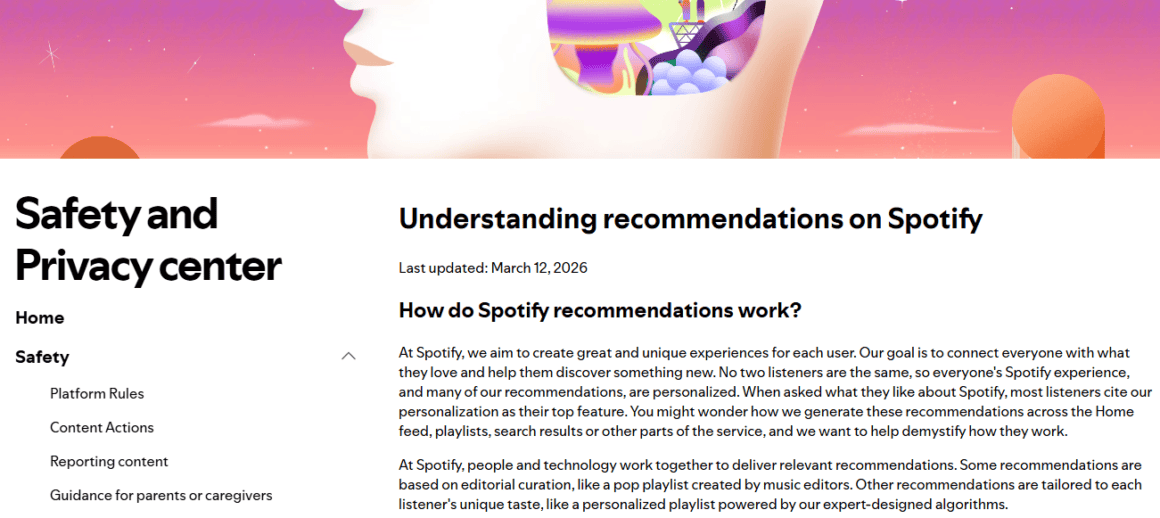
The debate reflects a larger question about algorithmic platforms. When promotion and recommendation merge, transparency becomes difficult.
A Growing Revenue Stream for Spotify
Discovery Mode has also become a meaningful business line for Spotify.
The Guardian10 showed that Discovery Mode generated €61.4 million in gross profit between May 2022 and May 2023.
The same internal data indicated €6.6 million in gross profit in May 2023 alone.
Much of that revenue came from independent and DIY artists rather than major labels.
By 2023, Spotify employees celebrated a milestone showing that more than 50 percent of “Tier 2–3 artists” had tried Discovery Mode. These tiers were internally defined as artists earning about $50,000 to $500,000 in annual royalties.
An internal message quoted in the reporting stated:
“Surpassing 50% felt beyond our wildest dreams.”
Those figures suggest Discovery Mode has moved beyond a small experimental tool. It has become a significant part of Spotify’s monetization strategy around discovery.
The official statistics tell only part of the story. In musician forums, the reaction to Discovery Mode is mixed.
Some artists describe dramatic increases in streaming numbers after opting in. Others report modest gains or even declining revenue.
On one Reddit thread discussing the feature, a musician explained the tradeoff in simple terms.
“Spotify will keep 30% of the revenue, but will push your songs more on radio and mixes.”
Another artist shared performance numbers from a test campaign.
“Out of 715k monthly streams about 25k were from discovery mode.”
The comments reveal a recurring theme. Discovery Mode can boost reach, but the financial impact varies widely depending on engagement and listener behavior.
Some artists say it functions like a useful marketing experiment. Others believe it pressures musicians into sacrificing revenue just to maintain visibility.
The Prisoner’s Dilemma of Streaming Promotion
The deeper concern around Discovery Mode is not simply the royalty cut. It is the competitive pressure the system creates.
If many artists use Discovery Mode, algorithmic recommendations may increasingly favor promoted tracks. Artists who decline participation could lose visibility relative to competitors.
This dynamic resembles a classic prisoner’s dilemma. Individually, it may make sense for artists to accept lower royalties in exchange for exposure. Collectively, the industry could see declining payouts as more musicians opt in.
Critics have described this effect as a form of algorithmic coercion. Once promotion becomes integrated into the recommendation system, participation may shift from optional to necessary.
Data from Music Pulse11 suggests the role of algorithmic discovery is already expanding. Research from music analytics firm Luminate indicates that algorithmic sources accounted for about 31 percent of Spotify listening in 2023 and roughly 38 percent by 2025. As personalized feeds increasingly replace manual search and library listening, analysts expect recommendation systems to shape an even larger share of streaming consumption in the coming years.
If those projections hold true, promotional signals inside the algorithm could influence a large share of the platform’s listening activity.
The Invisible Impact on Collaborators and the Listener Experience
One of the least discussed consequences of Discovery Mode is who actually absorbs the cost of the reduced royalty rate. The conversation around the program often focuses on the artist who enrolls in a track. In reality, the financial effect spreads much further across the recording ecosystem.
Streaming revenue is rarely paid to a single person. A typical recording involves a network of contributors who all receive a share of royalties. Producers often negotiate points on the master recording. Featured artists receive contractual percentages. Labels take their share depending on the deal structure. Distributors and managers may also participate in the revenue stream.
Industry contract structures vary widely, but it is common for recording royalties to be split among several stakeholders before the primary artist receives their final portion. When a track is enrolled in Discovery Mode, the reduced royalty rate applies to the entire recording royalty associated with those streams.
That means every participant in the royalty pool is affected by the decision.
Gavin Gottlich12 raised this concern publicly when the program expanded. He noted that the decision to opt for a song in Discovery Mode often sits with a label or rights holder rather than the full creative team. The royalty reduction still affects everyone who participated in the recording. As he wrote in a widely circulated post,
“If a track is enrolled in Discovery Mode, every royalty participant gets paid less for those streams, whether they agreed to the promotion or not.”
For independent musicians who collaborate frequently, that dynamic can become complicated. A producer who negotiated a percentage of master royalties may see their earnings drop even though they had no say in the promotional strategy. Featured artists may also receive lower payouts from streams they helped generate.
This is not unusual in the broader music business. Marketing decisions have always affected revenue outcomes. But Discovery Mode embeds that marketing decision directly into the royalty structure itself. The promotional choice and the payout calculation become the same mechanism.
Some independent artists say the tradeoff is manageable if the promotional exposure leads to new fans who later stream the rest of the catalog at the standard royalty rate. Others worry that collaborators might object to having their revenue reduced without direct approval.
The impact becomes clearer when the math is applied to collaborative releases. Imagine a track that earns $10,000 in recording royalties from a large streaming campaign. If half of those streams occur through Discovery Mode contexts with the 30 percent reduction, the royalty pool for those plays shrinks before any splits are distributed.
Every participant in the deal receives less than expected.
For small teams working on independent releases, that reduction can matter. Streaming revenue may already be divided among multiple collaborators. A lower base payout reduces every slice of the pie.
Yet while collaborators can see the difference in their royalty statements, listeners remain largely unaware that the promotional system exists.
One of the most striking aspects of Discovery Mode is its invisibility to the audience. Spotify does not mark or label songs that are promoted through the program. When a track appears in Radio or Autoplay recommendations, the listener receives no indication that the artist has accepted a lower royalty rate in exchange for algorithmic promotion.
The recommendation looks exactly like any other algorithmic suggestion.
This design preserves the seamless experience that made Spotify popular in the first place. The platform built its reputation on personalized discovery. Users open the app, and music appears that seems to match their taste perfectly.
If promotional signals were clearly labeled, that sense of organic discovery might feel different.
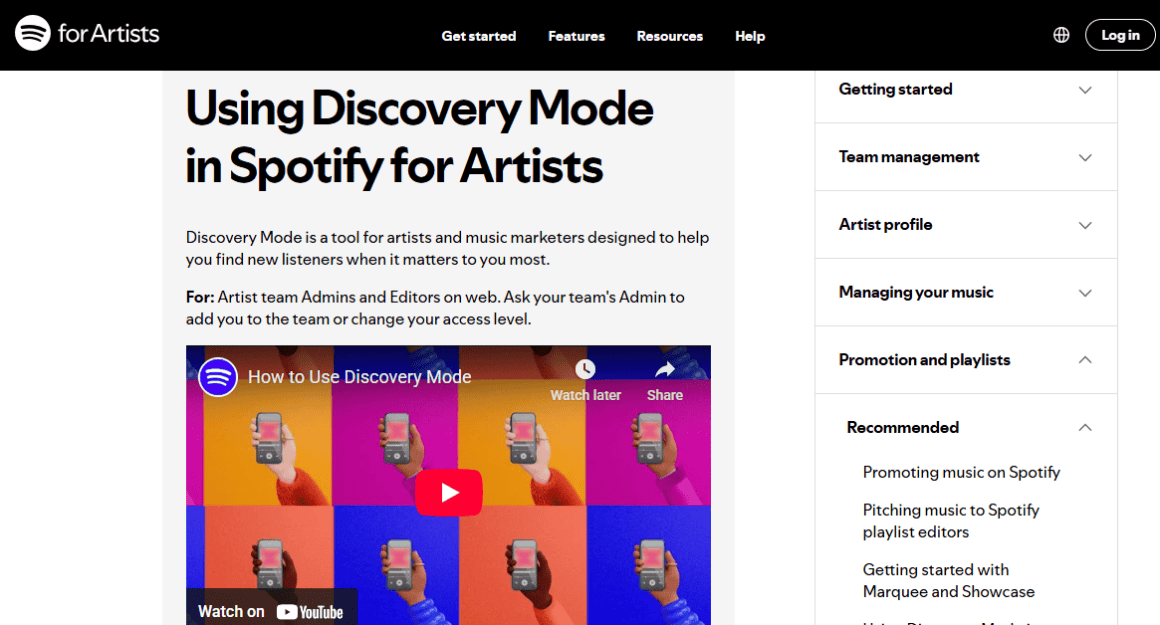
Spotify13 has acknowledged that many factors influence its recommendation systems, including listening behavior, metadata, and editorial inputs. Discovery Mode simply adds another signal into that mix. The company maintains that the algorithm still prioritizes listener satisfaction and engagement above all else.
Critics argue that the lack of transparency creates a grey area between recommendation and promotion. In traditional advertising environments, paid placement usually carries a disclosure. Sponsored posts on social media are labeled as promoted content. Paid search results on Google appear with an ad tag.
Streaming recommendation systems operate differently. Songs promoted through Discovery Mode blend seamlessly into algorithmic feeds.
A report examining algorithmic promotion14 in streaming pointed out that listeners rarely realize how much of their music discovery is mediated by automated recommendation systems. When promotional signals are layered into those systems without visible labels, it becomes difficult for listeners to distinguish between organic popularity and platform-driven exposure.
Some observers believe this invisibility is intentional. The value of recommendation engines depends on trust. If listeners believe the algorithm is guiding them toward music that fits their taste, they continue listening. If the system begins to feel like a marketplace where promotion dominates discovery, the experience could lose some of its appeal.
Others argue that the distinction may not matter to most users. From a listener’s perspective, the only real test of a recommendation is whether the song sounds good.
If the track resonates, the listener may save it, follow the artist, or add the song to a playlist. If it does not resonate, they skip it, and the algorithm adjusts.
But even if listeners do not notice the promotional layer, the economics behind that layer continue shaping the music ecosystem.
Discovery Mode shows how deeply recommendation systems now influence the business of music. The algorithm decides which songs appear in front of listeners. The promotional system allows artists to tilt that decision slightly in their favor.
The audience hears a seamless stream of music.
Behind the scenes, every play is part of a negotiation between visibility and revenue.
The Future of Music Discovery: The Price of Algorithmic Attention
Discovery Mode reflects a broader trend across digital platforms. Visibility itself has become a product.
On social media, creators pay for promoted posts. On video platforms, creators pay for ads or algorithmic boosts. Music streaming is beginning to follow the same model.
Instead of charging artists upfront, Spotify embedded the cost inside the royalty system. Artists pay for promotion with the revenue they would otherwise receive from their streams.
For Spotify, the model is efficient. The platform gains a new income stream while preserving the appearance of organic discovery. For musicians, the calculation is more complicated.
Exposure has always been valuable in the music industry. The question now is whether exposure should come at the cost of the royalties artists already struggle to earn.
The story of Spotify Discovery Mode is not simply about one promotional tool. It is about the transformation of music discovery itself.
Streaming platforms promised to remove gatekeepers from the music industry. In many ways, they did. Anyone can upload a song. But new gatekeepers emerged in the form of algorithms.
Discovery Mode reveals that even algorithms have economics. Visibility inside recommendation systems has become something artists can buy, even if the payment arrives later through reduced royalties. For listeners, the music still flows seamlessly from one track to the next. For artists, the system increasingly resembles a marketplace where attention has a price.
And the algorithm is collecting the toll.
Sources:
- “Discovery Mode – Spotify for Artists” artists.spotify.com/discovery-mode. Accessed 14 Mar. 2026. ↩︎
- “Spotify Reports Fourth Quarter 2024 Earnings — Spotify” 4 Feb. 2025, newsroom.spotify.com/2025-02-04/spotify-reports-fourth-quarter-2024-earnings/. Accessed 14 Mar. 2026. ↩︎
- Naomi. “Spotify Shares Our Vision To Become the World’s Creator Platform — Spotify” 8 June 2022, newsroom.spotify.com/2022-06-08/spotify-shares-our-vision-to-become-the-worlds-creator-platform/. Accessed 14 Mar. 2026. ↩︎
- “The music industry is engineering artist popularity – listeners are right to be angry” The Guardian, 29 July 2024, www.theguardian.com/music/article/2024/jul/29/the-music-industry-is-engineering-artist-popularity-and-listeners-are-right-to-be-angry. Accessed 14 Mar. 2026. ↩︎
- “How Much Does Spotify Pay Per Stream” IMusician, imusician.pro/en/resources/blog/how-much-does-spotify-pay-per-stream. Accessed 14 Mar. 2026. ↩︎
- 13 May 2022, Wintrends, winformusic.org/mp-files/winformusic.org/mp-files/wintrends-2022.pdf. Accessed 14 Mar. 2026. ↩︎
- “Nytimes.Com” 25 May 2002, www.nytimes.com/2002/05/25/arts/charges-of-payola-over-radio-music.html. Accessed 14 Mar. 2026. ↩︎
- “Forbes.Com” 5 Nov. 2025, www.forbes.com/sites/conormurray/2025/11/05/spotify-hit-with-class-action-lawsuit-alleging-discovery-mode-is-a-pay-for-play-scheme/. Accessed 14 Mar. 2026. ↩︎
- “Safety and Privacy center” www.spotify.com/in-en/safetyandprivacy/understanding-recommendations. Accessed 14 Mar. 2026. ↩︎
- Pelly, Liz. “Pay to get playlisted? The accusations against Spotify’s Discovery Mode” The Guardian, 19 Feb. 2025, www.theguardian.com/music/2025/feb/19/spotify-discovery-mode-payola-playlist. Accessed 14 Mar. 2026. ↩︎
- “How the Spotify Algorithm Really Works in 2026” MusicPulse, 24 Feb. 2026, www.musicpulse.app/en/blog/how-the-spotify-algorithm-really-works-in-2026/. Accessed 14 Mar. 2026. ↩︎
- Gottlich, Gavin. “Spotify’s Discovery Mode: A Hidden Cost for Artists | Gavin Gottlich posted on the topic” LinkedIn, 5 May 2025, www.linkedin.com/posts/gavingottlich_musicroyalties-spotifyforartists-musicbusiness-activity-7325209475915677696-ZXuA/. Accessed 18 Mar. 2026. ↩︎
- “Using Discovery Mode in Spotify for Artists” Spotify, support.spotify.com/st-en/artists/article/using-discovery-mode-in-spotify-for-artists/. Accessed 18 Mar. 2026. ↩︎
- “AI Recommendation Algorithms and their Influence on Listener Behaviour on Music Streaming Platforms: A Study of Spotify and YouTube Music” 28 Dec. 2025, ijsred.com/volume8/issue6/ijsred.com/volume8/issue6/IJSRED-V8I6P254.pdf. Accessed 18 Mar. 2026. ↩︎