
The internet was supposed to be the great equalizer. Log on, post your work, and let the best content rise. No gatekeepers. No editors with keys to the printing press. No money required to be heard. That was the promise, anyway. Meta had it etched into Facebook’s early DNA, right down to the tagline: free and always will be. That line has quietly disappeared from the website. In its place stands Meta Verified, a subscription service that, depending on who you ask, either represents a practical tool for digital identity protection or a slow-moving pay-to-win scheme for attention.
- The Original Promise and the Quick Retreat
- What the Data Actually Shows
- The Algorithm Question Nobody at Meta Will Answer Directly
- The Forum Voices: What Paying Users Actually Think
- The Quiet Escalation: Instagram Plus and the Moving Goalpost
- The Digital Divide Argument
- What Meta’s Revenue Numbers Tell Us
- The Transparency Problem
- Where This Leaves the Rest of Us
I have been watching this story unfold since Meta first announced the service in February 2023, when Mark Zuckerberg dropped an Instagram broadcast declaring that paying a monthly fee would grant users a blue badge, impersonation protection, and increased visibility and reach. That last part, those three words, became the most debated phrase in creator circles for months. Because if true, it meant the algorithm, the invisible engine that decides whose voice reaches the most ears, had a price tag on it.
The story of Meta Verified is not a simple one. It involves a company that floated the idea of algorithmic preference, then pulled back before the US launch, then quietly built features that appear to do the same thing through the back door, and now, as of early 2026, is testing a new subscription layer called Instagram Plus with features that hand-paying users literal visibility tools others do not have. The company has never been fully honest about any of it. And the people paying for the service are increasingly fed up.
The Original Promise and the Quick Retreat
When Zuckerberg announced Meta Verified1 in February 2023, the official blog post from Meta was explicit. The subscription would include, in Meta’s own language, “increased visibility and reach with prominence in some areas of the platform, like search, comments and recommendations.” It was the kind of plain statement that the platform rarely makes about how its algorithms operate. Content creators across the industry took notice.
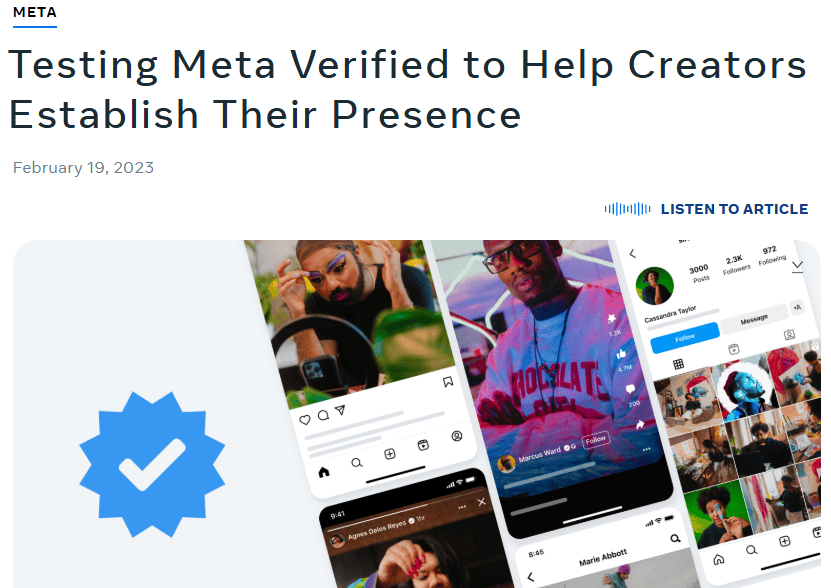
The service launched first in Australia and New Zealand. Then, before the US rollout in March 2023, something changed. Meta quietly updated its product description. “Increased reach” disappeared as a listed feature. The company’s own blog noted that it was “removing increased reach as a subscription feature for now, as we gather more feedback.” What that feedback actually said, or what changed between the Australia test and the US launch, Meta never explained publicly. The feature was simply gone, as if it had never been promised.
This pattern of announcing a feature, receiving pushback, and retreating without explanation has become something of a Meta signature. But the removal of “increased reach” did not end the question. It only moved it underground, into the forums and comment sections and creator newsletters where the actual data lives.
“Social media was meant to be the great equaliser. Instead, we are left with paid badges and subscription-only visibility perks that promise more than they deliver.” — Marieke, creator and Meta Verified subscriber
What the Data Actually Shows
Independent tests of Meta Verified have produced results that are murkier than either side of the debate wants to admit. Buffer2, a widely-read social media tool company, ran a two-week experiment subscribing to Meta Verified on Instagram and tracking performance carefully. Their conclusion was cautious: there was no dramatic shift in algorithmic visibility, though they estimated a possible boost of around 200 views in one period. They were not confident that the boost came from verification rather than content performance. Their reach actually fell 6.5 percent over the trial, while profile visits rose 79 percent, suggesting the badge drew curiosity rather than algorithmic amplification.
The Seasoned Marketer3, a marketing consultancy that tested the Business Plus plan over several months, tracked a roughly 1,000-view increase in January and tried to trace its source. Analyzing their analytics, the team traced the bulk of that growth to a specific story series they ran about local small businesses, not to any verification benefit. They also encountered a support experience that was, to put it charitably, underwhelming. After eight separate conversations with customer support representatives, their outstanding issue was never resolved.
“We paid for the blue tick so you don’t have to” became the working thesis.
BrandSnag4 ran its own trial and found a 30.2 percent rise in account interactions but a 6.5 percent drop in reach, and a 10-follower loss. Their analysis concluded that the results tracked closer to content quality and natural variation than to any algorithmic benefit tied to paying for the badge. Their bottom line: subscribers hoping for growth or higher visibility face disappointment.
What these tests share is a ceiling. They are all self-reported, short-term, and based on small accounts. Meta has never released any controlled study on the effect of verification on organic reach. The company does not have to. It sets the rules, controls the data, and decides what gets published. All anyone outside the company has are these small experiments and a lot of forum posts.
The Algorithm Question Nobody at Meta Will Answer Directly
Here is what Meta says, in the careful language of a company that knows every word will be examined: the subscription offers “prominence in some areas of the platform, like search, comments, and recommendations.” It does not say the algorithm actively boosts verified content in users’ feeds. It does not say that paying users receive more distribution for the same content. But it also does not say they do not. The language is chosen to be deniable.
Meta has confirmed that verified accounts receive priority placement in search results on both Instagram and Facebook. That is a real, if narrow, algorithmic advantage. If a user types a name or topic into Instagram’s search bar, a verified account will surface higher than an unverified one with the same name. For someone building a brand, or protecting one from impersonators, that is not nothing.
The more contested question is what happens in the feed. Meta’s recommendation algorithm, which decides which posts appear in the “Suggested for you” surfaces and the Explore page on Instagram, is a black box. The company publishes broad descriptions of how it works, but not its weights. Algorithmic researchers have noted that paid identity signals could function as credibility multipliers inside these systems, meaning that verification might push content into recommendation surfaces more frequently, even if Meta has not formally designated it as a reach-boosting feature.
Professor Sinan Aral of MIT5, who conducted a two-year experiment analyzing the effects of account labeling on online behavior, warned at the time of Meta Verified’s launch that identity cues like a paid checkmark could lead to intensified focus on personalities over content, and deepen the gap between in-groups and out-groups on the platform. His concern was not that the algorithm would be tuned to favor paying users explicitly, but that human behavior around the badge would produce the same outcome: people clicking more on verified accounts, engaging more with them, and thereby feeding the very engagement signals that the algorithm uses to determine what deserves wider distribution.
It is, in other words, a laundered algorithmic boost. Meta keeps its hands clean. The badge does the work.
“Verification is a credibility signal. It may cause algorithmic systems to weight you a bit more or rank you more favorably in search. But algorithms balance dozens of signals. The badge can cause people to trust you more and engage more. That increased engagement could, in turn, lead to the algorithm pushing your content further. But that is indirect.” — Sierra Exclusive Industries analysis
The Forum Voices: What Paying Users Actually Think
Spend enough time in the Reddit threads about Meta Verified, and a consistent picture emerges. It is not the picture that Meta’s marketing materials suggest. Users on r/Instagram and r/Facebook describe the service with a range of frustration that runs from mild disappointment to genuine anger.
“I paid for eight months and my reach is the same or worse,” wrote one user in a thread that drew hundreds of upvotes. “The badge is nice but Instagram clearly doesn’t care whether you pay them.”
Another commenter, who said they managed social media for a small e-commerce brand, reported that switching to Meta Verified had no measurable impact on their post performance:
“Our engagement rate was actually slightly lower the two months after we subscribed. Could be coincidence. But it is not the boost they imply.”
On the other side of the debate, some users report genuine value, particularly around account security. “Worth every penny to protect my brand” is a sentiment that appears repeatedly, especially from creators who have dealt with impersonation attempts or account lockouts. But those users are largely buying peace of mind, not algorithmic preference.
The support question is particularly raw. TechCrunch6 reported in July 2025 that during a wave of mass account bans, Meta Verified subscribers found the premium support entirely useless. Reddit threads from that period describe verified reps as “extremely unhelpful,” “giving out canned responses,” and offering no real resolution. Some users who signed up for Meta Verified specifically to get help during the ban wave were placed on a waitlist. A waitlist for a premium support product. The irony was not lost on anyone posting in those threads.
One creator, who described running a community page for 18 years before their account was wrongly suspended, wrote:
“I paid Meta monthly to get access to a real person. When I actually needed that person, the chat said there was a high volume of requests and offered me a link to the help center. The same help center I had already exhausted.”
What emerges from these voices is not the picture of a useful product. It is the picture of a service that has been marketed on the basis of what it might do, without being able to deliver reliably on any of its core promises.
The Quiet Escalation: Instagram Plus and the Moving Goalpost
While the debate over Meta Verified’s reach effects continued, Meta was building something more ambitious. In late March 2026, TechCrunch7 reported that Meta was testing a new subscription tier called Instagram Plus in select markets, including Mexico, Japan, and the Philippines. The features being tested included the ability to view someone’s Story anonymously, an extension of a Story’s visibility window by an extra 24 hours, and a “spotlight” option that allows users to boost one Story per week so it appears more prominently for followers.
That last feature deserves a closer read. Boosting a Story so it “appears more prominently for followers” is an algorithmic advantage. It is not a badge or an identity signal. It is a direct intervention in distribution, a mechanism that gives paying subscribers literal reach that non-paying subscribers do not have. Meta has not framed this as a reach product. It is testing it quietly, in three markets, without a press release.
The story is one of gradual escalation. In 2023, Meta floated “increased reach” as a feature, then retreated under scrutiny. In late 2024 and early 2025, reports surfaced that an algorithmic boost for verified creators had been confirmed by Meta, significant enough that for accounts reaching 50,000 users per month organically, the subscription was described as paying for itself. By 2025, Meta added to its Verified Max tier, priced at up to $499 per month for both Facebook and Instagram, a personalized content strategy session with Meta’s own team. Twice a year, for half a thousand dollars a month, you can get direct feedback from the people who build the platform you are trying to game.
And in December 2025, Meta went further still. According to Social Media Today8, the company began testing a policy that would limit unverified Facebook pages to two link posts per month. Businesses and publishers wanting to share more than two external links would need to subscribe to Meta Verified. This is not an algorithmic boost for paying users. It is the inverse: an algorithmic penalty for non-paying ones. The outcome is the same. Verified accounts get more. Unverified accounts get less.
The Digital Divide Argument
When Meta Verified launched, online safety expert Kavya Pearlman was direct. She described the emerging system as a “digital caste system” of haves and have-nots. Safety and security features, she argued, should not be for sale. The impersonation protections being bundled into the subscription were protections that users needed regardless of whether they could afford a monthly fee.
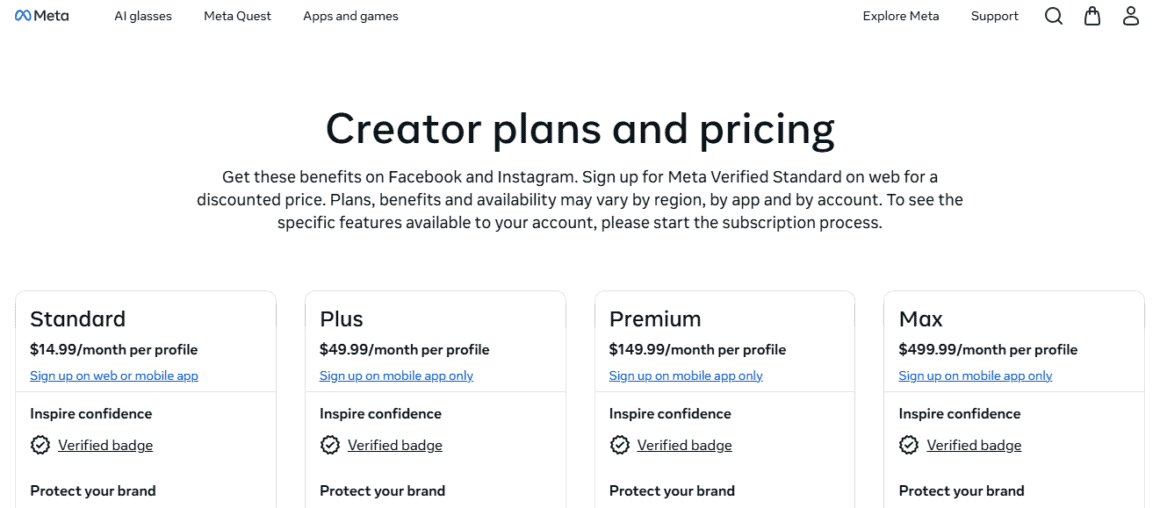
The digital divide concern has only grown as the tiering has become more complex. Meta9 now offers four distinct levels of Meta Verified, from the basic badge at around $14.99 per month to the Verified Max tier at $499 per month for both platforms, which includes priority support and content strategy sessions with Meta’s own team. The person who can afford $499 a month for social media management gets to sit down, twice a year, with the architects of the algorithm. The person posting from a phone during their lunch break gets the help center.
This stratification is not unique to Meta. Twitter, now X, built its entire post-Musk identity around paid verification, with consequences that gutted the original meaning of the checkmark. When anyone could pay for a blue tick, the tick stopped meaning what it once meant. Impersonator accounts multiplied. Misinformation spread under verified names. Meta, notably, has better controls: subscribers must verify with a government ID. But the fundamental question about what verification should mean in public discourse has not been resolved. It has just been monetized.
Reddit, watching all of this unfold, decided to go in a different direction. According to Technology.org10, when it began testing grey verification badges in December 2025, the platform was explicit: verified accounts would not receive algorithmic boosts, visibility advantages, or content priority. The checkmark was purely an identity marker. No one would pay for it. The approach was framed as a deliberate rejection of the social media verification-as-revenue model. Whether it holds, as Reddit faces its own commercial pressures, remains to be seen. But the contrast with Meta’s approach is hard to miss.
What Meta’s Revenue Numbers Tell Us
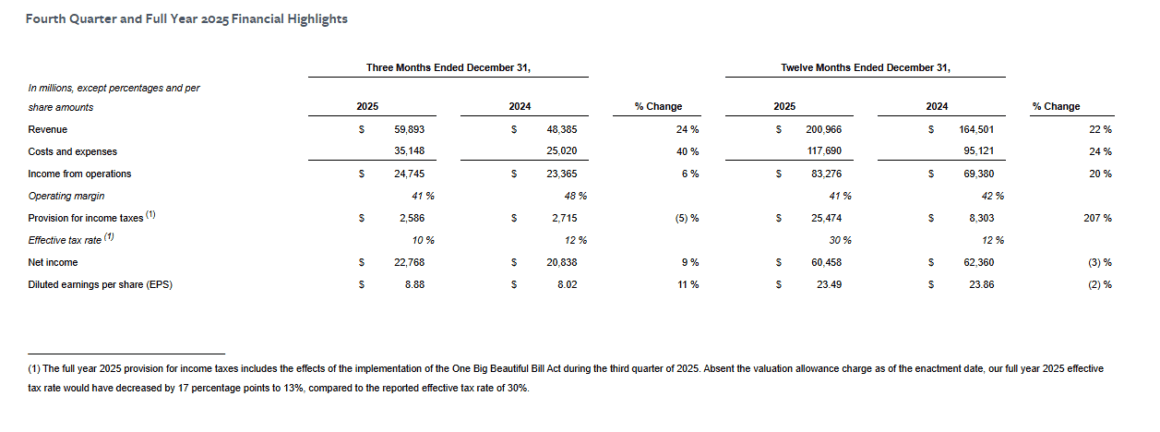
Meta has not been transparent about how much of its revenue comes from Meta Verified specifically. What has been published is a broader “Other” revenue category. According to Social Media Today11, in Q4 2025, that category generated $801 million, an increase of $572 million compared to when Meta Verified launched in Q2 2023. Dividing that increase by the average subscription cost of roughly $15 per subscriber suggests approximately 35 million paying users across Facebook and Instagram. That is not an exact figure, and the “Other” category includes additional revenue streams beyond subscriptions. But it points to a service that has grown from zero to a significant revenue line in three years.
This growth matters because it creates an incentive structure. Meta has every reason to make Meta Verified worth paying for. And the most compelling thing it could offer to potential subscribers is exactly what it once promised and then denied: algorithmic advantage. The financial logic points in one direction even when the official statements point in another.
Instagram Plus, if it launches widely, would add another revenue stream on top of Meta Verified. The Story spotlight feature, the anonymous viewing, and the extended visibility window are features built around visibility and social intelligence. They are not security features. They are performance tools, and they are being reserved for paying subscribers.
The Transparency Problem
The core problem with Meta’s approach to all of this is not the subscription itself. Charging for premium features is a reasonable business model. The problem is the language used around it, language calibrated to imply benefits without committing to them, to market reach without guaranteeing it, and to quietly implement what was once publicly retracted.
When a company publishes verified case studies showing improved reach and trust for subscribing businesses, as Meta does in its marketing materials with examples like Mom Approved Miami, it is selling the idea of algorithmic advantage while maintaining deniability about whether that advantage actually exists. When independent tests show flat or declining reach for verified accounts, Meta can point to the case studies. When the case studies are questioned, Meta can fall back on the fine print that says the subscription “may” improve visibility in “some areas.”
The EU is beginning to push back. Under the Digital Services Act, which is being strictly enforced in 2026, platforms are required to mitigate systemic risks to user wellbeing. Critics and legal observers have noted that selling visibility tools, including anonymous Story viewing and reach boosting for Stories, could draw regulatory scrutiny. The DSA does not exist in isolation. It is the beginning of a conversation about what platform responsibilities look like when platforms monetize the very systems they have built to shape public attention.
“We don’t expect the new account verification service to surpass more than one to two percent of total revenue over the next 18 months.” — Angelo Zino, CFRA Research, 2023. Three years later, the numbers suggest he was too conservative.
Where This Leaves the Rest of Us
The most honest answer to the question of whether Meta Verified paying subscribers get algorithmic preference is: probably, indirectly, sometimes, and increasingly. Probably, because the badge generates the kind of trust signals that produce engagement, and engagement is the currency the algorithm trades in. Indirectly, because Meta has not openly tuned the algorithm to favor verified content in feeds. Sometimes, because the benefit is most visible in search placement, which is a confirmed advantage, and least visible in organic feed distribution, where the evidence is thin. And increasingly, because the trajectory of the product, from a badge to content strategy sessions to Story spotlight features, points toward an explicit performance tier that does not yet have that label.
What I find most telling is not the data from any individual experiment. It is the behavior of the company over time. Meta promised increased reach. Then retracted it. Then added it back for higher tiers. Then began testing features that deliver the same outcome through different mechanisms. A company that genuinely believed its subscription had no effect on reach would not keep building reach-adjacent features into it. The product roadmap is the real answer to the question.
For small creators and businesses, particularly those in markets where the subscription costs represent a meaningful monthly expense, the implications are real. If paying users get higher search placement, more prominent recommendations, and Story spotlight tools, then the playing field is no longer level. The best content does not necessarily reach the most people. The content from the most adequately funded accounts does.
The internet was supposed to be the great equalizer. The blue tick, it turns out, comes with a price. And what it buys you is still being negotiated, in product meetings in Menlo Park and in Reddit threads at midnight, by people who paid $14.99 and are still waiting to feel the difference.
Sources
- “Testing Meta Verified to Help Creators Establish Their Presence” 19 Feb. 2023, about.fb.com/news/2023/02/testing-meta-verified-to-help-creators/. Accessed 13 Apr. 2026. ↩︎
- Lang, Kirsti. “I Got Meta Verified on Instagram — Here’s My Honest Review” 2 Apr. 2026, buffer.com/resources/meta-verified-review-instagram/. Accessed 13 Apr. 2026. ↩︎
- “Example Domain” theseasonedmarketer.com/meta-verified-increase-reach/. Accessed 13 Apr. 2026. ↩︎
- “How Much Does Meta Verified Cost?” BrandSnag, brandsnag.com/meta-verified-cost. Accessed 13 Apr. 2026. ↩︎
- “Sinan Aral” MIT Sloan, 29 Sept. 2026, mitsloan.mit.edu/faculty/directory/sinan-aral. Accessed 29 Apr. 2026. ↩︎
- Perez, Sarah. “Meta users say paying for Verified support has been useless in the face of mass bans” TechCrunch, 2 July 2025, techcrunch.com/2025/07/02/meta-users-say-paying-for-verified-support-has-been-useless-in-the-face-of-mass-bans/. Accessed 15 Apr. 2026. ↩︎
- Malik, Aisha. “Meta starts testing a premium subscription on Instagram” TechCrunch, 30 Mar. 2026, techcrunch.com/2026/03/30/meta-starts-testing-a-premium-subscription-on-instagram/. Accessed 29 Apr. 2026. ↩︎
- Hutchinson, Andrew. “Meta Is Considering Charging Business Pages To Post Links” Social Media Today, 17 Dec. 2025, www.socialmediatoday.com/news/meta-considering-charging-business-pages-to-post-links/808099/. Accessed 29 Apr. 2026. ↩︎
- “Meta Verified: Get the verified badge on Instagram and Facebook” www.meta.com/en-gb/meta-verified/?srsltid=AfmBOopEkPXCfTjs3Fh9JOPY-d9EbTQL57Q79quqRPj0gvHC2HycTfcK. Accessed 29 Apr. 2026. ↩︎
- Technology.org, 15 Mar. 2025, www.technology.org/2025/12/11/reddit-rolls-out-grey-verification-checkmarks-for-select-users-and-brands/. Accessed 15 Apr. 2026. ↩︎
- Hutchinson, Andrew. “Meta’s next subscription package could boost Instagram performance” Social Media Today, 29 Mar. 2026, www.socialmediatoday.com/news/metas-next-subscription-package-could-boost-instagram-performance/816048/. Accessed 15 Apr. 2026. ↩︎