
I spent a week trying to find one person who could tell me, with a straight face, what “320 million active users” means. Not what Microsoft says it means. What it means to someone running a business.
I did not find that person. I found IT administrators who treat the figure as noise. I found a Slack cofounder who spent the better part of a decade calling it hollow. I found a European antitrust case that used it as a weapon and then quietly closed without ever settling what the number was worth. And I found billions of dollars in unused software licenses sitting on corporate balance sheets, purchased in part because a chart on an earnings call made adoption look inevitable.
The number is real. Microsoft is not lying. That is the uncomfortable part. Nobody has to lie for a metric to stop meaning anything.
I came to this looking for a scandal and did not find one, not in the way I expected. I found something slower and, in some ways, more interesting than fraud. I found a perfectly legal, perfectly documented number that has been repurposed so many times, by so many different people with so many different incentives, that it has stopped doing the one job a metric is supposed to do, which is tell you something true about the world that you did not already know.
The Count, Year By Year
Start with the timeline, because the timeline tells its own story.
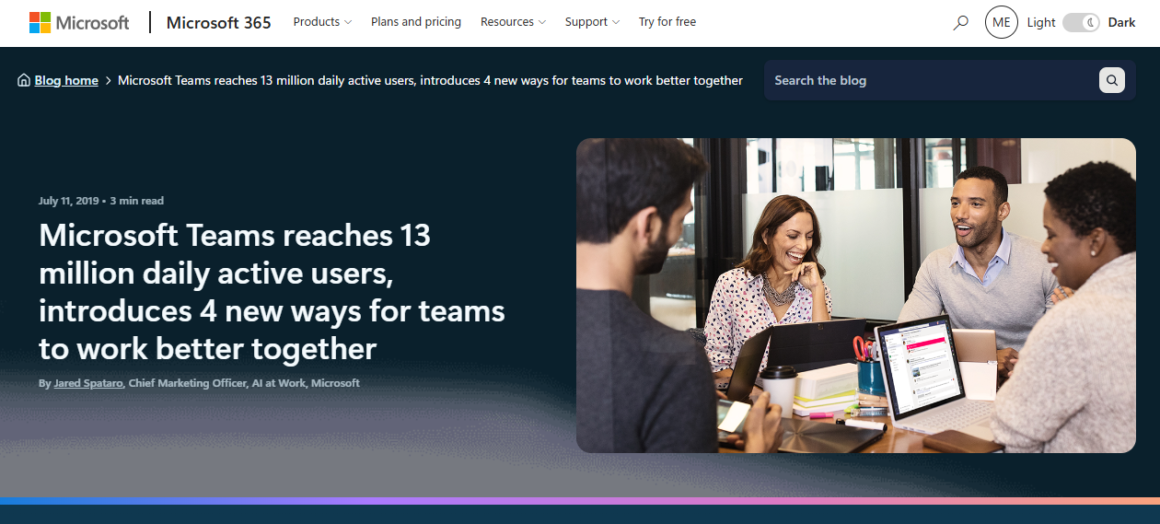
In July 2019, Microsoft1 announced Teams had reached 13 million daily active users, disclosed for the first time and released just ahead of a partner conference, days before Slack’s own numbers would come up for comparison.
By November that year the figure was 20 million. By March 2020, as the pandemic sent offices home, it was 44 million. A month later, 75 million. By October 2020, 115 million, a jump Microsoft’s CEO Satya Nadella delivered personally on an earnings call. By 2021, Microsoft had switched from daily counts to monthly ones, a change that on its own tends to inflate the headline figure, and by 2022 the number was 270 million. By 2024, 320 million.
Every one of those announcements arrived in the same place. An earnings call, a press release timed against a competitor, a partner conference keynote. Not a product update. Not a research report. A number built for an audience of investors and journalists, and delivered by the company’s own executives, on the company’s own schedule.
That alone does not make it fake. Public companies report growth metrics constantly. But it does tell you what the number was built to do. It was built to move a stock price and win a news cycle, not to tell a chief information officer whether Teams was actually working inside their walls.
What “Active” Is Allowed to Mean
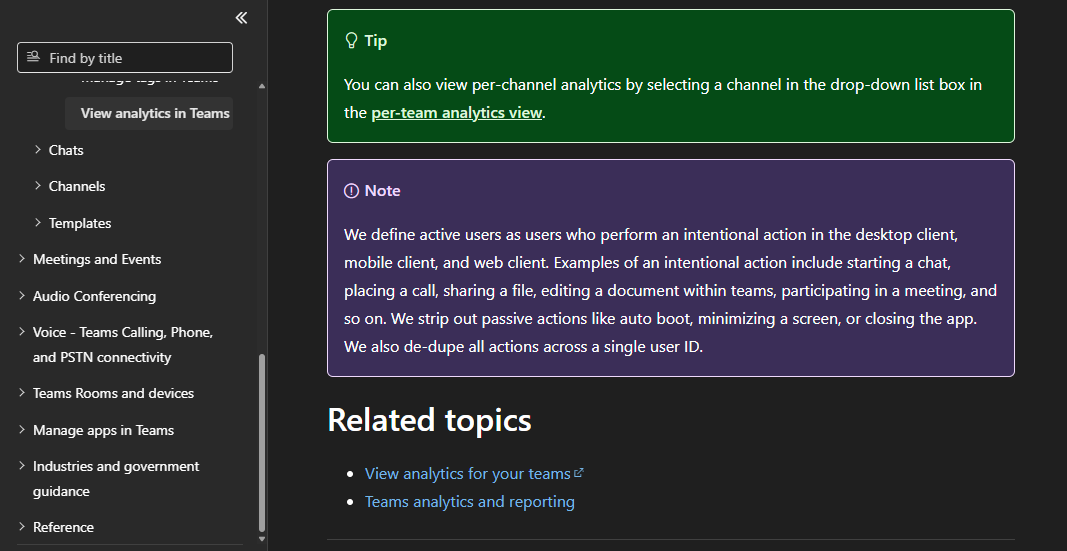
Microsoft’s own documentation is not hidden. Anyone can read it. An active user, according to Microsoft’s admin guidance2, is someone who performs “an intentional action” in the app. Starting a chat counts. Placing a call counts. Sharing a file counts. Sitting in a meeting counts. Microsoft says it strips out passive actions, things like the app auto-launching at startup or a window simply sitting open in the background.
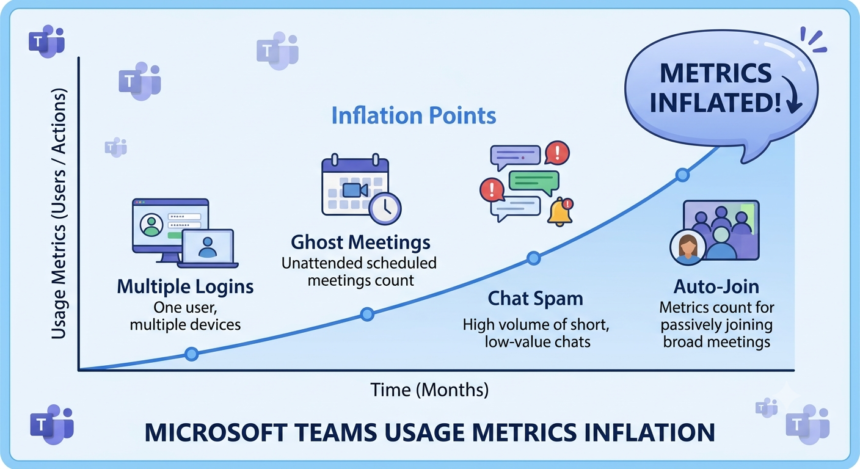
That sounds reasonable until you notice what still qualifies. Joining a meeting you were required to attend counts as activity, whether you spoke or not. Getting pulled into a chat thread by a colleague counts, even if you never reply. A single click during a mandatory town hall counts as much, statistically, as an hour of real collaborative work. The metric cannot tell the difference between a person building their day around the tool and a person who touched it once, under obligation, and closed the laptop.
I went looking for how people who manage these systems talk about that gap when nobody is selling them anything. One administrator, in a discussion of Microsoft 365 usage dashboards, put it this way:
“Leadership saw 85 percent active and assumed we were fully adopted. In reality, most people were just joining mandatory meetings.”
Another, in the same thread, was blunter:
“Active user does not mean active contributor. It just means they touched it.”
A third flagged the concentration problem underneath the headline figure:
“The numbers look great on paper, but when you break it down by team, usage is concentrated in a few groups.”
None of those people work in marketing. They work in the buildings where the software actually runs, and they are the ones who have to explain to a director why the adoption chart says one thing and the help desk tickets say another.
The reporting infrastructure itself does not always agree with its own count, which makes the whole exercise stranger. In one Microsoft community forum thread about Power BI usage metrics, an administrator noticed that reports opened through a Power BI tab embedded inside Teams simply were not being logged at all, while the same reports opened through a browser or a mobile app registered fine. “We have the same issue,” another administrator replied. “We published the reports in the different Teams for targeting purpose.” Nobody in that thread was arguing about inflation. They were just trying to figure out why a system built to count activity could not reliably count activity happening inside its own product. If the counting breaks down at that level, on a feature used by analysts who live inside spreadsheets for a living, it is worth wondering how cleanly it holds up everywhere else.
The Fight that Made the Number Famous
The most useful person to ask about Teams’ user count, for years, was not anyone at Microsoft. It was Stewart Butterfield, the cofounder of Slack, who spent the back half of the 2010s treating every Teams announcement as a provocation to answer.
When Microsoft revealed 20 million daily active users in November 2019, ahead of Slack’s own 12 million, Butterfield told analysts to “just look at the weak engagement numbers that Microsoft themselves reported about Teams.” According to CNBC3, he went further, saying flatly that the confusion in the market around what these numbers meant was “deliberately created.” His argument, repeated across interviews for years, was simple. Microsoft was counting people as Teams users if they had it open while doing something else in Office, not because they had chosen the product. In one interview he sized the real adoption rate this way:
“44 million is an impressive number, but it should be compared to 200 million of Office 365 users. It’s an adoption rate of 20 percent.”
You can dismiss this as a rival talking his book. He was. But the underlying complaint was never really about fraud. It was about what a bundled product’s usage number can mean when the product ships pre-installed to everyone who buys something else. If Teams arrives already sitting in the taskbar of every Office 365 subscription, “active user” stops measuring choice. It starts measuring how many people opened a folder that was already there.
Butterfield was not the only one who noticed the pattern, and he was not always gentle about it. Around the same earnings cycle, one financial writer covering the call put it in plainer terms than any executive would use on the record:
“In the minds of many techies, Microsoft is simply counting Teams users if they make a voice call, among other clever tactics. Not exactly the same thing as being actively engaged with a piece of software around the clock at work.”
Whether or not that framing is fair to Microsoft’s published methodology, it captures something true about how the number landed with people who were not in the room when it was defined. A user count that requires a paragraph of caveats to interpret correctly is not doing the basic job of a metric, which is to compress reality into something a reader can trust at a glance.
The comparison problem cuts against everyone, not just Microsoft. According to The Verge4, Zoom claimed 300 million daily users early in the pandemic and had to walk the figure back after admitting it actually meant 300 million daily meeting participants, a number that counts the same person twice if they join two meetings in a day.
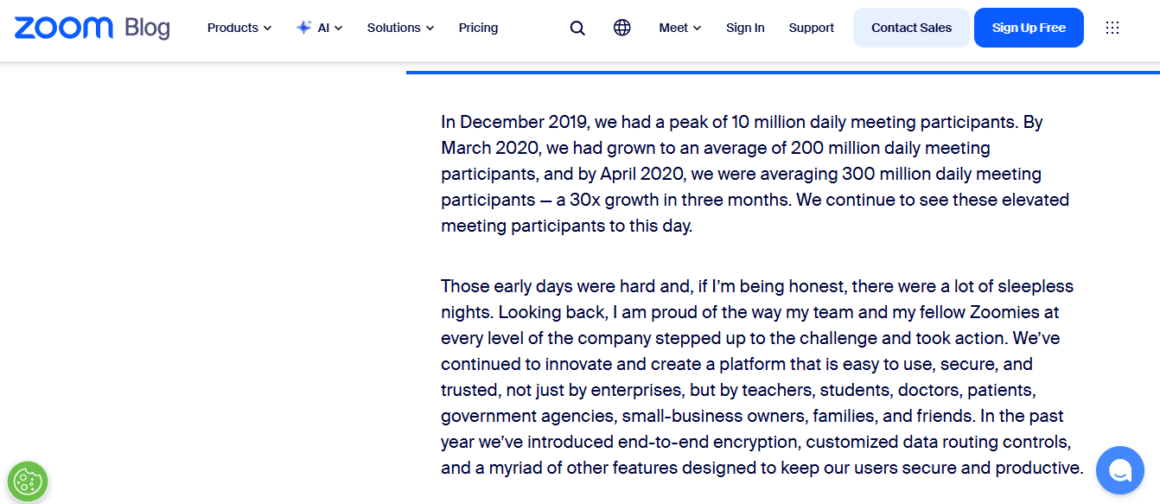
Google reported daily active participants using the same looser definition. Slack, for its part, stopped disclosing daily active users altogether once the number quit being a favorable comparison point, choosing instead to talk about connected minutes and paying seats. There is no shared unit of measurement across this entire product category. Every company is reporting a number that is true by its own definition and incomparable to everyone else’s, which means every headline chart stacking these platforms against one another is, technically, comparing four different things and calling it one.
The Regulators Finally Asked the Same Question
That argument eventually left the press cycle and went to Brussels. According to TechCrunch5, in July 2020, Slack filed a formal antitrust complaint with the European Commission, accusing Microsoft of illegally tying Teams to its dominant Office suite, “force installing it for millions, blocking its removal, and hiding the true cost to enterprise customers.” Computer World6 reported that Slack’s general counsel at the time, David Schellhase, called it a repeat of the browser wars of the early 2000s, when Microsoft bundled Internet Explorer into Windows and eventually paid a €561 million fine for failing to honor its settlement terms.
The European Commission opened a formal probe in 2023, and by June 2024 issued a statement of objections, the EU’s word for a formal accusation. Microsoft had already announced a partial unbundling of Teams from Office by then, separating pricing in most markets. The case dragged on for five years total. According to The Register7, in September 2025, Brussels accepted Microsoft’s concessions and closed the investigation without a fine.
Here is what stands out about that five-year fight. At no point did the case turn on whether Microsoft’s active user counts were technically false. Nobody proved a fabricated number. The entire dispute was about whether a real, honestly reported number could still be an instrument of market power, whether counting a captive install base as active adoption gave Microsoft leverage it had not earned through the product alone. The regulators effectively agreed there was something to that concern, since Microsoft changed its bundling and pricing to make the case go away. But they never had to answer the harder question hiding underneath it, which is what any of the headline numbers from that era actually tell you about whether people wanted the software.
The Bill for Adoption that Never Happened
That question has a price tag, and it shows up nowhere near an earnings call. It shows up in license audits.
Industry estimates on Microsoft 365 waste vary, but they cluster in an ugly range. One licensing audit firm puts unused licenses across large organizations at 15 to 30 percent of the total purchased. A SaaS management vendor, ABT8, cites studies showing 30 to 60 percent of Microsoft 365 seats sitting inactive, underused, or oversized for what the assigned employee actually does. Zylo’s SaaS Management Index, cited by EZO9, puts up to 50 percent of SaaS licenses generally as underutilized in any given month. Run the math on a mid-sized enterprise with 500 unused E5 licenses at roughly 57 dollars a seat per month, and one compliance firm calculates that comes to 342,000 dollars a year, gone, for licenses nobody opened.
None of that waste is Microsoft manufacturing false numbers. It is something closer to the opposite. It is organizations reading a rising public adoption curve, hearing that Teams has become the default in a supermajority of Fortune 100 companies, and concluding they had better be fully licensed too, before checking whether their own people would actually use the product at that scale. The macro number becomes cover for a purchasing decision. Then the purchasing decision generates a smaller, private number, the shelfware line item, that never gets an earnings call of its own.
One licensing consultant described the mechanism behind that waste plainly, and it has nothing to do with malice on either side of the sale.
“Enterprise software deals are often negotiated with future growth projections in mind,” the firm wrote in a breakdown of how shelfware accumulates. “Vendors are skilled at encouraging buyers to commit to higher seat counts in exchange for volume discounts. When the projected growth does not materialize, or materializes more slowly, organizations are left holding licenses they cannot fill.”
A rising adoption curve, publicized every quarter, is exactly the kind of signal that makes a growth projection look conservative rather than optimistic. It gives a buyer permission to overcommit. Nobody forces the overcommitment. The number just makes it feel safe.
That same logic shows up one level down, inside the license tiers themselves. Organizations do not just buy too many seats, they routinely buy the wrong seats, putting employees who only need email and chat onto premium bundles loaded with compliance tools, analytics, and voice features nobody on the team will touch. Even specialized add-ons bundled into these premium tiers go unused 10 to 20 percent of the time over a 90-day window, a quieter, more granular version of the same problem playing out inside licenses that do get “actively” used, by the loosest definition of the word, every day.
Watching the Watchers
There is a second, uglier place this metric infrastructure went, and it is worth sitting with, because it shows what happens when “active user” data gets pointed inward instead of outward.
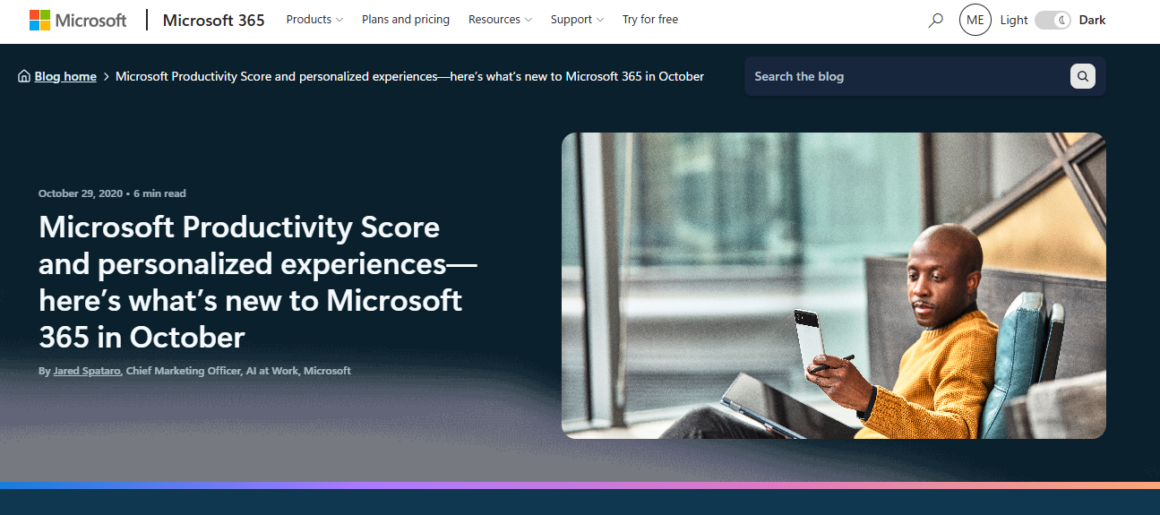
In October 2020, Microsoft announced the launch of a feature called Productivity Score inside Microsoft 365, giving employers a dashboard tracking metrics on how individual employees used the company’s tools, days logged into Teams, camera usage in meetings, email frequency. Privacy researcher Wolfie Christl called it out almost immediately, warning it “turns Microsoft 365 into a full-fledged workplace surveillance tool.” The tool shipped with individual-level tracking switched on by default. According to Forbes10, after weeks of criticism from privacy advocates and at least one UK union, Microsoft’s Jared Spataro announced in December 2020 that individual employee data would be removed entirely from the dashboard, leaving only aggregate, organization-level numbers.
Two years later, Microsoft published its own research acknowledging the trust this kind of tracking had cost it. As reported by GeekWire11, the company’s 2022 Work Trend Index found that 85 percent of managers said they struggled to know for sure their remote employees were being productive, while 87 percent of those same employees said they were. Microsoft’s own phrase for the gap was “productivity paranoia.” And in the same breath that Microsoft coined that term, Spataro told Fortune something that reads almost like an admission against interest: “Measuring productivity with mouse movements is like using a sundial as a stopwatch. Surveillance doesn’t just lead to bad data, it undermines trust.”
I want to be precise about what that sentence is doing. Microsoft built and shipped a tool that measured exactly the kind of granular activity data Spataro was warning against, walked it back under pressure, and then two years later published research warning that leaders lean too hard on activity data as a stand-in for real productivity. The company that popularized the active user count as a competitive weapon is the same company that told its own customers not to trust activity counts as a management tool. Both things came out of the same building, running on the same underlying telemetry, aimed at two different audiences.
Here is where I landed, after all of it. The active user figure is not fiction. Microsoft’s documentation on what counts as activity is public, specific, and consistent with how most of the industry defines the same term. Zoom and Google report daily meeting participants, a looser standard that can count the same person multiple times in a single day. Slack, for all of Butterfield’s criticism of Microsoft’s numbers, never published a full methodology either, and stopped disclosing daily actives altogether once the comparison started working against it. Nobody in this market is running a clean, comparable, independently audited standard. That was true before Teams existed and it is true now.
But accuracy and usefulness are different qualities, and the gap between them is where the real story lives. A number can be defined honestly and still be built for the wrong job. Microsoft’s active user count was built to answer one question: is Teams winning. It answers that question well, which is exactly why it shows up in earnings calls, antitrust filings, and press releases, and almost nowhere else. It cannot tell a CIO whether the fifty licenses she is about to renew will get used. It cannot tell a regulator whether the widespread numbers reflect choice or captivity. It cannot tell a manager whether an employee who joined eleven Teams meetings this week did any better work than the one who joined three. It was never built to answer those questions, and every institution that has tried to lean on it for that purpose, procurement departments buying ahead of adoption, boards reading engagement as endorsement, has ended up holding a number that looked like insight and turned out to be weather.
There is an old journalism instinct that says every number in a press release is hiding a smaller, truer number underneath it, and that the job is to go find that smaller number and hold it up next to the big one. I went looking for that here and I did find one, several of them actually, the twenty percent adoption rate Butterfield calculated against Microsoft’s own base, the fifteen to thirty percent of licenses sitting unused, the reports that simply fail to log activity happening inside the product itself. None of those smaller numbers disprove the big one. They just sit next to it, uncomfortably, refusing to be reconciled, which might be the most honest description of what a metrics ecosystem this contested actually looks like from the inside.
The 320 million figure will keep climbing, or it will plateau and Microsoft will find a new framing for the plateau. Either way, somewhere underneath it, an admin will keep exporting the same csv file, filtering out the auto-joins and the mandatory town halls, trying to find the smaller, harder number that actually describes what is happening in their organization. That number rarely makes it to an earnings call. It is usually the only one that matters.
Sources
- Spataro, Jared. “Microsoft Teams reaches 13 million daily active users, introduces 4 new ways for teams to work better together” 11 July 2019, www.microsoft.com/en-us/microsoft-365/blog/2019/07/11/microsoft-teams-reaches-13-million-daily-active-users-introduces-4-new-ways-for-teams-to-work-better-together/. Accessed 16 Aug. 2026. ↩︎
- “View analytics in Teams” Microsoft Learn, learn.microsoft.com/en-us/microsoftteams/teams-analytics-and-reports/view-analytics. Accessed 17 Aug. 2026. ↩︎
- Levy, Ari. “Slack CEO says Microsoft Teams has ‘weak engagement’ and he expects more users to migrate over” 4 Dec. 2019, www.cnbc.com/2019/12/04/slack-ceo-stewart-butterfield-microsoft-teams-has-weak-engagement.html. Accessed 17 Aug. 2026. ↩︎
- 23 Apr. 2020, www.theverge.com/2020/4/23/21232401/zoom-300-million-users-growth-coronavirus-pandemic-security-privacy-concerns-response. Accessed 17 Aug. 2026. ↩︎
- Lomas, Natasha. “Slack has filed an antitrust complaint over Microsoft Teams in the EU” TechCrunch, 22 July 2020, techcrunch.com/2020/07/22/slack-has-filed-an-antitrust-complaint-against-microsoft-teams-in-the-eu. Accessed 17 Aug. 2026. ↩︎
- Finnegan, Matthew. “Slack files EU antitrust complaint against Microsoft, cites anti-competitive Teams bundling” www.computerworld.com/article/1632525/slack-files-eu-antitrust-complaint-against-microsoft-cites-anti-competitive-teams-bundling.html. Accessed 17 Aug. 2026. ↩︎
- Page, Carly. “EU regulators let Microsoft off the hook after Teams unbundl” 12 Sept. 2025, www.theregister.com/2025/09/12/eu_regulators_let_microsoft_off/. Accessed 17 Aug. 2026. ↩︎
- Kirsch, Justin. “Stop Paying for M365 Shelfware: License Downgrade Guide for Financial Institutions” Access Business Technologies, 13 Jan. 2026, www.myabt.com/blog/stop-paying-for-shelfware-which-microsoft-365-licenses-you-can-safely-downgrade-and-which-you-cant. Accessed 17 Aug. 2026. ↩︎
- Naveed, Sara. “SaaS License Waste: The Hidden Cost in Your IT Budget” EZO.io, 12 Aug. 2025, ezo.io/assetsonar/blog/saas-license-waste/. Accessed 17 Aug. 2026. ↩︎
- “Forbes.Com” 1 Dec. 2020, www.forbes.com/sites/rachelsandler/2020/12/01/microsoft-makes-changes-to-productivity-score-tool-after-privacy-backlash/. Accessed 17 Aug. 2026. ↩︎
- Bishop, Todd. “‘Productivity paranoia’: Microsoft study of corporate workplaces finds big disconnect in hybrid work” 22 Sept. 2022, www.geekwire.com/2022/productivity-paranoia-microsoft-study-of-corporate-workplaces-finds-big-disconnect-in-hybrid-work/. Accessed 17 Aug. 2026. ↩︎