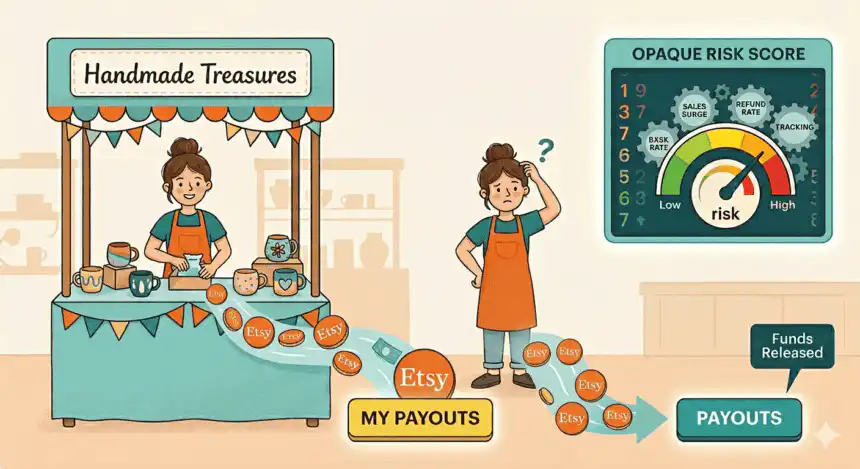

There is a particular kind of helplessness that sets in when you have made something with your hands, sold it to a stranger on the internet, and watched the money arrive in your account. And then watched it disappear behind a wall you cannot climb, cannot explain to your landlord, and cannot get Etsy to talk about. That is the reality for thousands of sellers on Etsy, the marketplace that built its brand on the language of human creativity and artisan independence. The wall has a name. Etsy calls it a Payment Account Reserve.
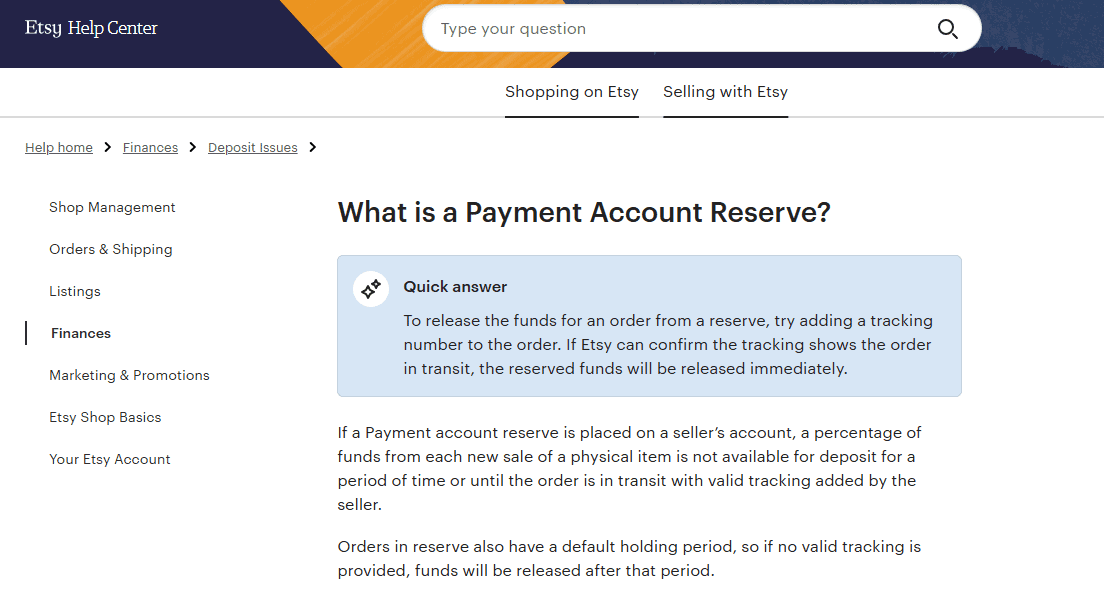
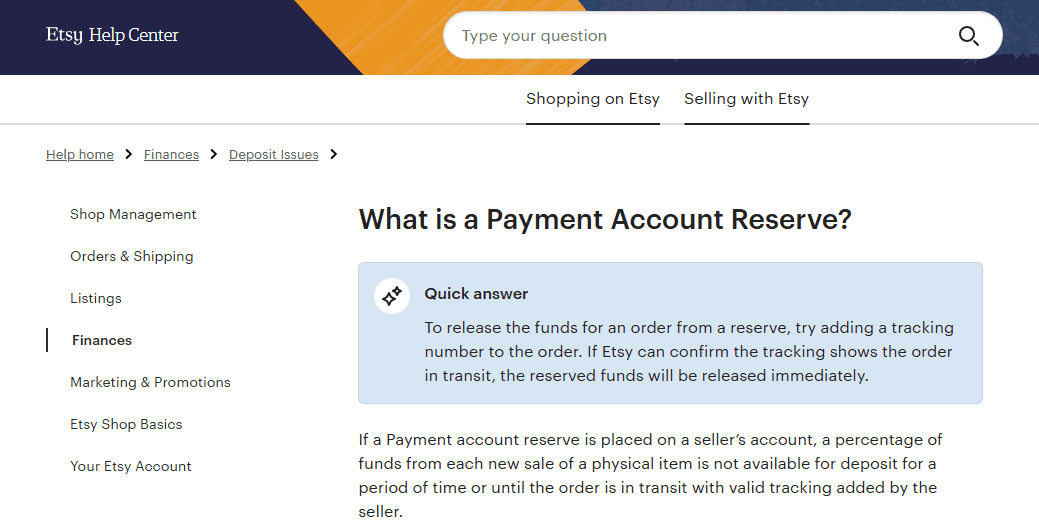
The mechanics are simple enough on paper. At Etsy1, if a reserve is placed on a seller’s account, a percentage of funds from each new sale of a physical item is not available for deposit for a period of time, or until the order is confirmed in transit with valid tracking. What the policy does not tell you, what Etsy’s own support agents are not permitted to tell you, is why your shop was flagged, what risk score triggered the hold, how long it will last beyond an approximate 90-day window, or what specific corrective action would end it. You are simply informed that you have been deemed risky and that a portion of every dollar you earn will be held in reserve until the algorithm decides otherwise.
This is not a fringe complaint from a handful of disgruntled sellers. Payment reserve holds have become an escalating point of concern for sellers, with many threads in the Etsy community forum and across social media pointing to increasing cash flow risks for businesses on the platform. One forum post on the topic alone accumulated over hundreds of replies. The anger is real, the financial damage is documented, and the system driving it remains, by design, invisible.
The Algorithm Nobody Can Explain
Etsy introduced Payment Account Reserves in 2021, initially applying them to new shops. By 2023, the policy had expanded dramatically. According to the Indie Sellers Guild2, at the beginning of May 2023, thousands of Etsy sellers found themselves placed on exorbitant payment reserves, where, on top of standard transaction fees, Etsy temporarily withheld up to 75% of funds meant to be paid out to sellers after a successful transaction.
Seventy-five percent. That number is worth sitting with. For a seller making $1,000 in a week, $750 vanishes into a reserve account they can see but cannot touch. Then Etsy deducts its fees and applicable taxes, the listing fee, the transaction fee, the payment processing fee, and, if you are enrolled in Offsite Ads, another slice on top, from the remaining 25%. Etsy fees run around 11 to 17% for a regular sale and around 23 to 29% of an Offsite Ad sale. What lands in a seller’s bank account, in the worst cases, is nearly nothing. And the product still has to be made and shipped before any of the held money moves.
For small businesses that operate on a made-to-order basis, this often leaves sellers unable even to afford to purchase postage, let alone to make the product that has been ordered. These sellers find themselves in a catch-22: they can’t get paid until they make and ship orders, but they can’t make and ship orders without getting paid.
Etsy’s3 official Payments Policy offers a list of risk-based criteria that may trigger a reserve: a recent first sale, a sudden, sharp increase in sales, a notice of intellectual property infringement, among others. The policy is careful to note that these are examples, not an exhaustive list, and that Etsy may use “a combination of reserves, deposit delays, and holds” at its sole discretion. A reserve will be placed on your account if Etsy believes there may be a high level of financial risk associated with you, your account, your business model, or your transactions. That definition is broad enough to cover nearly anything.
The opacity is not incidental. It is a stated feature. As part of our efforts to keep Etsy secure, Etsy Support4 isn’t able to give you the specific reason a reserve was placed on your account. Ask any Etsy support representative why your shop was flagged, and they will tell you they cannot see that information. Ask them to lift the hold, and they will tell you they cannot do that either. The decision belongs to the algorithm, and the algorithm does not explain itself.
This is a problem that goes beyond inconvenience. It is a structural power imbalance embedded in a platform that controls not just where small businesses sell, but how and when they get paid for what they have already sold.
The Sellers Who Fall Through
I have spent time reading through the Etsy seller community forums, the Indie Sellers Guild reports, posts on Reddit’s r/EtsySellers, and seller blogs. What strikes you is not the anger, though there is plenty of that, but the bewilderment. Sellers who have operated without a single complaint, who have five-star reviews, who ship on time, suddenly find their earnings locked up with no explanation that maps onto their situation.
Etsy seller and ecommerce consultant Cindy Baldassi5 has been researching and collecting data to determine the latest risk factors and bring attention to the situation. What she and others have found is that the reserve system hits certain categories of sellers disproportionately hard: made-to-order sellers with longer processing times, food sellers whose event-based delivery windows exceed Etsy’s maximum processing time settings, international sellers who cannot access Etsy-compatible tracking, and digital or craft sellers who make items by hand and cannot afford to hold inventory.
Most of the sellers affected have something less common about their processing time or shipping methods. Many operate as made-to-order, with processing times beyond the 8 weeks that Etsy will allow a seller to set. Sellers whose products require specialized shipping and can’t use Etsy-compatible tracking numbers are also at risk. These reasons seem to trigger the reserve regardless of whether there have been any actual complaints by customers about delays or shipping.
In one of the more infuriating scenarios Baldassi documented, innocent shops were placed on reserve because of bogus intellectual property infringement claims. There have already been innocent shops slapped with a reserve due to fraudulent IP cases. In one case, the reserve was not lifted even after the rights owner withdrew their claims. IP abuse is a known problem on the platform. Competitors file bad-faith DMCA claims to knock rivals offline, and the reserve system has made it a financial weapon. File a fake claim, watch your competitor’s cash flow collapse.
There is also the question of tracking. Etsy’s system can only verify shipping through a narrow list of supported carriers. If you ship internationally through a postal service that does not integrate with Etsy’s tracking verification, your reserved funds sit frozen for the full default holding period, regardless of whether the package was delivered. Proof of shipping, often available in countries that have very expensive tracking, is not accepted, and a customer leaving five-star feedback does not seem to matter either. The system rewards conformity with its own infrastructure, not actual proof of good behavior.
In the Etsy community forums right now, sellers report the system breaking down even when they do everything correctly. One seller, posting in mid-2025, described achieving Star Seller status and receiving a formal message from Etsy6 confirming their reserve had been lifted, then watching their payments continue to be fully reserved on new orders.
“I contacted support, and they replied that everything was fine and it was just a matter of 1–2 days for the system to update. Days passed, I had more orders, and guess what? My payments are still being reserved. I contacted support again, but the response I got seemed like they hadn’t even read my message.”
Another seller in the same thread reported being a Star Seller for the second time, ten months into selling, and still facing a 14-day payment hold with no resolution in sight.
These are not edge cases. They are the texture of how this system operates in practice.
The Numbers Behind the Wall
When the reserve percentage was 75%, the math was brutal enough to threaten business survival. After sustained seller pressure and negative media coverage, including a scathing report by Sky News and critical remarks from UK Small Business Commissioner Liz Barclay. According to The Guardian7, Etsy began ending some reserves early in July 2023 and eventually reduced the reserve percentage to 30% for most sellers. The timing of this announcement, just before the Q2 2023 earnings call, led many observers to question whether the change was driven by genuine concern for sellers or by a need to limit scrutiny ahead of the earnings report.
At 30%, the reserve is more survivable but still meaningful. According to EcomDelivery8, a few sellers face a rolling reserve policy where up to 30% of funds are held for up to 45 days, meaning a portion of earnings may not be accessible until day 49 from the sale date. On a $200 custom order, $60 is locked away for nearly seven weeks. For a one-person pottery studio or a jewelry maker operating on thin margins, that gap is not abstract. It is the difference between buying supplies for the next order or reaching for a credit card.
Etsy introduced payment holds in March 2024, originally ranging from 14 to 20 business days. The policy continued to evolve through 2025. Etsy’s October 9, 2025, policy update introduced new language that should alarm any seller paying close attention. The update gives Etsy the power to apply holds and delays on funds against any accounts they believe may be associated with each other. In other words, if Etsy’s system decides that two separate shops are “related.” And the criteria for that determination are not spelled out. Both shops can have their funds frozen simultaneously. The potential for algorithmic error cascading across multiple accounts is significant, and the lack of any meaningful appeals process makes it difficult to contest.
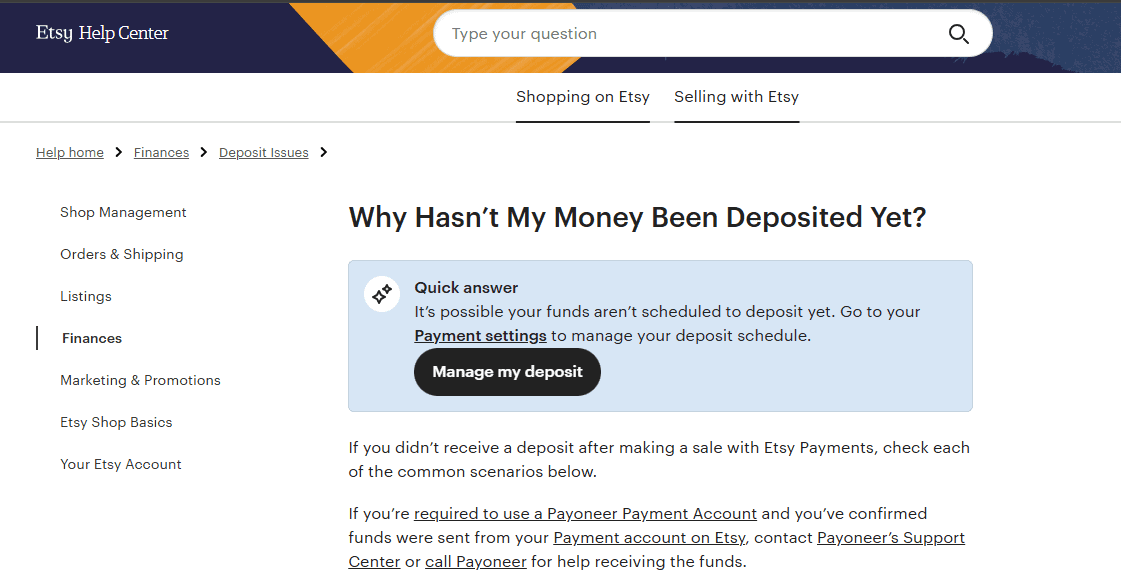
The December 2025 Payments Policy update also introduced Instant Transfers for US sellers. A feature that allows you to get your money faster, for a fee. That detail is worth noting. Etsy holds your money under a system you cannot challenge, then offers to return it to you faster if you pay an additional charge. The market has been created, and the solution is being sold.
The Float Problem Nobody Talks About
There is a financial dimension to reserve holds that receives almost no public attention: the float. When a marketplace holds millions of dollars in seller reserves, earning no interest for sellers, that money does not simply sit in a vault. It sits in bank accounts. In a high-interest-rate environment, and 2023 and 2024 were high-interest-rate years, money sitting in short-term accounts earns real returns.
Etsy does not disclose how it accounts for interest earned on reserved funds. The Indie Sellers Guild9, in its complaint filed with the FTC and the Small Business Association Office of Advocacy, raised the structural concern plainly: sellers are losing access to their own money, with no explanation, no appeal, and no compensation. The float, the interest or investment yield on pooled reserve funds, is a quiet benefit of scale for a publicly traded company.
At Etsy’s transaction volumes, the numbers are not trivial. The company reported gross merchandise sales of over $13 billion in 2023. Even if a fraction of that volume passed through reserves at any given time, the float on tens or hundreds of millions of dollars, even for short periods, would represent meaningful financial value. Sellers are the source of that value and receive nothing from it.
This is not to say Etsy is acting illegally. Payment reserves are legal. They are fairly common practice as a way to protect a payment processor from having to cover chargebacks. But legality and fairness are not the same thing. The question worth asking is whether a platform built on the labor of independent artists and craftspeople has an obligation to be more transparent about how it profits from the temporary use of their money.
The YouLend Paradox
In August 2023, while sellers were publicly voicing their frustration with reserves, Etsy sent an email to US sellers offering them access to a cash advance through a company called YouLend. The timing was precise, and the optics were terrible.
Some sellers found it ironic that Etsy was offering cash advances when it was holding some sellers’ money in payment reserves, forcing some of those sellers to take out loans or run up their credit cards to pay basic bills. One seller posted in the discussion boards:
“How ironic that they are now offering us third-party loans through the platform. As they hold millions in reserves.”
The Indie Sellers Guild10 called this situation an egregious conflict of interest: withholding sellers’ money through an extreme and vaguely defined payment reserves policy, and then offering those same sellers loans as a solution to the cash flow problem caused by the reserve policy.
Etsy maintains that YouLend is not affiliated with Etsy11, but is a merchant cash advance provider with whom they entered into a relationship. The technical distinction may be legally meaningful. Whether it addresses the moral question is another matter. A platform that controls when you get paid is also pointing you toward a borrowing product when that cash flow is disrupted. You do not have to be a cynic to see the architecture of dependency in that arrangement.
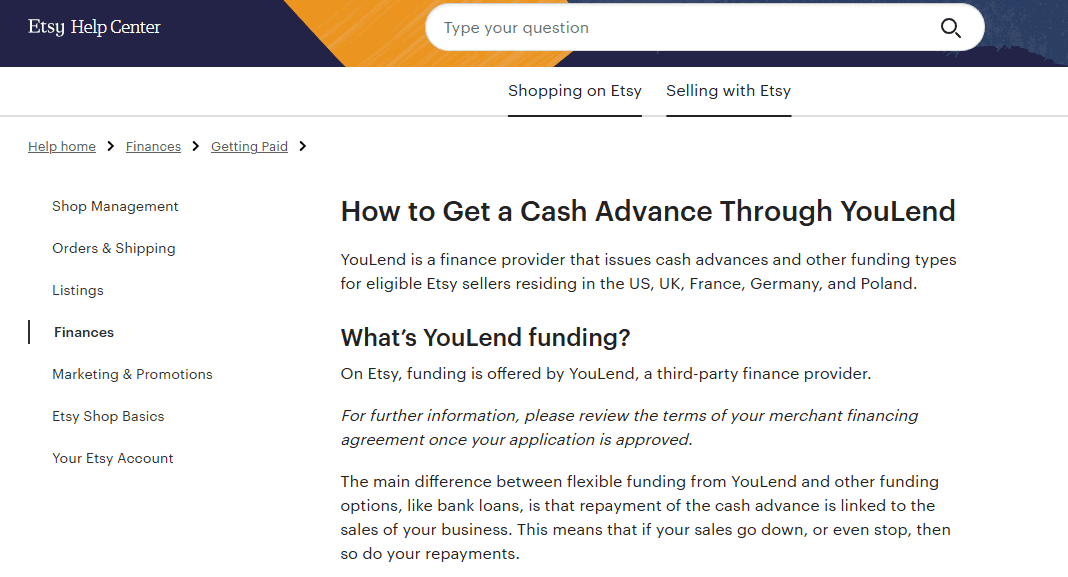
YouLend’s cash advances carry a one-time fixed fee rather than interest charges, according to Etsy’s documentation. It makes them difficult to compare to conventional financing. Between November 2023 and March 2024, 186 out of 229 US Etsy12 sellers who repaid their initial advance renewed it at least once. An 80% renewal rate could mean the product works well for sellers. It could also mean that once you are in the cash advance cycle, you stay in it, because the conditions that created the need persist.
The Star Seller Escape Hatch and Why It Does Not Always Work
Etsy offers one official path out of the reserve system: achieve Star Seller status. The Star Seller badge requires a seller to meet specific benchmarks. A 95% response rate to messages within 24 hours, on-time shipping for at least 95% of orders with tracking, and a high average review score. Star Sellers are exempt from payment account reserves under the Etsy Payments Policy13.
It is a coherent idea. Reward consistent performance with financial freedom. The problem is that the system does not always honor its own promise. Sellers in the community forums in 2025 describe achieving Star Seller and receiving official confirmation from Etsy that their reserve has been lifted, only to find their funds continue to be withheld. Support responses in these cases appear to be copy-pasted templates that do not engage with the specifics of the seller’s situation. One seller was told the system needed one to two business days to update. Days became weeks. The reserve remained.
The Star Seller pathway also creates its own inequities. Sellers who work in categories where tracking is expensive or unavailable (makers of large, fragile items, international sellers using postal systems outside Etsy’s approved carrier network, sellers of digital downloads that Etsy’s system misclassifies) face structural barriers to meeting the tracking requirement. The escape hatch is designed for sellers whose business model fits a particular shape. Sellers whose work does not fit that shape may find the door permanently closed.
The Regulatory Gap
The Indie Sellers Guild, a nonprofit advocacy organization for independent online sellers, has been the most organized voice pushing back on the reserve system. Beyond filing complaints with the FTC14 and the Small Business Administration’s Office of Advocacy15, they met with UK Small Business Commissioner Liz Barclay and began building a Marketplace Accreditation Program designed to hold platforms accountable for how they treat sellers. They commissioned a research study in collaboration with Dr. Samantha Close at DePaul University to document the scale of the problem.
The Guild argued that there are no clear, consistent guidelines listed by Etsy for why a seller will be placed on reserve. There are only stated risk factors. This makes it difficult or impossible for many sellers to determine what specific changes they need to make in order to comply. There is no customer service path for sellers to raise concerns or appeal a reserve if it was made in error.
These are not just seller complaints. They describe a power structure in which the platform has discretionary authority over an individual’s income, exercises that authority through automated systems that cannot be reviewed or appealed, and is not required under current law to explain or justify individual decisions. The Consumer Financial Protection Bureau has jurisdiction over some payment processing practices, but marketplace reserve systems exist in a regulatory gray zone that consumer finance law has not caught up with.
The October 2025 policy update, which declared Etsy an agent for US sellers in the receipt and settlement of payments, may have implications that have not been fully explored. As an agent for sellers, Etsy is now formally positioned in the payment chain in a way that might attract additional regulatory scrutiny. Or it might not. The legal questions are real, and the regulatory answers are not yet in.
What Etsy Says
Etsy’s public position on reserves is consistent and well-rehearsed. The company says reserves are common across online marketplaces and protect sellers and buyers during all phases of a transaction. Etsy16 uses reserves to make sure there are enough funds in a seller’s Payment account to cover any unexpected refunds or charges from a sale. The company points to data showing that, on average in 2022, funds held on reserve from most Etsy orders became available to sellers within two weeks of the order date.
That average masks considerable variance. A seller whose tracking does not integrate with Etsy’s systems waits 45 days, not two weeks. A seller whose reserve is extended beyond the standard 90-day period has no clear timeline. A seller whose reserve continues despite achieving Star Seller has no explanation.
According to eCommerceBytes17, Etsy CEO Josh Silverman has publicly positioned himself as an advocate for independent sellers, telling attendees at Semafor’s 2025 World Economy Summit that he was very active in advocating for independent entrepreneurs in Washington, DC, Brussels, and other places. He received nearly $18 million in compensation in 2024 while making that case. The advocacy he describes is directed outward at tariff policy and trade regulations. The financial architecture governing how and when Etsy’s own sellers get paid for their work is a different matter, and it operates largely in the company’s favor.
The Machinery of Silence
What makes the Etsy reserve system genuinely troubling is not any single policy choice. Reserve holds exist across e-commerce platforms. PayPal has held funds. Amazon holds funds. eBay has reserve programs. The practice is not unique to Etsy.
What is distinctive about Etsy’s implementation is the combination of opacity, inflexibility, and the absence of any real human oversight. Support agents are told they cannot see the specific reason a reserve was placed and cannot manually remove a reserve, even if it appears to have been applied by mistake, and none of the possible reasons apply to that shop. Every dimension of the system, the trigger, the percentage held, the duration, and the release conditions are governed by automated processes that no customer-facing employee can override.
This is efficient for Etsy. It insulates the company from liability for individual decisions, reduces the need for trained human judgment in support roles, and scales cleanly across millions of sellers. What it produces for sellers is a system that feels arbitrary because, from their vantage point, it is. They cannot know whether they triggered a threshold, whether their account was flagged by error, or whether a competitor filed a bad-faith complaint that set everything in motion. They simply receive a notification and a percentage.
The irony is deep. Etsy has spent considerable marketing budget positioning itself as the platform for the human touch. For things made by real people, for commerce that resists the impersonal machinery of mass production. Its payment reserve system is the opposite of that. It is a black box running on risk scores, managing money at scale, and offering nothing to the human on the other end except a progress bar and a 90-day wait.
What Needs to Change
The Indie Sellers Guild18 has called for specific reforms: clear and consistent criteria for reserve placement, a formal appeals process with human review, mandatory notification of the specific reason a reserve was placed, and transparency about how long a reserve will last based on what a seller can actually do. The Guild has also recommended that sellers file complaints with the Consumer Financial Protection Bureau to create a documented paper trail.
These are reasonable asks. They do not challenge the legitimacy of reserves as a financial instrument. They ask only that the system be accountable to the people it governs. A seller who knows why their funds are held can address the underlying issue. A seller who is told only that some opaque criteria have been met cannot do anything except wait and hope the algorithm changes its mind.
There is also a broader question about platform power that the Etsy reserve debate illuminates. When a marketplace controls not just where you sell but when you receive payment for what you have already sold, it has leverage over your business that goes beyond the transaction fee. That leverage is currently exercised through automated systems with no transparency requirements, no appeals process, and no regulatory oversight specifically designed for this context.
The craftspeople, artists, and small makers who built Etsy’s brand deserve better than a black box that holds their money and will not tell them why. They deserve a system that treats them as the partners the marketing says they are. Not as risk variables to be managed by an algorithm that has never seen what they make.
Sources
- Etsy, help.etsy.com/hc/en-us/articles/360058722214-What-is-a-Payment-Account-Reserve. Accessed 2 May 2026. ↩︎
- Indie Sellers Guild, indiesellersguild.org/update-on-etsys-payment-reserve-policy/. Accessed 2 May 2026. ↩︎
- “Etsy.Com” www.etsy.com/legal/etsy-payments/. Accessed 2 May 2026. ↩︎
- Etsy, help.etsy.com/hc/en-us/articles/360058722214-What-is-a-Payment-Account-Reserve. Accessed 2 May 2026. ↩︎
- 01, May. “CindyLouWho2’s Ecommerce Blog — CindyLouWho2” CindyLouWho2, 2 Mar. 2014, www.cindylouwho2.com/blog. Accessed 2 May 2026. ↩︎
- “Discussion” Etsy Community, community.etsy.com/forum/technical-issues-301/topic/deposit-delayed-past-90-day-reserve-period-became-a-starseller-and-nothing-happened-56820/. Accessed 2 May 2026. ↩︎
- Butler, Sarah. “Etsy to ‘substantially’ cut vendors’ funds held in reserve after UK boycott” The Guardian, 2 Aug. 2023, www.theguardian.com/business/2023/aug/02/etsy-to-substantially-cut-vendors-funds-held-in-reserve-after-uk-boycott. Accessed 2 May 2026. ↩︎
- Mercer, Jake. “Etsy Payment Schedule 2025: When Sellers Actually Get Paid” EcomDelivery, 11 Apr. 2026, ecomdelivery.net/etsy-pay-sellers-2025-payment-schedule-deposit-timeline/. Accessed 2 May 2026. ↩︎
- Indie Seller Guild, indiesellersguild.org/update-on-etsys-payment-reserve-policy/. Accessed 2 May 2026. ↩︎
- Indie Sellers Guild, indiesellersguild.org/update-on-etsys-payment-reserve-policy/. Accessed 2 May 2026. ↩︎
- Etsy, help.etsy.com/hc/en-us/articles/26622808089367-How-to-Get-a-Cash-Advance-Through-YouLend. Accessed 2 May 2026. ↩︎
- “Etsy.Com” www.etsy.com/seller-handbook/article/46603976053. Accessed 2 May 2026. ↩︎
- Etsy, help.etsy.com/hc/en-us/articles/360058722214-What-is-a-Payment-Account-Reserve. Accessed 2 May 2026. ↩︎
- Nguyen, Stephanie T. “Federal Trade Commission” 7 Mar. 2023, www.ftc.gov/. Accessed 2 May 2026. ↩︎
- “Office of Advocacy” advocacy.sba.gov/. Accessed 2 May 2026. ↩︎
- “Etsy.Com” www.etsy.com/seller-handbook/article/1177649220109. Accessed 2 May 2026. ↩︎
- Steiner, Ina. “Etsy CEO’s 2024 Compensation and Advocacy Work” EcommerceBytes, 28 Apr. 2025, www.ecommercebytes.com/2025/04/28/etsy-ceos-2024-compensation-and-advocacy-work/. Accessed 2 May 2026. ↩︎
- Indie Sellers Guild, indiesellersguild.org/etsy-payment-account-reserves-what-weve-learned/. Accessed 2 May 2026. ↩︎