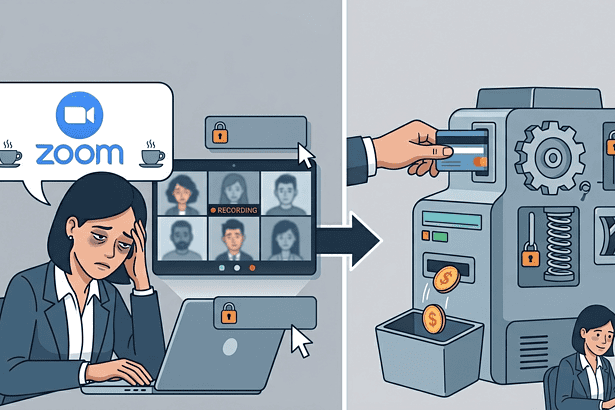

I went looking for the moment PayPal decided to become a court. There isn’t one. There’s no ribbon cutting, no swearing-in, no judge’s robe. There’s just a click-through agreement that quietly declares PayPal the final word on who gets to keep the money in a dispute between two people who trusted it to move that money safely. You don’t elect this court. You don’t get to appeal to a higher one, most of the time. You just get a decision, usually a form email, and a balance that’s either restored or gone.
This is a story about that court. About who it favors, when, and why the answer keeps landing on money rather than fairness.
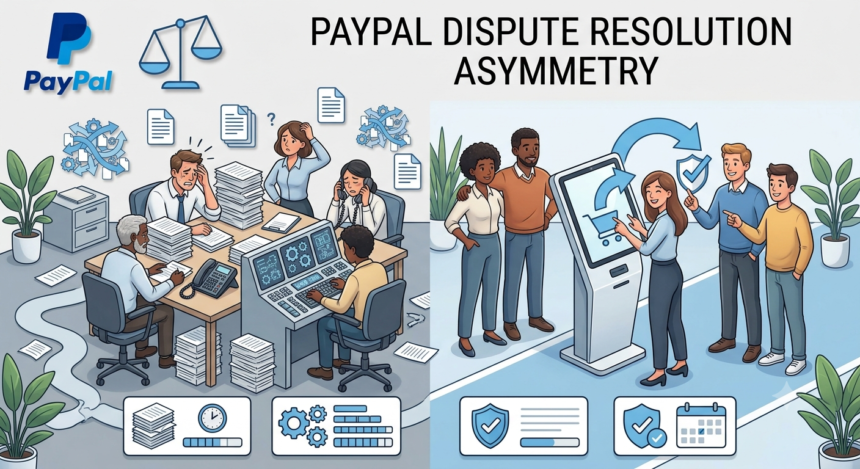
PayPal built two protection programs and gave them different names on purpose. Buyers get Purchase Protection. Sellers get Seller Protection. Read them side by side, and you notice the buyer’s door swings open more easily.
A buyer who says an item never arrived, or arrived broken, or wasn’t what the listing promised, gets to open a dispute in the Resolution Center. If the seller doesn’t respond within ten days, the claim closes in the buyer’s favor automatically and a full refund goes out. No investigation required. No proof demanded beyond the initial claim. Ten days of silence and the case is over.
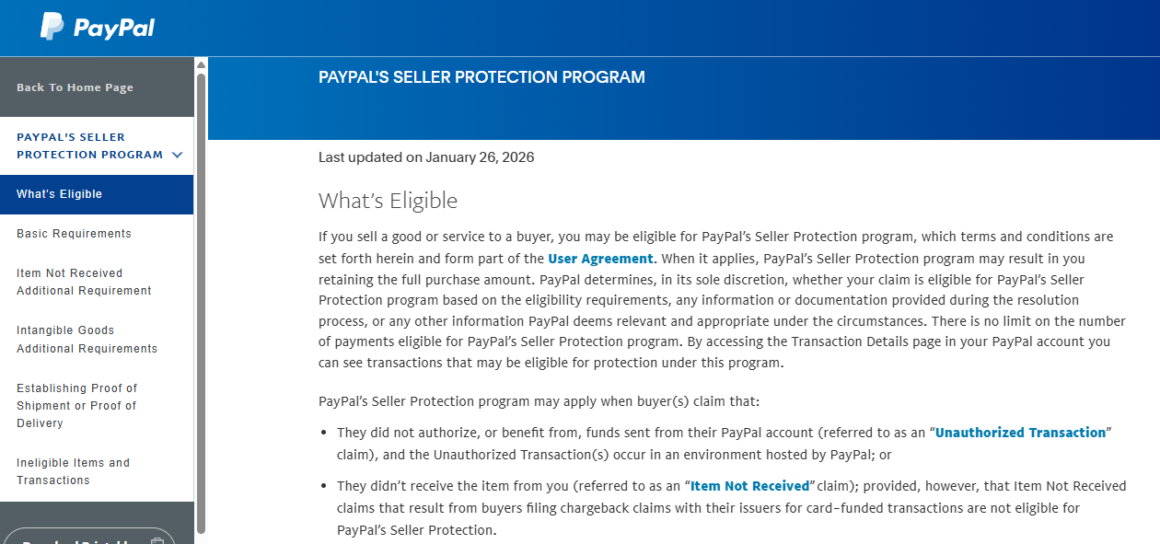
A seller facing the same dispute has homework. To even be considered for Seller Protection1, the transaction has to be marked “eligible” on the Transaction Details page, a status the seller does not control. The seller must have shipped to the exact address on file, kept proof of delivery, responded to every information request inside PayPal’s window, and prayed the buyer didn’t also file a chargeback with their card issuer, because as of PayPal’s2 2024 policy update, an Item Not Received claim that turns into a card issuer chargeback is no longer eligible for Seller Protection at all. The seller can do everything right and still lose, because the rulebook changed underneath the transaction.
I keep coming back to that asymmetry because it isn’t an accident of bureaucracy. It’s a design choice. Buyers are the customers PayPal wants to keep frictionless. Sellers are the ones PayPal has already locked in, because switching payment processors mid business is expensive and slow. When a platform has to pick who bears the risk of an ambiguous dispute, it picks the side it needs less.
Look closer at the paperwork requirement and the imbalance gets sharper. For any payment over a certain threshold, a seller needs signature confirmation of delivery, not just tracking. A scanned barcode isn’t enough. PayPal’s own guidance recommends merchants keep a running file of every proof of shipment and every proof of delivery document, because the payment must be marked eligible or partially eligible on the Transaction Details page, and that status can be reevaluated if anything about the order changes after the fact. A buyer, meanwhile, needs almost nothing to start the clock. Open a dispute, describe the problem, wait. The evidentiary burden sits almost entirely on one side of the transaction, and it’s not the side asking for money back.
The claim window compounds the pressure. Once a dispute escalates to a claim, the seller typically gets ten days to respond, and PayPal3 tells merchants outright that if they don’t respond, the claim will automatically close in the customer’s favor and a full refund will be issued. Ten days sounds generous until you remember that small sellers are often running fulfillment, customer service, and bookkeeping themselves, sometimes from a phone, sometimes between shifts at another job. A missed notification email, a spam filter, a busy week, and the case is decided before the seller even knew it was open.
What the Forums Actually Sound Like
I read a lot of PayPal complaint threads for this piece. The tone repeats itself. Frustration, then disbelief, then a kind of exhausted resignation once someone realizes there’s no one to call who outranks the decision.
One small business owner, writing about a limitation on his account after buyers he says never even contacted him were somehow logged as complaining, described weeks of contradictory answers from PayPal’s own departments, saying each office told him a different thing about deadlines and appeals rights, with one office blaming the last for getting the policy wrong. He called the whole ordeal, in his words, a real nightmare.
On Quora4, one user commented:
So i started selling on ebay 3 months ago and everything was fine till last week i listed some disposable face masks and they started selling like crazy and my sales rised so much, 3 days later i received email from paypal saying that my account is limited and asking for some documents, 4 days later i got ebay account suspended because they say its too risky, i tried to talk to them but they didnt give me a clear reason why i was suspended, now my question is if i send paypal they documents they asked for will they release my money? And should i ship the items that were sold lately? I had 10 days handling time on them so i have like 2 weeks to ship them, or will it be w waste of money and they will start filing cases? Because some of them already did
Another seller who says he provided proof that an item wasn’t counterfeit and still lost the dispute framed the confusion plainly, writing that he’d been told PayPal disputes are geared toward the other side entirely and still couldn’t get a straight explanation for the loss.
One more frustrated user claimed:
I had a PayPal account and only 2 transactions, they locked my account and it was 6 months waiting before they finally allowed me to withdraw the $132.00. I will never use PayPal again.
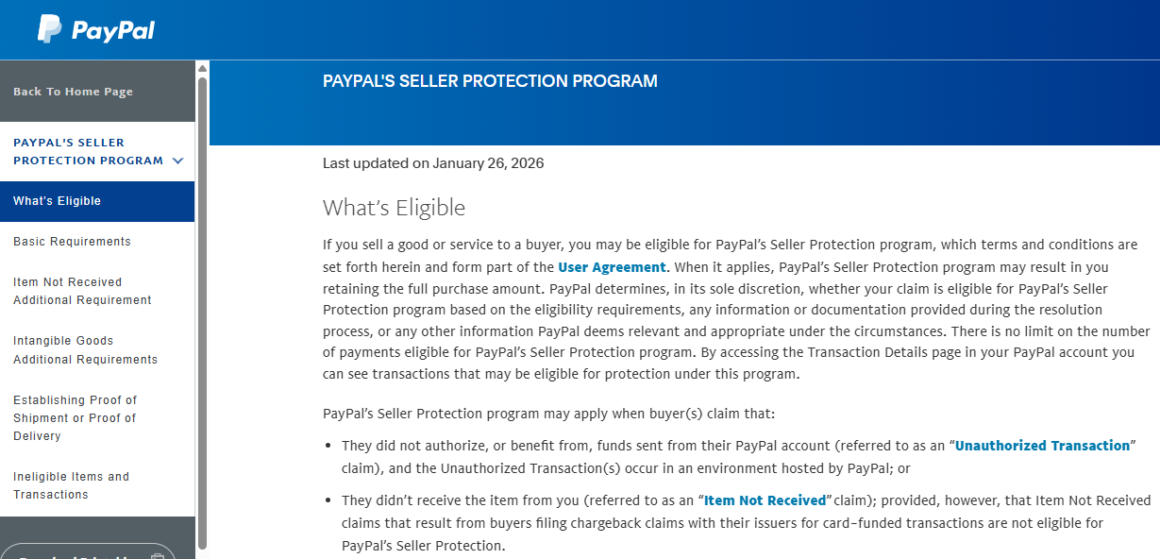
What strikes me about these accounts isn’t the anger. It’s the shared confusion about which rules applied and when. A payment can be marked eligible for protection on the surface and still get denied, because PayPal5 determines eligibility in its sole discretion based on any information it deems relevant, a phrase that appears in the user agreement like a release valve built for exactly this kind of case.
A discretion clause like that means two sellers can submit identical evidence for nearly identical disputes and get opposite outcomes, and neither one will ever be told why. There’s no published rubric. There’s no case law a merchant can point to and say, look, this is how the last hundred cases like mine were decided. The absence of precedent is itself a policy. It keeps every dispute feeling like a fresh roll of the dice, which means sellers can never actually learn how to protect themselves beyond following the checklist and hoping the checklist was enough this time.
The account limitation stories follow a similar shape. A hold gets placed, often described only as a review of account activity, and the merchant is told funds will be released after 180 days pending resolution of any disputes, chargebacks, or claims tied to the account. Getting a straight answer about what triggered the hold, in the accounts I read, usually meant calling multiple departments and getting a different explanation from each one. That’s not a support system working as designed. That’s a support system where no single person has the authority, or the incentive, to actually close the loop.
The Gift Payment Trap
There’s a scam that keeps showing up in fraud advisories that I think says everything about where the asymmetry actually bites. A buyer asks the seller to accept payment as a personal gift, Friends and Family, instead of Goods and Services. It sounds like a favor, save on fees, keep it simple between friends. It’s actually a trapdoor. Personal payments aren’t covered by Seller Protection at all. According to Justt6, once the item ships, the buyer can file a chargeback with their card issuer claiming the transaction was unauthorized, and because the seller had no protection to begin with, there’s no policy left to invoke in their defense.
The address redirection version is worse because it looks like innocent bad luck. A package gets sent to the address on file, comes back undeliverable, gets reshipped to a corrected address at the buyer’s request, and then the buyer claims it never arrived. The seller’s proof of delivery only covers the original, failed shipment. The scam works because normal customer service, the instinct to accommodate a buyer’s correction, becomes the exact hole in the paper trail that voids protection.
I don’t think most sellers who get caught in this ever fully understand what happened to them. They think they lost a fight. They actually lost a fight they were never eligible to enter.
No Exit Through the Marketplace
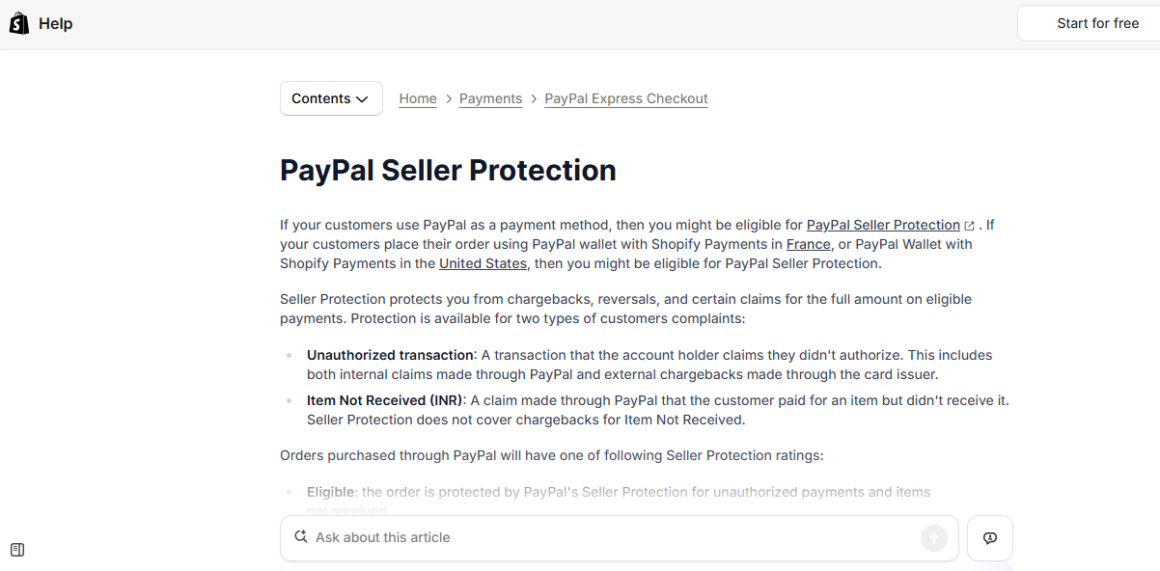
Part of what makes this asymmetry durable is that most sellers can’t simply walk away from PayPal even when they want to. Shopify’s7 own help documentation tells merchants plainly that PayPal Seller Protection isn’t managed by Shopify, and if you’re having issues with a PayPal transaction, you should contact PayPal directly, because Shopify can’t manage or access a merchant’s PayPal account at all. The marketplace that hosts the store has no authority over the payment processor the store depends on. eBay built its entire managed payments system around a similar structure for years. The seller’s storefront lives on one platform, the buyer’s money moves through another, and when something goes wrong, the merchant is bounced between two companies that each insist the dispute belongs to the other one’s rulebook.
This is worth sitting with because it’s the same shape I keep finding across the platform economy pieces I’ve written this year, from Etsy’s payment reserves to eBay’s managed payment holdbacks. The financial infrastructure and the customer relationship get separated on purpose. The seller owns the risk and the reputation. The processor owns the money and the decision. A buyer who’s unhappy has one relationship to manage, with the seller, and one appeal to file, with PayPal. A seller who’s unhappy has two companies to negotiate with, neither of which is fully accountable for the other’s rules, and both of which can point to the other when a merchant asks who is actually responsible for making this right.
PayPal held funds for up to 180 days from three account holders who eventually sued, alleging the company violated federal racketeering law by freezing money without explanation. According to Legal Reader8, the complaint claimed PayPal told the plaintiffs they would have to get a subpoena just to learn why their funds were frozen, a detail that reads less like customer service and more like an admission that no human inside the company felt obligated to say why.
That same article mentions the professional poker player Chris Moneymaker, who said PayPal held twelve thousand dollars of his winnings and publicly threatened legal action. His funds were returned within days of the tweet going viral, which tells you something about how these disputes actually get resolved for people with a platform of their own. Public pressure works. Filing a claim through the official channel, for most people, does not.
The user agreement anticipates lawsuits like the RICO complaint and tries to close the door on them before they open. EcommerceBytes9 states that PayPal’s arbitration clause requires nearly all disputes to be resolved through individual binding arbitration, explicitly barring class action claims, with the agreement itself stating that any and all disputes shall be resolved exclusively through final and binding arbitration rather than in court, except for the narrow carveout of small claims court, filed one person at a time.
Even that clause has been tested. According to Justia Law10, in Kass v. PayPal, the Seventh Circuit found that an arbitration award already issued in PayPal’s favor had to be reopened because it was never actually proven the customer had received notice of the amended agreement she supposedly consented to. It took years of litigation to establish that PayPal couldn’t simply assume silence meant agreement. That’s the level of resistance it takes to get a court to even ask the question of whether the contract was fair, let alone rule that it wasn’t.
The Regulator that Closed the File
The Consumer Financial Protection Bureau opened an investigation into Venmo’s handling of unauthorized transfers back in January 2021. It ran for three years. According to Payments Journal11, the Civil investigative demands went out, PayPal says it cooperated and turned over documents, and in March 2024 the CFPB communicated that it was closing the inquiry without enforcement action. No fine. No consent order. No public accounting of what those three years of documents actually showed.
That is not nothing, and it’s not everything either. The FTC12 did extract a real settlement from PayPal over Venmo back in 2018, after finding the company had told users their money could move freely to a bank account without adequately disclosing that transfers were still subject to review and could be frozen or clawed back, on top of misrepresenting the level of security protecting consumer accounts. That settlement stands as one of the few moments a regulator put a number and a consent decree behind the gap between what PayPal tells users and what actually happens to their money.
But regulatory attention is not the same as regulatory teeth. The CFPB’s Venmo probe closing without enforcement, three years after it opened, reads to me like a preview of the fate that awaits most consumer complaints about payment platforms. Not vindication. Not rejection either. Just a quiet unwinding of the file drawer.
The FTC’s13 2018 settlement is the exception that proves how rare accountability actually is here. That case succeeded because Venmo had made specific, checkable claims about security and fund availability that turned out to be false, the kind of concrete misrepresentation a regulator can build a complaint around. Most dispute resolution complaints don’t have that shape. They’re not about a false statement. They’re about a discretionary decision that felt unfair but technically followed the rules PayPal wrote for itself. That’s a much harder thing for any agency to act on, and it’s exactly the kind of harm the current regulatory toolkit is bad at reaching.
Meanwhile, the antitrust track record cuts the other way for anyone hoping the courts will force PayPal to loosen its grip. A federal judge dismissed a proposed class action in 2025 that accused PayPal of using anti-steering rules in its merchant agreements to keep prices artificially high across the wider e-commerce landscape, ruling the claims were too indirect to establish standing. Whatever leverage sellers might have had to challenge PayPal’s contractual terms as anticompetitive, that avenue closed too, at least for now on appeal.
Here’s the structural detail that gets lost in most of the coverage of this fight, and the one I think matters most. Buyers who fund a purchase with a credit card retain an independent right to dispute the charge with their card issuer, entirely outside PayPal’s process, under protections that predate PayPal by decades. If PayPal denies their claim, they still have Visa or Mastercard’s own dispute system waiting behind it. A seller has no equivalent second door. If PayPal rules against a seller, that’s the end of the road, unless the seller has the time, money, and appetite to pursue individual arbitration or small claims court against a company with a legal budget the size of a small nation’s GDP.
The asymmetry, in other words, isn’t just written into PayPal’s own policies. It’s built into the fact that one side of every transaction has a second referee available and the other side doesn’t. PayPal’s whole dispute architecture sits on top of that imbalance, and every policy choice it makes, from the Item Not Received exclusion to the 2024 chargeback carveout, tightens the seller’s side of that gap rather than loosening it.
What Accountability Would Actually Require
I don’t think the fix here is complicated to describe, even if it’s hard to imagine PayPal choosing it voluntarily. Sellers would need a genuine appeals path that doesn’t dead end in a discretion clause. The definition of “eligible” would need to be fixed at the moment of sale, not subject to retroactive reclassification after a dispute is already filed. And regulators would need to treat fund holds and dispute outcomes the way they already treat unauthorized transactions, as protected under EFTA-style disclosure and investigation requirements, not as a private contractual matter PayPal gets to police itself.
None of that is coming soon. What I keep sitting with instead is the plainer, less satisfying truth. PayPal isn’t a bank in any way that requires it to act like a fair court, and it isn’t a court in any way that lets you appeal its rulings. It’s a company that built itself into the only referee both sides have, and then wrote the rules of that refereeing to protect its own downside first. Everyone who has ever waited out a 180 day hold already knows this in their body, even if they never read the sixty-five pages that made it legal.
There’s a version of this story that ends with outrage, and I understand the impulse, but outrage isn’t quite the right note to end on. What actually sits with me is something quieter. It’s the particular loneliness of realizing that the company standing between you and your own money has no obligation to explain itself, and that the explanation you eventually get, if you get one at all, was written to protect a different set of interests than yours. Sellers keep showing up to that realization one dispute at a time, alone, reading the same discretion clause, discovering the same absence of precedent, and calling it a nightmare because there isn’t a better word for a system built to feel personal while functioning entirely as policy.
I don’t know what changes this. Maybe nothing does, not soon, not from inside the current regulatory posture, not from a company whose incentives point so clearly toward keeping the buyer relationship smooth at the seller’s expense. But I think it’s worth naming the shape of the thing precisely, because the people living inside it deserve at least that much. Not a villain. Not a conspiracy. Just a system that decided, a long time ago, whose risk mattered less, and never had a reason strong enough to decide otherwise.
Sources
- “PayPal’s Seller Protection Program” PayPal US, 26 Jan. 2026, www.paypal.com/us/legalhub/paypal/seller-protection. Accessed 8 July 2026. ↩︎
- “Does Seller Protection include Item Not Received chargebacks from buyers?” PayPal US, www.paypal.com/us/cshelp/article/does-seller-protection-include-item-not-received-chargebacks-from-buyers-help1102. Accessed 8 July 2026. ↩︎
- Staff, PayPal Editorial. “What Does “Dispute Transaction” Mean?” PayPal US, 8 Jan. 2026, www.paypal.com/us/brc/article/customer-disputes-claims-chargebacks-bank-reversals. Accessed 8 July 2026. ↩︎
- Quora, www.quora.com/What-can-one-do-when-PayPal-just-shuts-down-his-account-when-there-is-still-money-inside. Accessed 8 July 2026. ↩︎
- “PayPal’s Seller Protection Program” PayPal US, 26 Jan. 2026, www.paypal.com/us/legalhub/paypal/seller-protection. Accessed 8 July 2026. ↩︎
- Shnidman, Ronen. “PayPal Chargeback Scams: How to Recognize and Avoid Them” Justt, 23 July 2025, justt.ai/blog/paypal-purchase-protection-what-it-is-and-how-it-works/. Accessed 8 July 2026. ↩︎
- Shopify, help.shopify.com/en/manual/payments/paypal/paypal-seller-protection. Accessed 8 July 2026. ↩︎
- “PayPal Hit With Lawsuit Claiming Frozen Funds, RICO Violations” Legal Reader, 15 Jan. 2022, www.legalreader.com/paypal-lawsuit-rico-violations/. Accessed 8 July 2026. ↩︎
- Steiner, Ina. “The Irony of PayPal’s Arbitration Opt-Out Clause” EcommerceBytes, 29 June 2022, www.ecommercebytes.com/2022/06/29/the-irony-of-paypals-arbitration-opt-out-clause/. Accessed 8 July 2026. ↩︎
- Justia Law, law.justia.com/cases/federal/appellate-courts/ca7/22-2575/22-2575-2023-07-27.html. Accessed 8 July 2026. ↩︎
- Nawrocki, Tom. “CFPB Closes Years-Long Probe Into PayPal, Venmo” PaymentsJournal, 3 May 2024, www.paymentsjournal.com/cfpb-closes-years-long-probe-into-paypal-venmo/. Accessed 8 July 2026. ↩︎
- “PayPal Settles FTC Charges that Venmo Failed to Disclose Information to Consumers About the Ability to Transfer Funds and Privacy Settings; Violated Gramm-Leach-Bliley Act” 27 Feb. 2018, www.ftc.gov/news-events/news/press-releases/2018/02/paypal-settles-ftc-charges-venmo-failed-disclose-information-consumers-about-ability-transfer-funds. Accessed 8 July 2026. ↩︎
- FTC, www.ftc.gov/news-events/news/press-releases/2018/05/ftc-gives-final-approval-settlement-paypal-related-allegations-involving-its-venmo-peer-peer-payment. Accessed 8 July 2026. ↩︎