

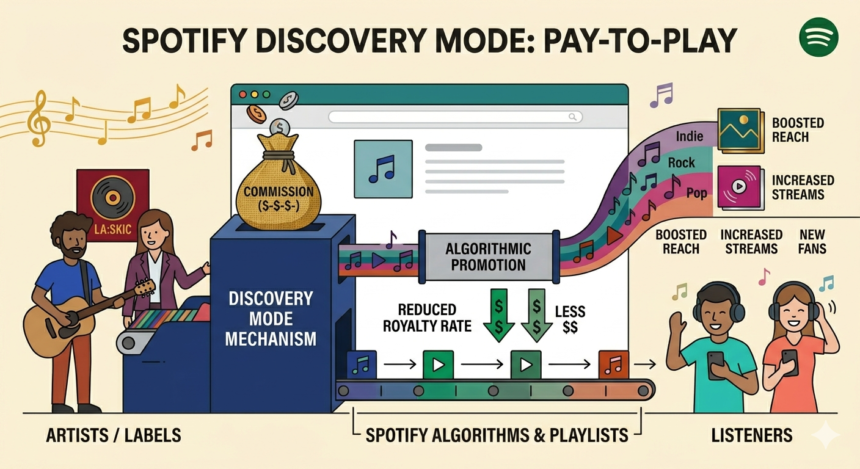

I started looking into Discovery Mode because of a sentence. It showed up in a class action lawsuit filed against Spotify in a Manhattan federal court, and it stopped me cold. The plaintiff said Spotify “secretly sells” its recommendations “to the highest bidder.” That is a hell of a thing to say about a company that has spent a decade selling itself as the algorithm that knows you better than your friends do. So I went down the hole. What I found was a program that is, depending on who you ask, either a clever lifeline for broke musicians or the quietest reinvention of payola in the history of the music business. Maybe it is both. That is the uncomfortable part.
What Discovery Mode Actually Is
According to The Guardian1, Discovery Mode launched in 2020, tucked into a company blog post with a title so bureaucratic it could put you to sleep: “Amplifying Artist Input in Your Personalised Recommendations.” Strip away the corporate fog, and the mechanics are simple. An artist or their label flags certain songs as a priority. Spotify feeds that flag into the algorithm that builds Radio, Autoplay, and certain Mixes, the playlists that string songs together based on what you have already been listening to. In exchange, the rights holder agrees to a 30 percent cut to the royalty rate on any stream that happens inside those Discovery Mode contexts. Every other stream of the song, the ones that happen because someone searched for it or added it to their own playlist, gets paid at the normal rate.
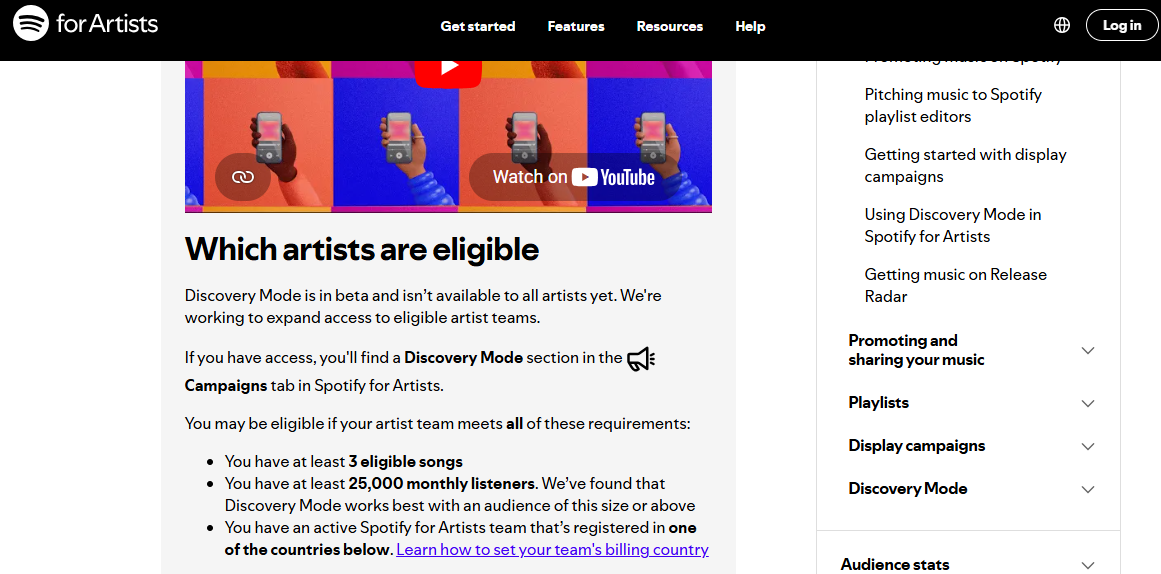
Spotify’s own help page2 lays out who gets to play. You need at least three eligible songs and an active Spotify for Artists account. You also need at least 25,000 monthly listeners, because, as the company puts it, that is the threshold where the tool “works best.” Read that requirement twice. The program, marketed as a way to help unknown artists get discovered, requires you to already have an audience the size of a small city.
The trade itself is not a secret. Spotify discloses it in its recommendations explainer, under a section on what it calls “commercial considerations.” But disclosure buried in a help center article is a different animal than a label on the song itself, and that gap between technically disclosed and actually visible to a listener is where most of this story lives.
A Program Born Already Controversial
Discovery Mode did not even make it through its pilot phase before Congress noticed. In June 2021, Representatives Jerry Nadler3 and Hank Johnson Jr. sent a letter to Spotify founder Daniel Ek. Their warning was blunt. They said the program could set off “a race to the bottom in which artists and labels feel compelled to accept lower royalties as a necessary way to break through an extremely crowded and competitive music environment.” They also pointed out something that has stuck with me since I read it. If every artist eventually enrolls every song, the relative advantage cancels out, but the 30 percent discount does not. Everyone loses a slice of their pay, and nobody gets ahead. Only Spotify’s margins improve.
A year later, three more members of Congress piled on. According to Variety Australia4, Yvette Clarke, Judy Chu, and Tony Cardenas wrote to Ek in March 2022, and their letter used a phrase that has become the unofficial tagline for this whole debate. They called the situation “a classic prisoner’s dilemma.” Their request was modest on paper. They asked Spotify to publish, every month, the name of every track enrolled in Discovery Mode and the size of the royalty discount attached to it. Spotify never did that. As far as I can tell, nobody outside the company has ever seen that list.
The letter also raised something that gets lost in the streaming numbers conversation. The representatives argued that asking artists “of diverse backgrounds, who often struggle to access capital,” to now pay just to be findable on Spotify “represents an especially serious problem.” That framing reframes Discovery Mode from a marketing tool into something closer to a toll booth on the road to visibility, one that charges more, in relative terms, to the artists who can least afford it.
Fast forward to November 2025, and the slow-burning controversy turned into litigation. Forbes5 reported that a woman named Genevieve Capolongo filed suit in federal court in New York, accusing Spotify of deceptive business practices and false advertising. Her complaint claims Spotify kept recommending her “the same major label tracks” from artists like Drake, Zach Bryan, and Justin Bieber, music that “bore little resemblance to her listening habits,” all while the platform promised “a personalized listening experience built around her own tastes.” Her lawyers are seeking class action status, and according to reporting from AllHipHop picked up by NME, the suit is seeking more than five million dollars in damages.
The complaint does not mince words. NME6 stated that it describes Discovery Mode and Spotify’s “purportedly organic curated playlists” as “the latest form of payola in the industry’s long history of deceptive pay-for-play.” United Musicians and Allied Workers, the labor advocacy group that has been pushing for a Living Wage for Musicians Act, amplified the suit on social media, framing it as proof that streaming services need real transparency and an end to pay-for-play once and for all.
Spotify’s response was fast and pointed. A spokesperson called the allegations “nonsense” and said the complaint “misrepresent[s] what Discovery Mode is and how it works.” The company pushed back specifically on the scope of the claims, saying Discovery Mode “isn’t used in all algorithmic playlists, or even Discover Weekly or DJ,” and that the lawsuit was wrong to suggest the program “only supports major label artists.” The company pointed out it has been “widely embraced by the independent music community, many of whom have praised the program publicly.”
Then, in January 2026, a second class action landed. According to Rolling Stones7, this one was filed in Manhattan and first reported by AllHipHop, a 39-page complaint calling Discovery Mode “a modern form of payola.” Spotify’s defense this time leaned on the disclosure argument and the program’s stated purpose. The company said Discovery Mode “doesn’t buy plays, it doesn’t affect editorial playlists, and it’s clearly disclosed in the app and on our website,” and added that the tool is meant to give “emerging artists a chance to gain visibility without traditional marketing budgets.”
Both of those things can be true at once. The program can be disclosed somewhere on a help page, and it can also feel, to a working musician staring at a royalty statement, like an invisible tax nobody warned them about loudly enough.
What the Artists Themselves Are Saying
This is where the story stops being abstract for me. I went looking for what actual musicians have said about Discovery Mode, not in press releases, but in the unglamorous places where artists compare notes. Forums. Substacks. The comment sections under royalty explainer videos.
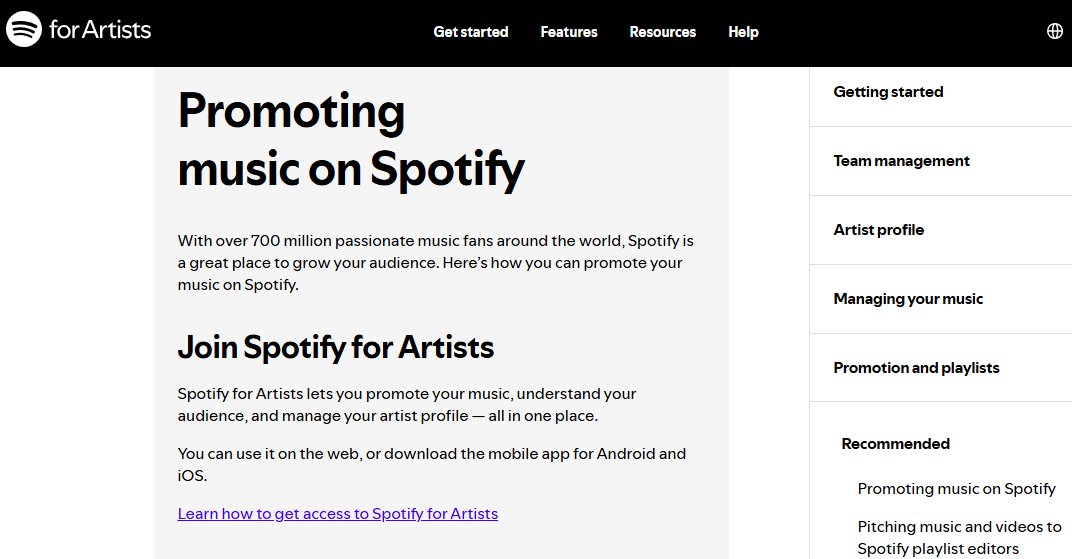
Spotify’s own promotional page for the tool is, unsurprisingly, glowing. One testimonial from an artist named Sam Riggs reads like the kind of quote a marketing team dreams about.
He says the results were “absolutely amazing,” that he “reached new listeners on Spotify, gained a lot of new followers on social media, and even saw increases in streams on my songs and ticket sales that were mind blowing.” He calls it “100% worth it.”
Another artist, Ryan Oakes, frames Discovery Mode as the great equalizer for independents, saying it “helps me reach highly targeted people and turn them into lifelong fans” without the marketing budget a major label artist would have.
Outside of Spotify’s own pages, the picture gets messier. Digital Music News8 rounded up a handful of independent case studies, and the through line is “it depends.” An artist named Brian Hazard ran his own experiment and came away convinced.
“It looks like the more songs you opt in, the more streams you get,” he wrote, concluding the effect was big enough that “streams per song is irrelevant,” and that he planned to enroll as much of his catalog as he could.
A writer at Ari’s Take followed an artist who used the tool for five months and reported a “healthy lift in listeners in streams” every single month, concluding that if you use Discovery Mode, “it’s safe to say that you will see a bump in streams and listeners.”
But here is the part that stuck with me most. An independent artist named Andrew Southworth called the tool a “no brainer” when he first tried it, back when it was new. Then he added a line that, to me, sounds like he accidentally predicted the entire economic problem with the program.
“Eventually, down the line,” he said, “when everyone’s using Discovery Mode, it’s effectively like no one having Discovery Mode.”
That is the prisoner’s dilemma that Congress warned about, except it is not a hypothetical anymore. It is a guy with a guitar and a distribution deal, noticing it from the inside.
And then there is the Reddit quote that Digital Music News dug up, attributed to an artist describing their own results. No polish, no marketing copy, just a shrug.
“It works okay-ish/well for a couple of genres but it’s awful for the most.”
That sentence has done more to convince me that Discovery Mode is genre-dependent and luck-dependent than any case study with a chart in it.
A more recent analysis from Soundlink9, published in 2026, tries to put numbers on all of this. Their assessment is that Discovery Mode can boost streams on an enrolled track by anywhere from 100 to 400 percent. That sounds enormous until you read the next sentence, which is that this stream spike “rarely converts into proportional follower or save growth once the campaign ends.” In other words, you can buy a temporary flood of plays at a 30 percent discount, and most of that flood disappears the moment you turn the tool off. Soundlink’s blunt verdict is that for an artist with an existing audience and a track already showing strong engagement, the tool can help. For an artist trying to build a fanbase from zero, it is “not a substitute for paid media that targets specific audiences.”
A separate guide from The A&R Department10 walked through a seven-month case study from an artist called Cog, and the lesson there was about selectivity. Not every song performs the same in Discovery Mode, and the advice was to watch which tracks get a real lift and pull the underperformers rather than leaving your whole catalog enrolled and bleeding 30 percent for nothing.
The Math Underneath the Math
To understand why a 30 percent cut matters so much, you have to understand how little Spotify pays in the first place. Multiple royalty calculators and distribution services put the average per-stream rate somewhere between three tenths and half a cent, depending on the listener’s country, whether they are on a free or paid tier, and the overall pool of streams that month. One estimate from Streaming Calculator11 pegs the realistic average for independent artists closer to four tenths of a cent, meaning you would need roughly 250,000 streams just to clear a thousand dollars.
Now take 30 percent off the top of that. A track that would have earned four tenths of a cent now earns closer to three tenths. Multiply that gap across hundreds of thousands of Discovery Mode streams and the numbers start to mean something real, even if each individual stream still feels like pocket change. And there is another wrinkle that makes this even sharper. As of April 2024, Spotify12 requires a track to hit 1,000 streams in a rolling 12-month window before it earns any royalties at all. One estimate suggests 87 percent of all tracks on the platform currently fall below that line and earn nothing. So for a huge swath of artists, the actual choice Discovery Mode presents is not “full royalty versus discounted royalty.” It is “discounted royalty versus zero,” because without the algorithmic boost, the track might never cross the threshold where it earns a cent in the first place.
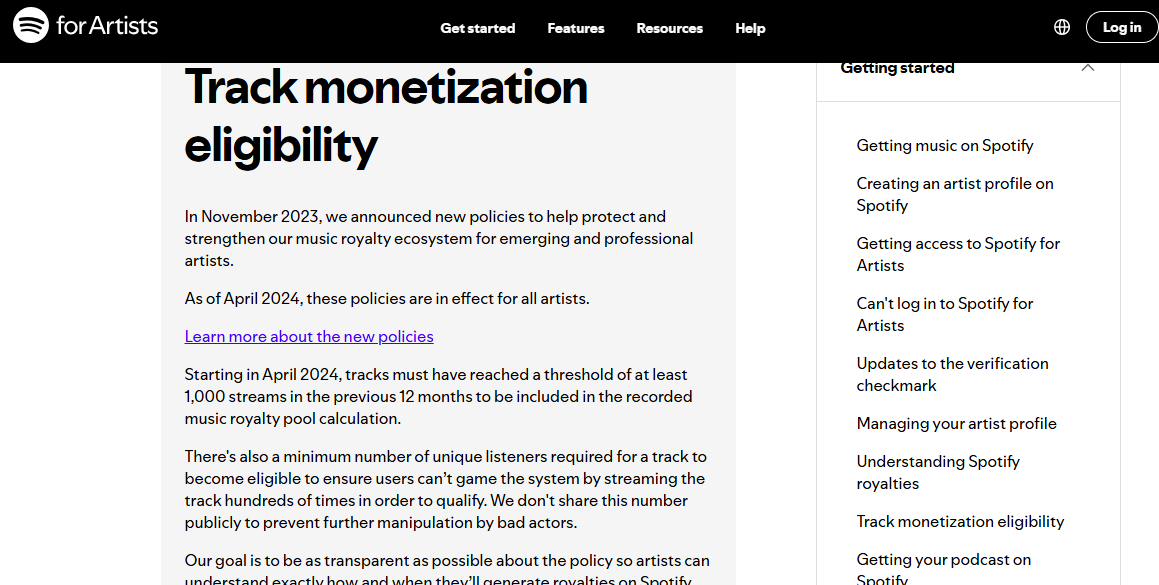
That is the trap, and I do not think it is too strong a word. Spotify built a system where a meaningful chunk of music earns nothing unless it gets enough plays, then built a separate tool that can help a track get those plays, in exchange for a fee on every play it generates. Whether you call that an opportunity or a shakedown probably depends on which side of the 1,000-stream line your music tends to land on.
Mood Machine and the Payola Comparison
If you want the long version of this argument, it is laid out in Liz Pelly’s book Mood Machine13, published in January 2025 and built on more than a hundred interviews with former Spotify employees and working musicians. Pelly’s framing of Discovery Mode is one of the most quoted passages in the book. She describes it, alongside Spotify’s playlist ecosystem, as part of “a series of pay-to-play schemes” that the streaming era promised would never exist, schemes that get framed internally as an “opportunity” even as they function, in her words, as a new version of payola, the term that goes back to the 1950s practice of labels secretly paying radio stations for airplay.
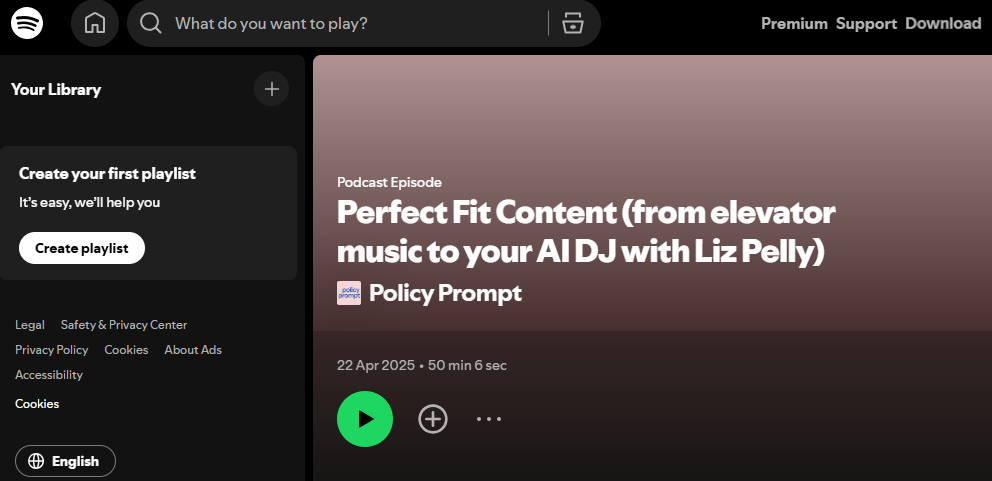
What makes Pelly’s reporting land harder than the lawsuits, for me, is the context she builds around Discovery Mode. She connects it to Spotify’s Perfect Fit Content program14, in which production companies are commissioned to make cheap, mood-based music under fake artist names, music that then gets heavy placement on chill and focus playlists at a discounted royalty rate. A reviewer at Our Culture went looking for one of these “ghost artists” and found a profile claiming to be “from the dark corners of Sweden” with 500,000 monthly listeners and, as the reviewer put it, “no results on Google.” Discovery Mode and Perfect Fit Content are not the same program, but they rhyme. Both involve Spotify offering a rights holder more algorithmic visibility in exchange for accepting less money per stream, and both quietly reshape what gets heard based on what is cheapest for Spotify to serve, not what listeners would choose if they knew the deal being made on their behalf.
Not every critic buys the payola framing wholesale. A review in The Arts Fuse15 pushed back a little, arguing that Pelly’s parallel to radio payola “may not be an exact parallel,” and noting that any system where players with different resources strike binding agreements will always favor whoever has more leverage going in. That is a fair point. Discovery Mode is not literally a brown envelope handed to a DJ. But the reviewer’s own framing, that the well financed player always comes out ahead, is itself a pretty damning description of a tool marketed as a way to level the playing field for the underdog.
Here is where I land, after sitting with all of this for a while. Discovery Mode is not a scam in the sense of an outright lie. The mechanism is real. Songs enrolled in it do, in many cases, get more algorithmic plays. Spotify is not pocketing a secret fee while delivering nothing, the way a true con would work. But “not a lie” and “not a problem” are different categories, and Discovery Mode sits squarely in the gap between them.
The program takes a structural reality that Spotify itself created, a payout system so thin that most songs earn nothing, and then sells artists a way to maybe cross that line, at a cost that comes directly out of their own pocket and indirectly benefits Spotify’s margins either way. It dresses up a tradeoff as an opportunity, and for some artists, the ones with an existing fanbase and a song that was already gaining traction, it genuinely can be one. For others, the ones the program was supposedly built to help, it is a discount they pay for a shot in the dark, in a system where, as Andrew Southworth predicted years ago, mass adoption cancels out the advantage and leaves everyone holding a smaller check.
The lawsuits working their way through federal court right now will not resolve that tension. Even if Capolongo’s case succeeds, even if Spotify is forced to label every Discovery Mode track the way the 2022 congressional letter asked, the underlying math does not change. Streaming pays close to nothing per play. A platform that controls discovery can always find a way to monetize the desperation that math creates. Discovery Mode is just the version of that monetization that Spotify decided to put a friendly name on.
I keep coming back to that Reddit line. It works okay-ish for a couple of genres, and it’s awful for the most. That is not the sentence of someone who got scammed. It is the sentence of someone who took a bet the house designed, and lost, and is still not entirely sure whether the bet was rigged or just bad odds. In an industry built on royalty rates measured in fractions of a cent, maybe there is no meaningful difference between the two.
Sources
- Pelly, Liz. “Pay to get playlisted? The accusations against Spotify’s Discovery Mode” The Guardian, 19 Feb. 2025, www.theguardian.com/music/2025/feb/19/spotify-discovery-mode-payola-playlist. Accessed 24 June 2026. ↩︎
- “Using Discovery Mode in Spotify for Artists” Spotify, support.spotify.com/us/artists/article/using-discovery-mode-in-spotify-for-artists/. Accessed 24 June 2026. ↩︎
- “Nadler & Johnson Request Information on Spotify’s “Discovery Mode” Feature” Congressman Jerry Nadler , 3 June 2021, nadler.house.gov/news/documentsingle.aspx?DocumentID=394661. Accessed 24 June 2026. ↩︎
- Staff. “Members of Congress Slam Daniel Ek and Spotify Over ‘Troubling’ Discovery Mode Policy (EXCLUSIVE)” Variety Australia, 7 Apr. 2022, au.variety.com/2022/music/news/congress-spotify-troubling-discovery-mode-policy-1335. Accessed 24 June 2026. ↩︎
- “Forbes.Com” 5 Nov. 2025, www.forbes.com/sites/conormurray/2025/11/05/spotify-hit-with-class-action-lawsuit-alleging-discovery-mode-is-a-pay-for-play-scheme/. Accessed 24 June 2026. ↩︎
- Pilley, Max. “Spotify respond to “payola” lawsuit over ‘Discovery Mode’” 6 Nov. 2025, www.nme.com/news/music/spotify-respond-to-payola-lawsuit-over-discovery-mode-3906188. Accessed 24 June 2026. ↩︎
- Kreps, Daniel. “Class Action Lawsuit Accuses Spotify of Engaging in ‘Payola’ in Discovery Mode” 5 Nov. 2025, www.rollingstone.com/music/music-news/class-action-lawsuit-spotify-payola-discovery-mode-1235460448/. Accessed 24 June 2026. ↩︎
- 1 Mar. 2024, www.digitalmusicnews.com/2024/03/01/spotify-discovery-mode/. Accessed 24 June 2026. ↩︎
- Ouwehand, Tom. “Spotify Discovery Mode in 2026: Does It Actually Grow Fans?” Soundlink, 2 June 2026, www.getsoundlink.com/blog/spotify-discovery-mode-still-worth-it-in-2026-v2. Accessed 24 June 2026. ↩︎
- “Spotify’s Discovery Mode: A Guide for Emerging Artists to Enhance Catalogue — The A&R Department” A&R Department, 24 Nov. 2007, www.theaandrdepartment.com/stories/spotifys-discovery-mode-a-guide-for-emerging-artists-to-enhance-catalogue. Accessed 24 June 2026. ↩︎
- Streaming Calculator, streamingcalculator.com/blog/spotify-royalties-explained. Accessed 24 June 2026. ↩︎
- “Track monetization eligibility” Spotify, support.spotify.com/us/artists/article/track-monetization-eligibility/. Accessed 24 June 2026. ↩︎
- “Book” lizpelly.info/book. Accessed 24 June 2026. ↩︎
- “Perfect Fit Content (from elevator music to your AI DJ with Liz Pelly)” Podcast on Spotify, 22 Apr. 2025, open.spotify.com/episode/59fw4XwlCJfrlG7XQexVnC. Accessed 24 June 2026. ↩︎
- Artsfuse, artsfuse.org/303672/book-review-mood-machine-in-the-mood-for-manipulation/. Accessed 24 June 2026. ↩︎

