


How Elon Musk’s revenue-share program became the most unpredictable paycheck in the creator economy
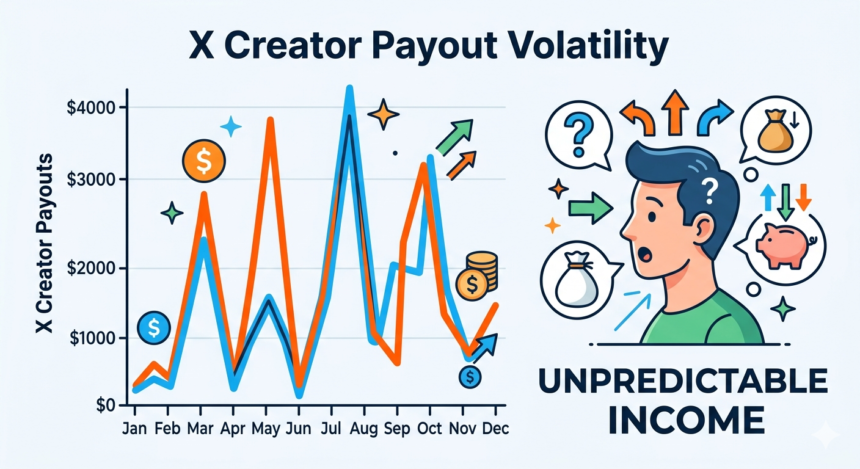
There is a particular kind of dread that comes with payday when you work for X.
It is not the dread of a gig worker who misses a delivery window, or a freelancer whose invoice sits ignored for thirty days. It is something stranger. You post. You rack up millions of impressions. You watch the engagement metrics climb through a week of hard work. And then, when the bi-weekly payout arrives via Stripe, you stare at a number that might be half what you expected, or double, or nothing at all, with no explanation from the platform and no dashboard you can check in real time to understand why.
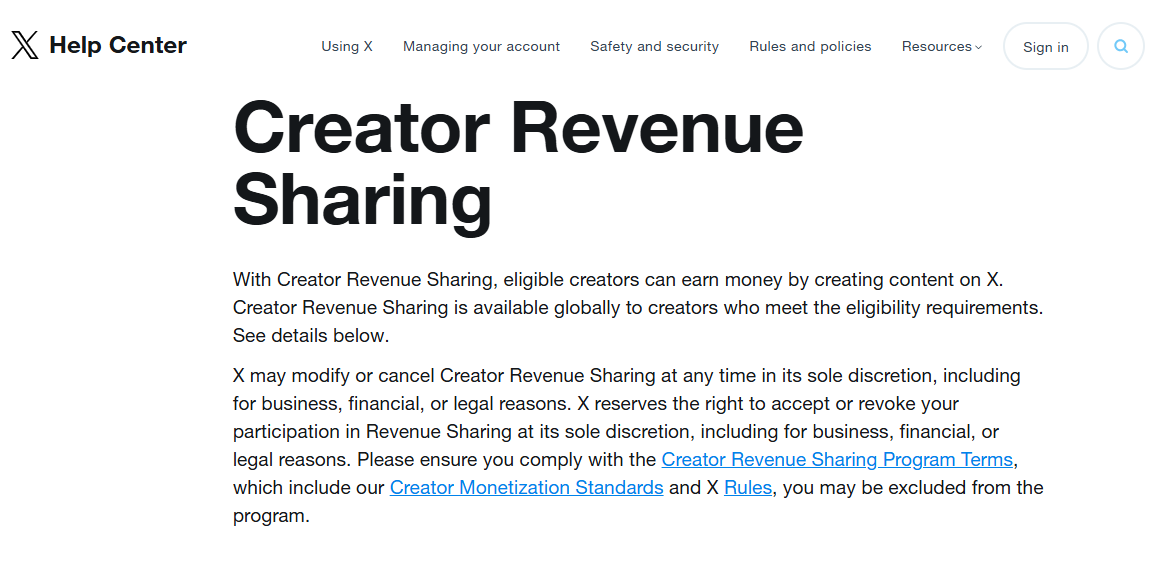
This is life inside X’s Ads Revenue Sharing program1, the creator monetization system Elon Musk launched in the summer of 2023 with a promised $5 million in first-round payments. The program has grown substantially since then. But for the creators who depend on it, the core problem has never been fixed: the payout formula is opaque, the rules keep changing, and the platform decides your eligibility and earnings without offering anything close to a real-time view into how those numbers are reached.
The Promise and the Reality
When X first opened its revenue-sharing program to global creators in July 2023, the reception was electric. As reported by TechCrunch2, some creators reported payouts in the five and six range. Dogecoin co-founder Billy Markus, known online as Shibetoshi Nakamoto, reportedly collected $37,000 in that first wave. By September 2023, X CEO Linda Yaccarino announced the platform had paid out nearly $20 million to creators. The numbers were real. The energy was genuine. For the first time, a platform that had historically failed to give writers and commentators a direct financial stake in their own reach was writing checks.
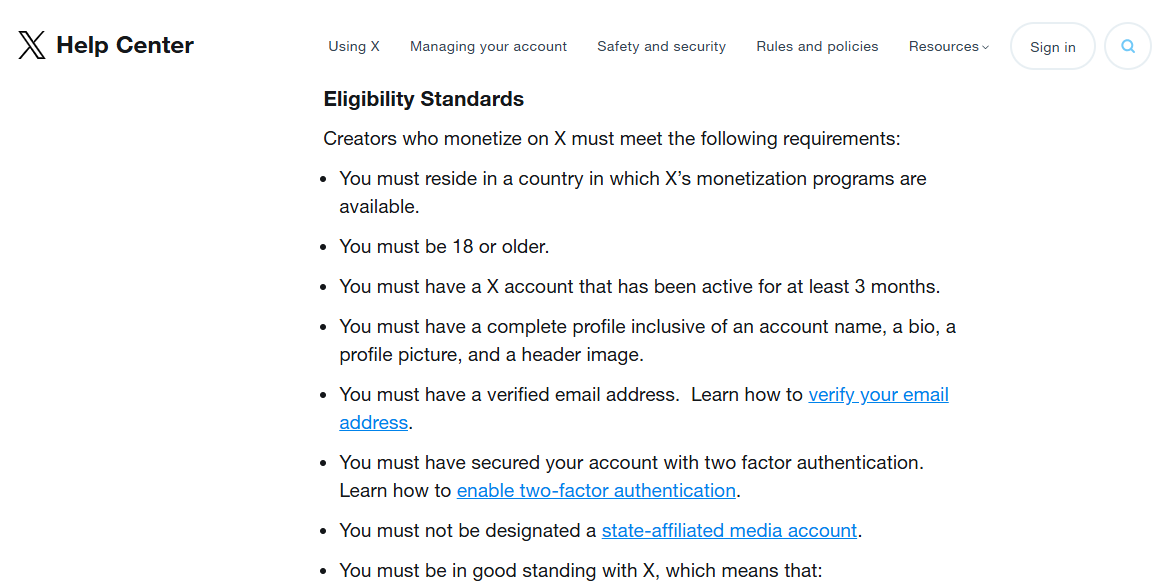
The eligibility requirements shifted constantly from the start. The program launched, requiring 15 million impressions over three months. According to Mashable3, within weeks, X lowered the threshold to 5 million impressions, reduced the minimum payout from $50 to $10, and simultaneously cut the follower requirement from 5,000 to 500. Each of these changes widened access, which is genuinely good for smaller creators. But each change also signaled something else: this was a program being built in real time, with no fixed architecture, governed by rules that could shift at any moment based on Musk’s preferences, product decisions, or responses to advertiser pressure.
The structural instability was there from day one. And it has never left.
Ask a creator on X how their payout is calculated, and you will get a shrug and a theory. The platform’s own help documentation states that payouts are based on engagement from verified Premium users, but that the “calculation considers the impact of different content types” without specifying what that weighting looks like in practice.
What we do know is the basic framework. Prior to November 2024, the program paid creators based on ad impressions appearing in their reply threads. Medium4 claimed that after November 8, 2024, X overhauled the model entirely: ad impressions in replies no longer directly counted toward revenue. Instead, the system shifted to rewarding genuine interactions from Premium subscribers, including likes, replies, reposts, bookmarks, and quote-tweets. Generic engagement from non-paying users now counts for very little.
The logic behind this shift has some merit. Premium-user engagement is harder to fake at scale and is correlated with higher-value advertising inventory. But the transition was announced without any transparent explanation of what the new formula looked like numerically. According to Influencer Marketing Hub5, one content creator, Mike Holden, publicly documented his first payout under the new system at $125.43, noting that the majority of what counted came from verified user engagement. That one data point, shared voluntarily by a creator with nothing to gain from the disclosure, represents one of the only windows into what the new model actually produces at the mid-tier level.
What X does not offer is a real-time earnings dashboard. Creators cannot view running totals during a payout period. Revenue is revealed only after the calculation period closes. This means a creator posting every day for two weeks has no idea whether they are on track for $50 or $500 until the number appears in their Stripe account. On YouTube, creators have had access to real-time revenue analytics for years. On X, you are flying without instruments.
The Pool Gets Diluted
One of the quieter forces pushing individual payouts down over time is simple arithmetic. As more creators qualify for the program, the same revenue pool gets split among more people. X6 has lowered the eligibility thresholds repeatedly, which is good for participation but mathematically bad for existing earners. Impression counts that would have earned a creator $400 in early 2024 may now earn $150 or less, not because the creator’s performance declined but because dozens more accounts now share the same bucket of ad money.
The platform has never disclosed the size of the revenue pool or how it scales relative to creator growth. This makes financial planning nearly impossible. A creator who builds a content strategy around a reliable $600 per month from X has no way of knowing whether that figure will hold next quarter, because neither the size of the pool nor the number of participants sharing it is publicly reported.
On top of this, ad market fluctuations directly compress the pool. When advertisers reduce spend during economic downturns or retreat following brand-safety controversies, there is simply less money to distribute, even if creator output and engagement remain constant. X has faced multiple advertiser boycotts since Musk’s 2022 acquisition, and the correlation between those boycotts and creator earnings is something no independent analyst can fully assess because X does not publish the underlying data.
There is also a regional dimension to this that borders on structural inequity. Postory7 states that the average payout runs roughly $8.50 per million verified impressions, but that figure is not geography-neutral. US-based creators earn approximately 3.5 times the base rate, UK creators earn about 2.8 times, and Indian creators earn about 0.8 times. A creator in Lagos or Nairobi producing content with 10 million impressions can earn a fraction of what a creator in Austin earns with identical engagement patterns. UK creators have reported losing an additional 3 to 5 percent on top of that through FX conversion fees when cashing out to sterling.
The Rules Change Without Warning
According to LeadrPro8, in October 2024, X altered its monetization model so fundamentally that creators who had built entire content strategies around driving reply-thread ad impressions found their approach suddenly worthless. Overnight, a tactic that had been rewarded became irrelevant. There was an announcement, but the depth of the formula change was not communicated in a way that allowed creators to adapt in advance.
This is the pattern. Rules shift. Thresholds move. Content-weighting factors adjust. And creators, who have invested real time and built real habits around the old system, absorb the financial shock and scramble to reverse-engineer what the new system rewards.
The March 2026 episode made this dynamic visible in a way that prior changes had not. According to Net Influencer9, on March 25, X Head of Product Nikita Bier announced that the platform would begin weighting payout calculations toward impressions from a creator’s home region, with the change set to take effect in less than 48 hours. The stated rationale was to discourage creators from targeting US and Japanese audiences to maximize earnings in high-CPM markets, and to incentivize regionally relevant content.
The backlash was immediate and international. Creators across Africa, South Asia, and Latin America who had built English-language audiences over the years, covering topics ranging from technology to sports to culture, pointed out that the change would effectively penalize them for succeeding at their craft. Critics argued the policy would hit creators posting about sports, fashion, entertainment, and technology just as hard as those gaming political content. In one characteristically blunt exchange, Bier replied to a user by suggesting the goal was “fewer Ivanka Trump Fan accounts based in Nigeria, and more Nigerians sharing their thoughts about Nigeria,” which predictably inflamed the situation further.
Hours after Bier’s announcement, EuroNews10 reported that Musk replied to a post on the platform with a single line:
“We will pause moving forward with this until further consideration.” The rollout, set for the next morning, was halted.
This was a payout policy reversal executed in less than a day. For creators who had already begun recalibrating their content strategy in response to the announcement, the whiplash was its own kind of damage. The fact that the policy change was designed and then killed entirely through X’s internal feed, without formal documentation or a creator notice email, illustrates how little institutional stability the program actually has.
The Nigeria Crackdown: What Happens When the Platform Decides You Are Gaming the System
The clearest illustration of how quickly X’s revenue program can collapse for a creator comes from Nigeria, where February 2026 brought a mass suspension of monetization accounts that shocked the country’s creator community.
According to TechNext11, on February 14, 2026, roughly 80 to 90 percent of monetized Nigerian accounts had their payouts frozen. X’s AI assistant Grok, when creators queried it directly, confirmed the suspensions were linked to low-effort spam, engagement farming, and attempts to manipulate algorithmic metrics. Some of the suspended accounts were, by all accounts, genuinely gaming the system. Reports emerged of individuals selling courses for approximately 3,000 naira, teaching tactics like coordinated reply schemes, mass liking, and repetitive posting of stolen video content to inflate impression counts. One creator on the platform observed bluntly: “You can’t outsmart a machine designed specifically to analyse you. It reads millions of messages per hour.”
But the breadth of the suspension, affecting an estimated 80 to 90 percent of Nigerian monetized accounts, strongly suggests that X’s enforcement tools were deployed broadly rather than with precision. The platform’s systems cross-check content quality against sudden engagement surges using machine learning, which means that creators caught in patterns that resembled gaming behavior, even if their methods were legitimate, were swept up alongside the genuine bad actors.
Some Nigerian creators who had quit their jobs to post full-time, building dollar-denominated income streams in a country where that represents serious financial stability, woke up to empty dashboards with no appeal pathway, no timeline for review, and no specific explanation of which rule they had violated. Similar enforcement actions had previously hit creators in India and Pakistan, suggesting this is a recurring enforcement posture in lower-CPM markets rather than an isolated incident.
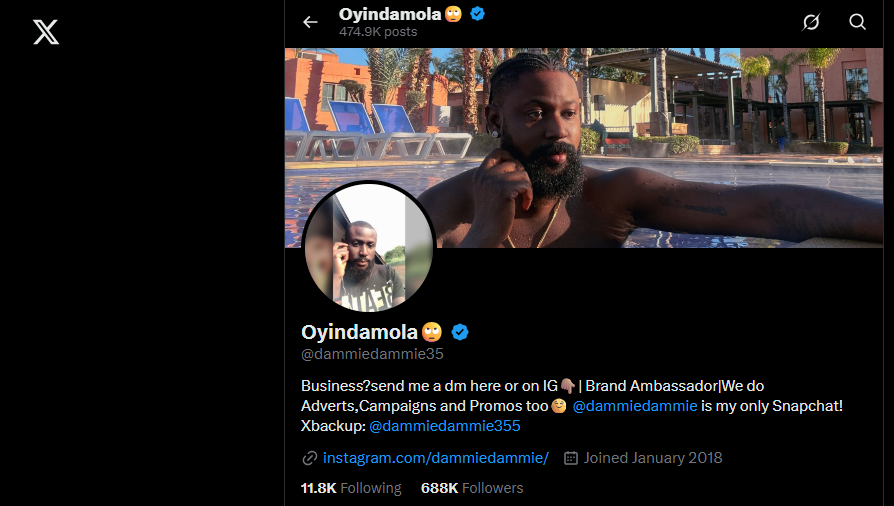
The story did eventually produce a counterpoint. According to The Nation Newspaper12, in late March 2026, a Nigerian creator named Oyindamola, whose account had been restricted since the previous year, shared news of a 32 million naira payout after he kept posting and appealing through months of suspension. He credited persistent appeals and continued content creation. It was a feel-good story, and it spread across Nigerian creator communities. But it was also a story about one person who won a months-long battle against an opaque enforcement system. The others who did not persist, or who could not afford to go without income while waiting for a review, are not the ones going viral.
The Pyramid Problem and the Engagement Farming Trap
Beyond the enforcement volatility, there is a more fundamental structural critique of how X’s monetization model works, and it comes from within the platform itself.
One observer put it plainly in a widely circulated Substack13 comment:
“While it’s great that Twitter is sharing revenue with its creators, its incentive structures just strike me as being way off. The main benefit of being a paid subscriber is to be able to opt into its revenue sharing program, which means all of its creators are just competing to take more money out of the system that they’re paying into it.”
This is the internal circularity problem. X requires creators to pay for Premium verification (at $8 per month for the base tier) in order to qualify for revenue sharing. That revenue sharing pool is partly funded by Premium subscription revenue. Creators are, in part, paying into the pool they are competing to extract from. The more creators join, the more the pool is funded by their own subscription fees, and the more diluted each creator’s share becomes.
X declared 2026 the “Year of the Creator” and announced it had more than doubled the revenue-sharing pool, citing Premium subscription growth in 2025 as the source. Many creators have reportedly seen payouts double or triple compared to 2025, even at flat impression levels. That is genuinely positive, but it also confirms the mechanism: the pool grows when more people pay for Premium, many of them creators themselves. The program’s expansion is partly self-funded by the creators participating in it.
Perhaps the most ironic consequence of X’s revenue model is that it systemically incentivized the very behavior the platform now claims to be fighting.
When the original program rewarded ad impressions in reply threads, the fastest path to high earnings was to generate maximum replies. That meant outrage, divisiveness, and engagement-bait. Recycled memes, fake debates, deliberately provocative questions, and content designed to generate friction rather than insight became reliable earning strategies. The platform rewarded this content because it drove impressions.
In April 2024, Yahoo!News14 reported that Musk announced that accounts doing engagement farming would be suspended. The announcement got over 100 million views and was met with widespread approval from users who had watched their feeds fill with low-quality engagement bait. But Musk’s platform had spent the preceding year paying creators to produce exactly that content. The revenue model created the behavior, and then the platform owner announced he would punish accounts for engaging in it.
The November 2024 pivot toward weighting Premium-user engagement was partly designed to fix this. The new payout system aimed to tie earnings more closely to meaningful interaction from paying subscribers, reducing the reward for cheap engagement tricks. X’s head of product, Nikita Bier, has been explicit about wanting to shift revenue away from engagement farming and toward original content, with policies including a 60 percent payout reduction for aggregator accounts and permanent deductions for habitual bait-posters who deploy words like “BREAKING” or “You won’t believe this” on every post.
These are reasonable goals. But the timeline from “we pay you for impressions” to “we suspend you for farming impressions” to “we redesign the system to reward something different” spans roughly 18 months, during which creators built businesses around the old rules. The damage to trust is cumulative.
What Stability Would Actually Look Like
The comparison to YouTube is instructive. YouTube’s Partner Program has its own volatility, its own opaque algorithmic quirks, and its own history of demonetization controversies. But YouTube publishes RPM data that creators can track in real time. It has a documented appeals process. It has been paying creators consistently for over a decade, long enough for a generation of professionals to build careers on its stability.
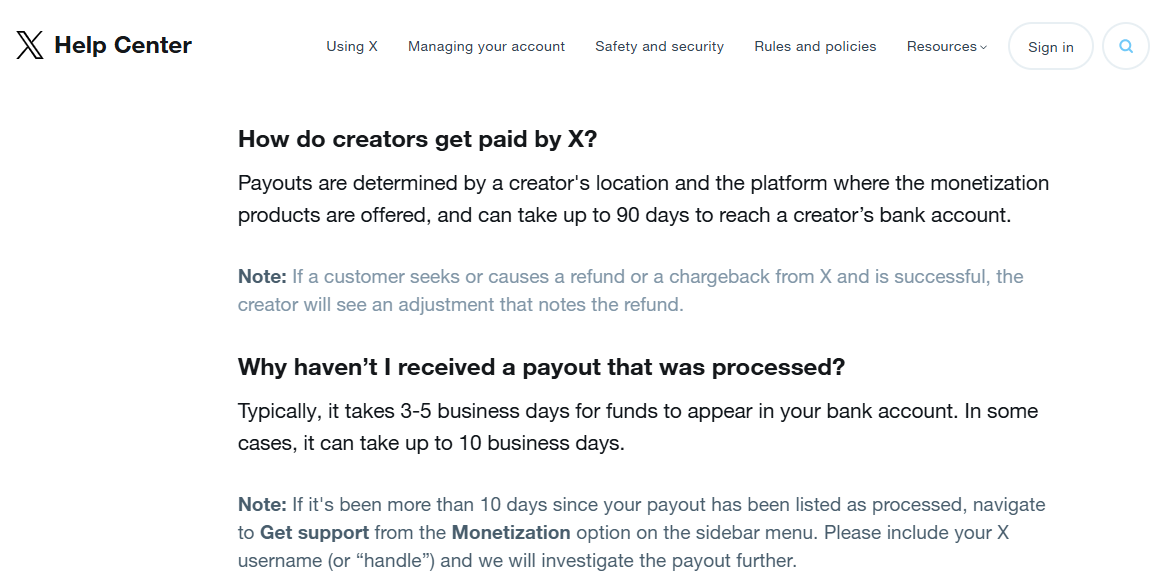
X’s program is three years old and has already changed its core formula multiple times, imposed mass suspensions affecting entire national creator communities, launched and reversed policy changes within 48 hours, and declined to provide creators with any real-time visibility into their own earnings. X’s15 own help center states that earnings are calculated after the close of each payout period, with no running total available during the cycle.
For creators who treat X as a supplementary income stream alongside other platforms, this volatility is an annoyance. For the creators who went all-in, particularly in markets like Nigeria, where X payouts offered genuine economic mobility, the instability is a livelihood crisis disguised as a product feature.
The subscription model offers somewhat more predictability, since recurring subscriber revenue does not fluctuate with ad markets. But X takes Apple’s 30 percent cut off iOS subscriptions before distributing anything, and chargebacks from subscriber disputes are deducted from the creator’s next payout. For smaller creators, a handful of chargebacks can wipe out an entire month’s subscription earnings.
What would stability look like? It would mean a real-time earnings dashboard. It would mean published RPM ranges by region and content category. It would mean a documented appeals process with human review, not just Grok confirmation that your account has been flagged. It would mean policy changes announced with at least two weeks’ notice before implementation, not 48 hours. It would mean enforcement calibrated precisely enough to catch bad actors without sweeping up 80 percent of an entire country’s creator base.
None of these things is technically impossible. Some of them are table stakes on competing platforms. X has chosen not to build them.
Every creator who builds their income around X is making a specific bet: that Elon Musk’s commercial interest in keeping top talent on the platform will prevent him from destroying the conditions that make the platform worth posting on. It is not a crazy bet. X doubled its revenue-sharing pool for 2026. The program is real, and real money flows through it.
But it is a bet on the stability of one man’s attention, one platform’s advertiser relationships, and one company’s ability to enforce rules it keeps rewriting. The creators who are thriving on X in 2026 are largely those who treat its payouts as a bonus on top of income derived from owned newsletters, brand deals, and subscriber communities they control directly. The ones most exposed to the volatility are those who went all-in on X as a primary income source, trusting the initial promise without accounting for how often the terms would change.
The slot machine pays. In some cycles, it pays well. But the house has always controlled the reels, and it has never been shy about reconfiguring them overnight.
Sources
- X, help.x.com/en/using-x/creator-revenue-sharing. Accessed 19 June 2026. ↩︎
- Perez, Sarah. “Twitter tweaks its new revenue-sharing policy for creators to expand access, increase rate limits” TechCrunch, 17 July 2023, techcrunch.com/2023/07/17/twitter-tweaks-its-new-revenue-sharing-policy-for-creators-to-expand-access-increase-rate-limits/amp. Accessed 19 June 2026. ↩︎
- Binder, Matt. “X / Twitter lowers the eligibility requirements for creator monetization” Mashable, 11 Aug. 2023, mashable.com/article/x-twitter-lower-eligibility-requirements-creator-monetization. Accessed 19 June 2026. ↩︎
- Medium, medium.com/@amanyadavspeak/the-complete-guide-to-x-twitter-monetization-payout-system-99c1e41ebb8e. Accessed 19 June 2026. ↩︎
- Anastasov, Kalin. “X (Twitter) Ads Revenue Sharing: Eligibility & Payout Math” 5 Oct. 2025, influencermarketinghub.com/x-twitter-ads-revenue-sharing/. Accessed 20 June 2026. ↩︎
- X, help.x.com/en/rules-and-policies/content-monetization-standards. Accessed 20 June 2026. ↩︎
- Petryshyn, Vadym. “X Premium / Twitter Blue: Is It Worth It for Creators in 2026?” Postory, 18 May 2026, postory.io/blog/x-premium-worth-it. Accessed 20 June 2026. ↩︎
- “LeadrPro” Discover innovative new software, www.leadrpro.com/blog/x-changes-monetization-what-does-it-mean-for-content-creators. Accessed 20 June 2026. ↩︎
- Stojkov, Dragomir. “Elon Musk Halts X Plan To Prioritize Local Impressions In Creator Revenue Payouts After Backlash” 27 Mar. 2026, www.netinfluencer.com/elon-musk-halts-x-plan-to-prioritize-local-impressions-in-creator-revenue-payouts-after-backlash/. Accessed 20 June 2026. ↩︎
- Roy, Anushka. “Elon Musk’s pauses rollout of new rules on X to pay creators after criticism online” Euronews, 25 Mar. 2026, www.euronews.com/next/2026/03/25/elon-musks-pauses-rollout-of-new-rules-on-x-to-pay-creators-after-criticism-online. Accessed 20 June 2026. ↩︎
- Bankole, Mubarak. “Why X suddenly cut off payments for most Nigerian creators” 15 Feb. 2026, technext24.com/2026/02/15/why-x-cut-payments-for-nigerian-creators/. Accessed 20 June 2026. ↩︎
- The Nation Newspaper, thenationonlineng.net/man-goes-viral-after-receiving-n32-million-payout-from-x/. Accessed 20 June 2026. ↩︎
- McIntosh, Makayla. “Is Meta the new MLM?” By Makayla McIntosh, 8 July 2024, sirenmakayla.substack.com/p/is-meta-the-new-mlm/comments. Accessed 20 June 2026. ↩︎
- Yahoo!News, www.yahoo.com/news/elon-musk-plans-to-ban-engagement-farming-on-x-what-does-this-mean-for-the-platform-161726379.html. Accessed 20 June 2026. ↩︎
- X, help.x.com/en/using-x/creator-dashboard. Accessed 20 June 2026. ↩︎


