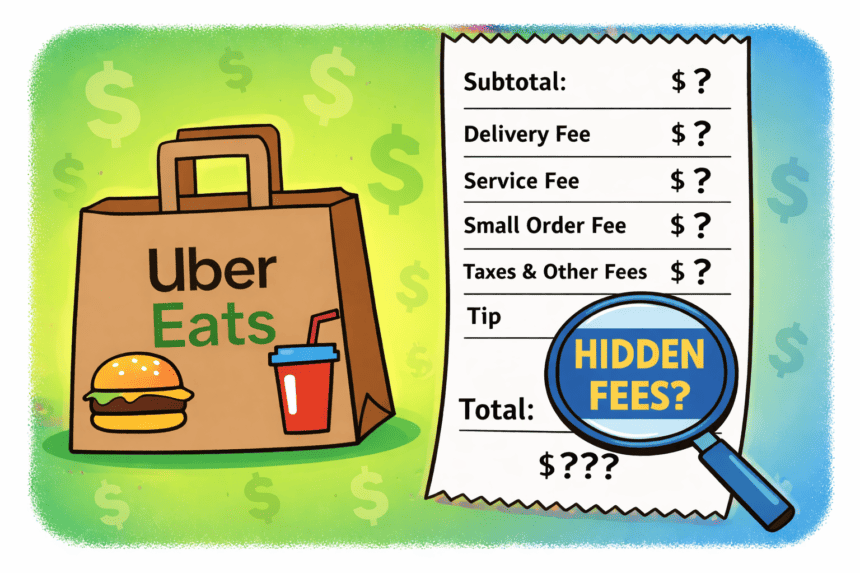

The first time I paid attention to the final total on Uber Eats, I thought I had miscalculated. The subtotal for dinner was reasonable. I expected tax and a delivery charge. What I did not expect was the layered stack of fees that pushed the total far beyond what I had mentally approved.
The jump was not dramatic enough to cause outrage. It was subtle. Just enough to make me hesitate. Just enough to make me wonder how many customers simply tap confirm without recalculating in their heads.
That moment sent me down a path that led through court filings in Canada, regulatory actions in the United States, academic discussions of dark patterns, and the blunt honesty of online forums. The pattern that emerged was not about one rogue charge. It was about structure. It was about how pricing is revealed in stages. It was about what consumer protection law calls drip pricing.
Uber Eats operates in dozens of countries. Its app is sleek, intuitive, and efficient. But beneath that clean interface is a pricing model that many consumers say feels opaque. The central question is not whether delivery services cost money. It is whether customers are shown the true cost clearly and early enough to make an informed choice.
What You See First Is Rarely What You Pay
When customers browse Uber Eats, they see menu prices and sometimes a delivery fee displayed near the restaurant name. That delivery fee can vary depending on location, demand, and subscription status. For Uber One1 members, it may display as zero for qualifying orders.
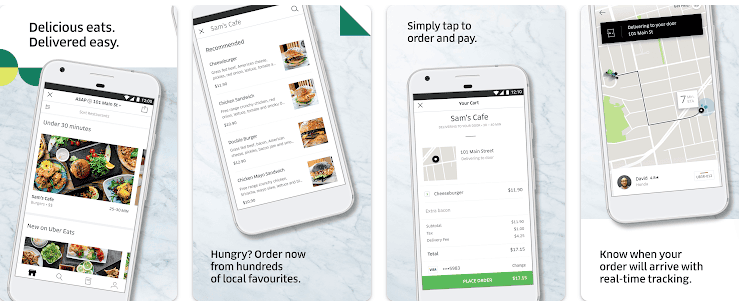
At that early stage, the user forms a mental price anchor. The food costs a certain amount. Delivery costs another amount. The decision to proceed often happens there.
Only later, after items are added to the cart and checkout begins, do additional mandatory fees appear. These can include:
• A service fee calculated as a percentage of the subtotal
• A small order fee if the cart does not meet a minimum
• A regulatory response fee in certain jurisdictions
• Taxes
• A suggested tip
The service fee is the most controversial element because it is often variable and not always clearly explained at the browsing stage. It can range from modest to substantial depending on the order total and market conditions.
This layered presentation of costs has triggered legal scrutiny.
The Canadian Class Action and the Claim of Drip Pricing
In 2025, a proposed class action was filed in Ontario alleging that Uber Eats engaged in drip pricing. The plaintiffs argue that the delivery fee displayed at the outset did not reflect the true cost of delivery because an additional service fee was imposed later in the checkout process.
The Statement of Claim filed with the Ontario Superior Court of Justice2 states:
“The fees for delivery of orders charged to Class Members on Uber Eats are, in fact, higher than the Delivery Fee… Accordingly, the Defendants made representations of a price that is not attainable due to fixed obligatory charges or fees, thereby engaging in drip pricing.”
The filing further alleges that the service fee was often included under a general label such as “Taxes and Other Fees,” which plaintiffs argue could mislead customers into believing it was a government levy rather than a platform charge.
According to reporting from Daily Hive3, the lawsuit claims that Uber did not clearly show the full cost of delivery upfront. Instead, the Service Fee was allegedly revealed only at the final stage of checkout and was often grouped under a vague “Taxes and Other Fees” label. The complaint argues that this practice, commonly referred to as drip pricing, can make the total cost seem lower at first and only becomes fully apparent right before payment.
Uber has not admitted wrongdoing in the case and disputes the allegations. As of this writing, the claim remains before the courts.
The legal question is whether the timing and labeling of these fees constitute a misleading representation under consumer protection law.
A U.S. Regulatory Lens on Subscription Transparency
The pricing issue intersects with subscription services through Uber One. The program promises benefits, including zero-dollar delivery fees on eligible orders for members who pay a recurring subscription fee.
In April 2025, the United States Federal Trade Commission4 filed a lawsuit against Uber Technologies, alleging deceptive practices related to Uber One enrollment and cancellation.
Reuters5 reported that the FTC accused Uber of enrolling consumers without proper consent and making cancellation unnecessarily difficult. FTC Chair Andrew Ferguson stated:
“Americans are tired of getting signed up for unwanted subscriptions that seem impossible to cancel.”
While the FTC case focuses on subscription practices rather than delivery fee stacking alone, it reflects broader regulatory concern about how pricing and recurring charges are communicated to consumers.
Uber has stated publicly that its processes are clear and compliant with the law.
The Canadian class action goes further by arguing that even when delivery fees are displayed as zero for subscribers, service fees continue to apply in ways that may undermine the perception of savings.
What Lawmakers Want to Know
Concern over hidden or layered fees is not limited to courtrooms. It has moved into congressional hearing rooms and formal letters on Capitol Hill.
In the United States, senators from both parties have questioned major delivery platforms, including Uber Eats, about the structure and disclosure of consumer facing fees. According to reporting by Restaurant Business Online6, lawmakers asked companies to detail “all types of fees charged to consumers,” including minimum and maximum levels, how those fees are calculated, and how the revenue is distributed among drivers, restaurants, and the platform itself.
The letters sought more than a breakdown of categories. They asked for mechanics. How often do service fees change. Under what conditions do they rise. Are customers informed when dynamic pricing alters the cost of delivery. And crucially, what share of those fees reaches the worker who delivers the meal.
This bipartisan interest reflects a broader shift in how lawmakers view platform economics. For years, scrutiny focused on restaurant commissions and antitrust concerns. Now attention is turning toward the consumer side of the transaction.
One issue lawmakers have raised is whether consumers can meaningfully compare prices across platforms. If a restaurant lists the same menu price on multiple apps, but each platform applies different combinations of service fees, regulatory response fees, and delivery charges that appear at different stages of checkout, comparison becomes difficult. Transparency, in this context, is not only about disclosure but about comparability.
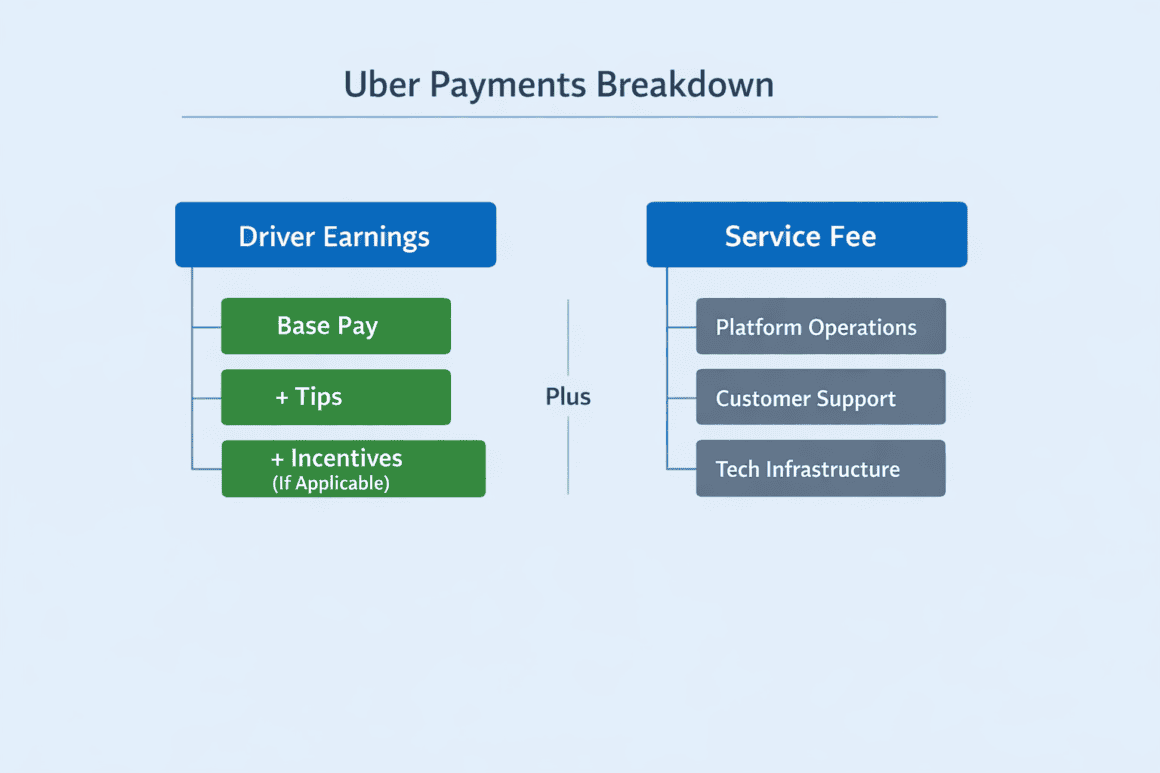
Another concern centers on allocation. Customers often assume that delivery fees compensate drivers. Yet in practice, driver pay structures typically involve a base fare calculated by distance and time, plus tips, plus occasional incentives. Service fees are generally retained by the platform to support operations, insurance, technology infrastructure, and customer service.
The lack of a clear on screen breakdown fuels confusion. Lawmakers have asked whether companies would consider itemizing how each dollar of a transaction is distributed. Such transparency is not currently required under federal law, but the political pressure signals that disclosure standards could evolve.
This line of questioning fits within a broader federal conversation about so called junk fees. The White House and federal agencies have repeatedly criticized hidden or surprise charges across industries, from airlines to ticketing platforms. Delivery apps fall into that wider policy debate.
The inquiry also touches on competition. If one platform advertises a lower delivery fee but relies more heavily on service fees that appear later, does that distort consumer choice. Senators appear to be probing whether fee presentation can function as a competitive tactic.
In public statements, Uber7 has maintained that its fees are disclosed before checkout and that consumers see the full price before confirming an order. From a strictly legal standpoint, that disclosure may satisfy existing requirements. The political question is whether current standards reflect how consumers actually process digital pricing.
What lawmakers want, at its core, is clarity. They want to know how much consumers are paying in total. They want to know who receives that money. And they want to know whether the structure of app interfaces obscures or illuminates those realities.
The outcome of these inquiries remains uncertain. But the fact that senators are asking these questions at all suggests that fee stacking is no longer a niche complaint buried in online forums. It is a matter of public policy.
Dark Patterns and Voices From the Front Lines
If regulatory filings describe the legal theory, online forums reveal the emotional response.
In one Reddit8 discussion about fee stacking, a user wrote:
“Almost 25% service + delivery fee… none of which goes to the driver is insane.”
The accuracy of the claim about where fees go is debated. But the perception matters. Many customers assume that delivery fees primarily compensate drivers. When they learn that driver pay structures are more complex, frustration grows.
Another user described abandoning the app after comparing prices in-store:
“Uber eats is a SCAM. Was looking at BOGO burritos… decided to go into the store… $20 for the same thing.”
The perception that ordering through the app dramatically increases cost fuels distrust, even if part of the difference reflects restaurant pricing strategies or promotional structures.
A third user who identified as an Uber One subscriber expressed shock at the final total of an order:
“I thought about ordering a $35 curry and they tried to charge me $83 and this is WITH Uber One.”
Individual anecdotes do not prove systemic misconduct. But when similar experiences recur across regions and years, they suggest a widespread transparency problem.
9Legal scholars have examined how digital platforms structure pricing interfaces. An analysis published by the Centre for Business and Commercial Laws at NLIU describes drip pricing as a dark pattern when “the elements of the full price are not revealed upfront or are revealed surreptitiously within the user experience.”
The term dark pattern refers to interface design choices that steer users toward decisions that benefit the platform. It does not automatically imply illegality. But it does frame the issue as one of design ethics and consumer psychology.
Behavioral economics research from NIH10 shows that consumers anchor on the first price they see. If that anchor is lower than the eventual total, they may proceed further into the transaction than they otherwise would have.
In practical terms, this means that even if all fees are technically disclosed before final payment, the timing of disclosure can shape consumer behavior.
Global Variation, Similar Complaints
When I began looking at Uber Eats pricing outside the United States, I expected to find sharp differences. Different tax systems. Different consumer laws. Different regulatory cultures. All of that exists. What surprised me was how familiar the complaints sounded from one country to the next.
Uber Eats operates across North America, Europe, Asia Pacific, Latin America, and parts of the Middle East and Africa. In each region, the fee structure is tailored to local tax rules and regulatory frameworks. Yet the architecture of layered charges often looks strikingly similar. There is a delivery fee. There is a service fee. There may be a small order fee. Taxes apply. Promotions shift the visible numbers. The final total appears only after several taps.
In the United Kingdom, the Competition and Markets Authority has emphasized the importance of upfront pricing transparency in digital markets. Its guidance on online choice architecture warns against drip pricing, a practice where additional mandatory fees are revealed late in the purchase process. The CMA11 notes that “consumers should be given clear and timely information about the total price” before they commit to a transaction.
Although Uber Eats states on its UK help pages that service fees and delivery fees are displayed before checkout, complaints in online forums often focus on how totals change as users move through the ordering flow. On the UK consumer forum MoneySavingExpert12, one user wrote that they
“felt misled by how low the initial price looked compared to the final bill once fees and taxes were added.”
Across the European Union, the Unfair Commercial Practices Directive prohibits misleading omissions, including failing to provide material information that the average consumer needs to make an informed decision. The European Commission’s13 guidance explains that traders must present the total price inclusive of taxes and unavoidable charges where applicable.
In practice, delivery platforms operating in the EU, including Uber Eats, typically display fees before payment. Yet consumer organizations have continued to question whether the presentation is sufficiently clear. In 2021, BEUC14, the European Consumer Organisation, called for stronger enforcement around digital platform practices, arguing that consumers often struggle to understand the real cost of online services.
In Australia, the Australian Competition and Consumer Commission has taken action in recent years against digital platforms for misleading representations around pricing and fees. The ACCC’s15 guidance on online pricing states that businesses must not mislead consumers about the total price payable. It emphasizes that unavoidable fees should be prominently disclosed.
Australian users on Reddit have echoed similar frustrations. In one thread discussing food delivery charges, a commenter wrote that “the delivery fee looks reasonable until the service fee and small order fee pop up.”
In India, where food delivery competition is intense, regulatory scrutiny has focused more on restaurant commissions and platform dominance than on consumer fee stacking. Still, the Consumer Protection Act of 2019 requires transparent disclosure of prices and prohibits unfair trade practices. The Central Consumer Protection Authority16 has issued advisories to e commerce platforms about misleading pricing displays.
Indian users on Quora and Reddit frequently compare final bills between platforms. One such user asked why
“the final payable amount is always much higher than what I see when I first open the restaurant page.”
In Latin America, local dynamics vary widely. In Brazil, consumer protection agencies operate under the Consumer Defense Code17, which mandates clear and adequate information about products and services, including price.
Brazilian social media posts about delivery apps often highlight sudden increases in delivery fees during peak demand. While surge pricing is disclosed in app interfaces, users frequently describe it as unpredictable. A user in São Paulo wrote that
“the delivery fee doubled in minutes after I added items to my cart.”
During the early months of the COVID 19 pandemic, cities around the world imposed temporary caps on delivery commissions charged to restaurants. New York City, for example, capped certain fees charged by delivery platforms. While those caps focused on restaurant side commissions rather than consumer facing fees, they brought new public attention to the economics of delivery apps.
In Canada, the Competition Bureau18 has also published guidance on drip pricing. It defines drip pricing as advertising a price that is unattainable because mandatory fees are added later in the purchasing process. The Bureau notes that such practices can be misleading under the Competition Act.
Canadian consumers on forums like RedFlagDeals have shared side by side screenshots of restaurant menu prices compared to final totals on delivery apps. One commenter wrote that
“the fees are technically listed, but you only see the real impact at the last screen.”
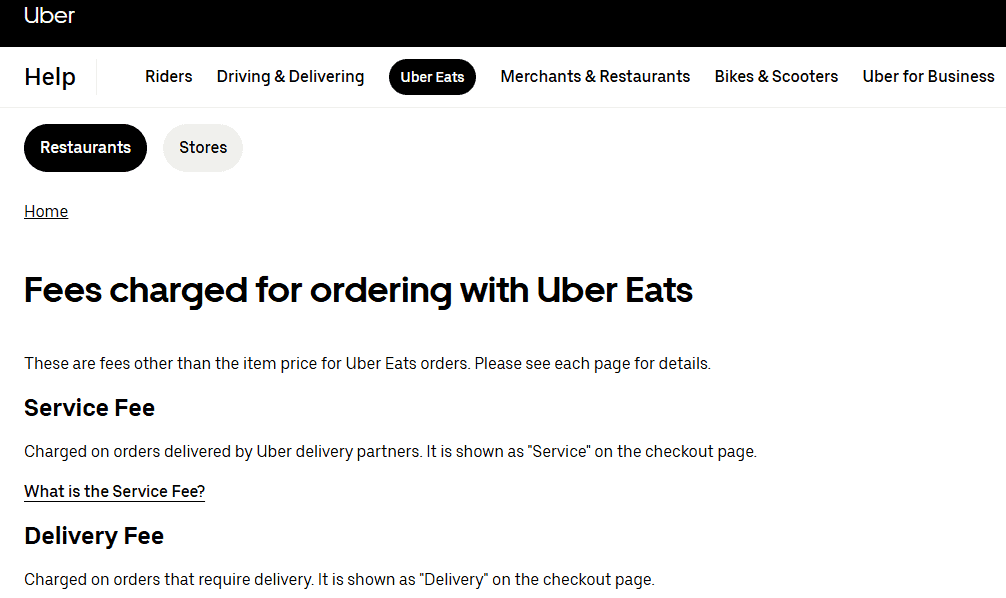
To be clear, Uber Eats19 generally displays fees before the final payment confirmation. The company’s help pages explain that service fees “vary based on factors such as the restaurant, your location, and current demand.”
The legal line between disclosure and opacity often turns on presentation. Regulators tend to ask whether the total price is available before purchase and whether mandatory fees are clearly identified. Consumers tend to ask a simpler question. Why did the number in my head not match the number on my screen?
The global pattern is consistent. The fee categories may shift. Tax rates differ. Local consumer laws impose varying levels of disclosure. Yet the layered structure of charges appears across markets. Delivery fee. Service fee. Small order fee. Taxes. Tip. Sometimes a regulatory response fee in certain jurisdictions.
The core issue travels easily across borders because the psychological experience is similar everywhere. A consumer sees a meal priced at a certain amount. They mentally anchor to that number. Each additional line item feels like a deviation from that anchor. Even when disclosed, it can feel like an afterthought.
Regulators focus on compliance with disclosure rules. Platforms focus on unit economics and competitive positioning. Consumers focus on the final total. Across Europe, Asia Pacific, Latin America, and the Middle East, the complaint is not always that fees exist. It is that the path to the full cost can feel fragmented.
Clarity is not just a legal requirement in many jurisdictions. It is a trust mechanism. In digital markets that rely on repeat transactions, trust compounds. When customers say they want to know the full cost of a meal before they mentally commit, they are not making a legal argument. They are describing a cognitive process.
That process looks remarkably similar whether the order is placed in London, Sydney, Mumbai, São Paulo, or Toronto.
Where the Money Goes
A recurring theme in consumer frustration is uncertainty about who receives what portion of each fee.
Uber states in various markets that drivers receive base pay plus tips and sometimes additional incentives. The service fee, according to company explanations in help materials, supports platform operations, customer support, and technological infrastructure.
However, there is no simple breakdown on the checkout screen that shows how each dollar is allocated. That opacity feeds suspicion.
When one user claims that none of the service fee goes to the driver, it reflects that lack of a visible breakdown rather than a verified accounting statement.
Transparency is not only about showing totals. It is about showing distribution.
I no longer assume the subtotal plus delivery fee is the real cost. I scroll to the final screen before deciding. Sometimes I abandon the order.
That small act of hesitation represents something larger. Trust has shifted. Instead of feeling that the app is presenting a straightforward price, we feel that we have to uncover it.
In the meantime, millions of customers continue tapping through checkout screens each day. Some notice the stacked fees. Some do not. Some accept them as the cost of convenience. Others feel misled.
The invisible bill is not invisible because it never appears. It is invisible because it appears late.
For a platform built on speed and ease, that delay in clarity may be its most consequential design choice.
Sources
- Uber, www.uber.com/en-GB/blog/terms-and-conditions-for-uber-one-member-days-offers-2025/. Accessed 3 Mar. 2026. ↩︎
- Redko, Olga. “2025 04 16 – Statement of Claim(8660095.8)” 16 May 2025, assets.kmlaw.ca/wp-content/uploads/2025/05/assets.kmlaw.ca/wp-content/uploads/2025/05/Statement_of_Claim.pdf. Accessed 3 Mar. 2026. ↩︎
- Silvestre, Irish Mae. “Proposed class action alleges Uber Eats charged Canadians hidden service fees” National, 10 June 2025, dailyhive.com/canada/uber-eats-canada-class-action. Accessed 3 Mar. 2026. ↩︎
- 4 Dec. 2025, www.ftc.gov/news-events/news/press-releases/2025/04/ftc-takes-action-against-uber-deceptive-billing-cancellation-practices. Accessed 3 Mar. 2026. ↩︎
- “Reuters.Com” www.reuters.com/sustainability/us-ftc-sues-uber-accusing-it-deceptive-practices-court-filing-2025-04-21/. Accessed 3 Mar. 2026. ↩︎
- Guszkowski, Joe. “Senators question DoorDash and Uber Eats over ‘hidden fees’ for consumers” 18 Apr. 2024, www.restaurantbusinessonline.com/technology/senators-question-doordash-uber-eats-over-hidden-fees-consumers. Accessed 3 Mar. 2026. ↩︎
- Uber, help.uber.com/so/ubereats/restaurants/article/fees-charged-for-ordering-with-uber-eats?nodeId=98748050-3fac-410b-8003-bcc12dc3e0ee. Accessed 3 Mar. 2026. ↩︎
- Reddit, www.reddit.com/r/UberEATS/comments/1g7egk9/uber_eats_fees_are_ridiculous/. Accessed 3 Mar. 2026. ↩︎
- CBCL, cbcl.nliu.ac.in/contemporary-issues/hidden-charges-in-delivery-apps-legal-or-deceptive/. Accessed 3 Mar. 2026. ↩︎
- “An Experimental Study on Anchoring Effect of Consumers’ Price Judgment Based on Consumers’ Experiencing Scenes” PMC , pmc.ncbi.nlm.nih.gov/articles/PMC8860899/. Accessed 3 Mar. 2026. ↩︎
- “Online Choice Architecture: How digital design can harm competition and consumers” GOV.UK, 5 Apr. 2022, www.gov.uk/government/publications/online-choice-architecture-how-digital-design-can-harm-competition-and-consumers. Accessed 3 Mar. 2026. ↩︎
- “Home” MoneySavingExpert Forum, forums.moneysavingexpert.com/. Accessed 3 Mar. 2026. ↩︎
- “Unfair commercial practices directive” European Commission, commission.europa.eu/law/law-topic/consumer-protection-law/unfair-commercial-practices-and-price-indication/unfair-commercial-practices-directive_en. Accessed 3 Mar. 2026. ↩︎
- 14 Dec. 2021, BEUC, www.beuc.eu/sites/default/files/publications/www.beuc.eu/sites/default/files/publications/beuc-x-2021-116_the_regulatory_gap-consumer_protection_in_the_digital_economy.pdf. Accessed 3 Mar. 2026. ↩︎
- “Pricing” ACCC, 9 July 2024, www.accc.gov.au/business/pricing. Accessed 3 Mar. 2026. ↩︎
- “Home” consumeraffairs.gov.in/. Accessed 3 Mar. 2026. ↩︎
- “L8078” www.planalto.gov.br/ccivil_03/leis/l8078.htm. Accessed 3 Mar. 2026. ↩︎
- Canada, Competition Bureau. “Drip pricing” 25 Nov. 2024, competition-bureau.canada.ca/en/deceptive-marketing-practices/drip-pricing. Accessed 3 Mar. 2026. ↩︎
- Uber Eats, help.uber.com/ubereats/restaurants. Accessed 3 Mar. 2026. ↩︎