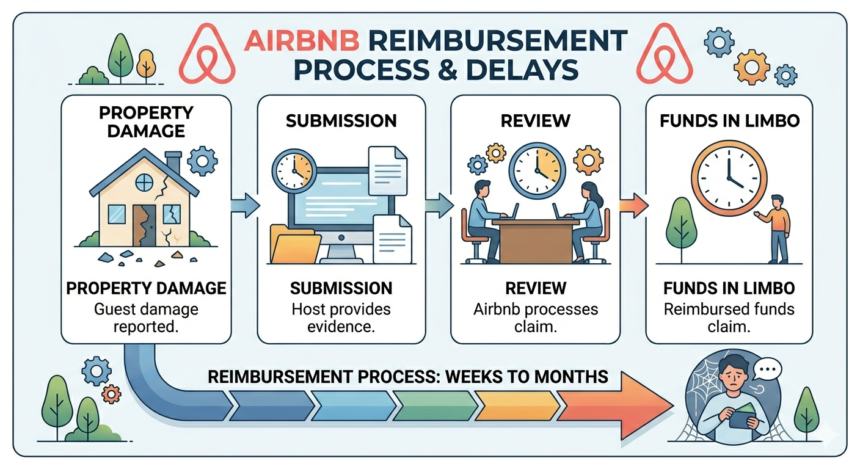

Short-term rental platforms depend on trust. Guests trust that the homes they book will be clean and safe. Hosts trust that the platform will step in when things go wrong. When damage happens, Airbnb promotes a protection program that promises large coverage limits. Yet many hosts report that reimbursement claims take weeks or months to resolve.
This delay rarely appears in Airbnb marketing. But in host communities, support forums, and online discussions, the slow pace of claims is a recurring theme. The issue is not that reimbursements never happen. The issue is that the process can be complex, documentation-heavy, and slow-moving when disputes arise.
Understanding why these delays occur requires looking at how Airbnb designed its host protection system and how the claim process works in practice.
The Promise of AirCover
Airbnb’s protection program for hosts is called AirCover. The company presents it as a central pillar of trust within its marketplace. The idea is simple. If a guest damages a property, the host should not have to absorb the cost alone. AirCover is designed to provide financial protection and reassurance for people who open their homes to short-term rentals.
According to Airbnb’s official help documentation1, Host Damage Protection under AirCover reimburses hosts “up to $3 million” for damage to property or belongings caused by guests during an Airbnb stay. The program was introduced as an expansion of the company’s earlier Host Guarantee system and was rolled out globally in 2021 as part of a broader push to strengthen host protections.
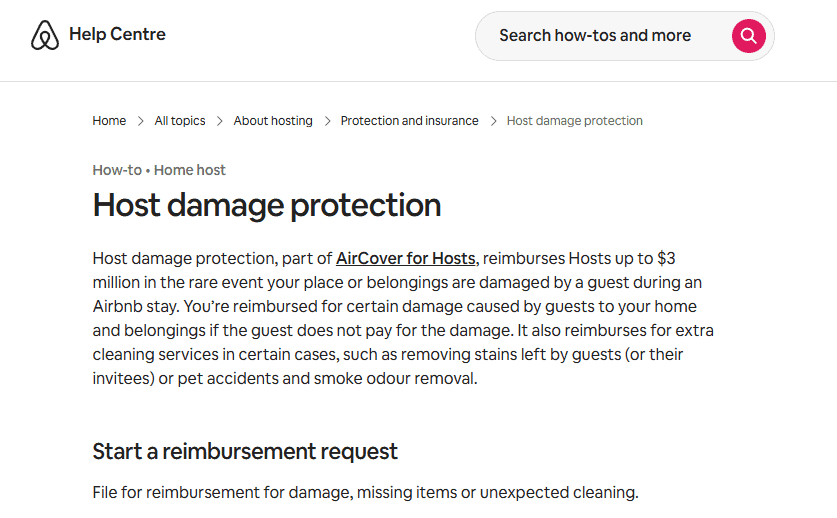
The coverage is relatively broad on paper. It can include damage to furniture, appliances, electronics, flooring, walls, and other parts of a home’s interior. Hosts may also request reimbursement for certain additional costs that arise after damage occurs. These can include extra cleaning fees, pet damage, and, in some situations, the loss of income if a host must cancel upcoming reservations in order to repair the property.
Airbnb also states that the protection extends to some outdoor property features and shared spaces within a listing. Items such as patios, landscaping, and certain structural elements may qualify depending on the circumstances of the claim and the documentation provided by the host. The intent is to cover the types of damage that are most likely to occur when guests stay in a private home.
For many hosts, especially those new to short-term rentals, this protection is an important factor in deciding whether to list a property. Renting out a personal home or investment property involves risk. Guests are strangers. Even with identity verification and reviews, accidents happen. A broken appliance, damaged furniture, or stained carpet can quickly turn a profitable booking into a costly repair.
According to PriceLabs2, AirCover aims to reduce that uncertainty. In its public messaging, Airbnb frames the program as part of a larger system of host support. The company often highlights that the coverage applies automatically to every Airbnb booking without requiring hosts to purchase additional policies or opt into the program.
However, the protection system is not the same as traditional insurance. Airbnb makes this distinction clear in its policy documentation. The company states that AirCover’s Host Damage Protection3 “is not a residential insurance contract and does not replace homeowner or renter insurance.”
Hostaway4 states that AirCover is not traditional insurance. Instead of functioning like a standard insurance policy, it operates as a reimbursement program that follows a structured dispute and documentation process. This difference may appear subtle at first, but it has practical implications for how claims are handled.
In a traditional insurance model, a policyholder files a claim directly with an insurer. The insurer investigates the damage and determines whether the loss is covered under the policy terms. The relationship is contractual and governed by insurance regulation.
AirCover works differently because Airbnb itself operates the marketplace where the transaction occurs. When damage happens, the process begins as a dispute between the host and the guest. The host must first request reimbursement from the guest through Airbnb’s internal Resolution Center. Only after that step fails does Airbnb review the claim and determine whether the company’s protection program will cover the loss.
The system therefore functions as a hybrid between a dispute mediation process and a reimbursement program.
This structure reflects Airbnb’s role as a platform rather than a traditional insurer. The company connects hosts and guests while offering protection mechanisms that help maintain trust within the marketplace. At the same time, the program is designed with safeguards to prevent fraudulent claims or exaggerated damage reports.
Airbnb’s documentation notes that hosts must provide evidence showing that the damage occurred during the guest’s stay and that the repair cost is reasonable. Documentation can include photographs, invoices, repair estimates, and communication records between host and guest. The company reserves the right to request additional information during the review process.
These documentation requirements are a key part of the system. They help verify claims, but they also make the process more formal than many hosts expect when they first hear about AirCover.
For experienced hosts, the distinction between reimbursement protection and insurance coverage becomes clearer over time. AirCover provides a financial safety net, but it operates within a platform dispute system rather than a standard insurance framework.
Understanding this difference is important for anyone hosting on Airbnb. It explains why the claim process involves negotiation with guests, documentation requirements, and review periods that can take weeks or months. The promise of AirCover is significant coverage, but the path to reimbursement follows the procedural structure of a marketplace rather than the immediate payout expectations of traditional insurance.
The Step-by-Step Claim Process
To request reimbursement, hosts must follow several procedural steps. Missing any of them can invalidate the claim.
First, hosts must document the damage immediately after the guest’s checkout. Photos, repair estimates, and receipts are often required to establish evidence.
Second, the host must submit a reimbursement request through Airbnb’s Resolution Center within fourteen days of the guest’s checkout date.
Third, the guest is given an opportunity to respond to the claim. According to Airbnb’s help guidance5, the guest typically has twenty-four hours to accept or decline the reimbursement request.
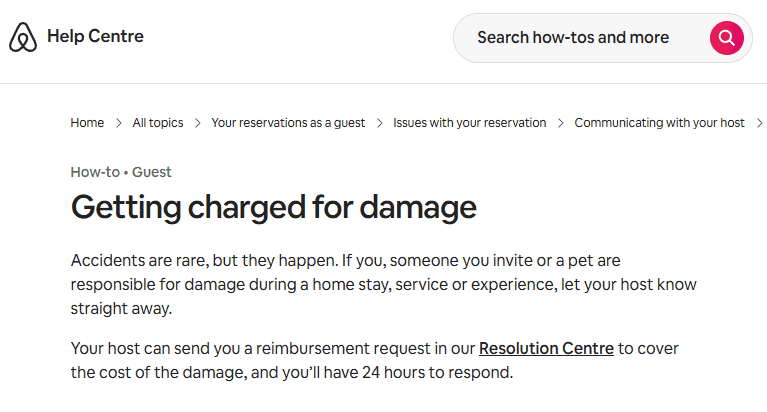
If the guest declines or fails to respond, the host can escalate the claim to Airbnb support under the AirCover protection program.
At this point, Airbnb begins reviewing the evidence and documentation submitted by both sides.
Airbnb’s own documentation suggests that the claim review process may take time. In the host damage protection terms, the company states it will use “commercially reasonable efforts” to process a payment request within three months after receiving the necessary documentation.
That clause helps explain why many hosts report long waiting periods. A review window of up to three months can already stretch beyond the expectations of hosts who need to repair damage quickly.
Additional delays often occur if Airbnb requests more documentation or if there is disagreement about the cause of damage.
Hosts must also submit complete supporting documentation within thirty days after escalation, including invoices or contractor estimates. Missing that deadline can lead to the denial of the claim regardless of the damage itself.
These procedural steps create a system where reimbursement depends heavily on evidence and strict timelines.
Evidence plays a central role in Airbnb damage claims. Hosts must demonstrate three key points. They must show that damage occurred, that it occurred during the guest’s stay, and that the claimed repair cost is reasonable.
This often requires more documentation than hosts initially expect.
Contractor invoices, repair estimates, purchase receipts, and time-stamped photos may all be requested during the review process. In some cases, Airbnb may also examine the conversation history between host and guest to determine whether the damage was reported promptly.
If the documentation is incomplete or inconsistent, the claim may be reduced or denied.
One host on a discussion board described how inconsistent documentation affected their experience with the system:
“One claim went through, another was partially covered, and one got denied for ‘insufficient evidence’ even though I had photos.”
That uncertainty contributes to the perception that claims are unpredictable.
Confusion in the Support System
Another factor that appears to contribute to reimbursement delays is the structure of Airbnb’s support system. Unlike a traditional insurance company that manages claims within a single department, Airbnb operates a large global support network that handles a wide variety of issues at the same time. Customer support agents respond to booking problems, guest complaints, safety incidents, payment questions, and property damage reports. Damage claims are therefore only one category within a much larger operational structure.
When a host reports property damage, the case may move through several internal stages before it is resolved. The first contact often occurs with a general customer support representative. If the issue involves financial reimbursement, the case may then be escalated to a team that handles disputes through the Resolution Center. In situations where the claim involves AirCover protections, it may be reviewed again by specialists who handle host protection cases or insurance-related matters.
Each step can involve a different team or support agent reviewing the same documentation.
This layered structure is not unusual for large technology platforms. According to Statista6, Airbnb operates globally and processes millions of guest stays every year. The company relies on distributed support teams across multiple regions to handle the volume of customer inquiries. However, the structure can create confusion when a claim moves between teams that handle different parts of the process.
Some hosts say their claims appeared to stall during these transitions.
One Reddit7 host described their experience in a discussion thread on a hosting forum:
“I have a reimbursement request from October that still hasn’t been resolved.”
The same discussion noted confusion between AirCover claims and other reimbursement requests processed through Airbnb’s Resolution Center. According to the host, different support representatives appeared to interpret the claim under different categories, which created additional delays.
Although individual forum posts cannot represent the full experience of all hosts, similar comments appear frequently in online host communities. Some hosts describe cases where multiple support agents contacted them over time, requesting the same information. Others say that new agents asked for documentation that had already been submitted earlier in the process.
These situations may occur because support agents rely on internal case notes and documentation history when they take over an existing claim. If the information in the case file is incomplete or unclear, the new agent may request clarification or additional evidence from the host.
In a complex claim involving multiple pieces of evidence, each review stage can add time to the overall timeline.
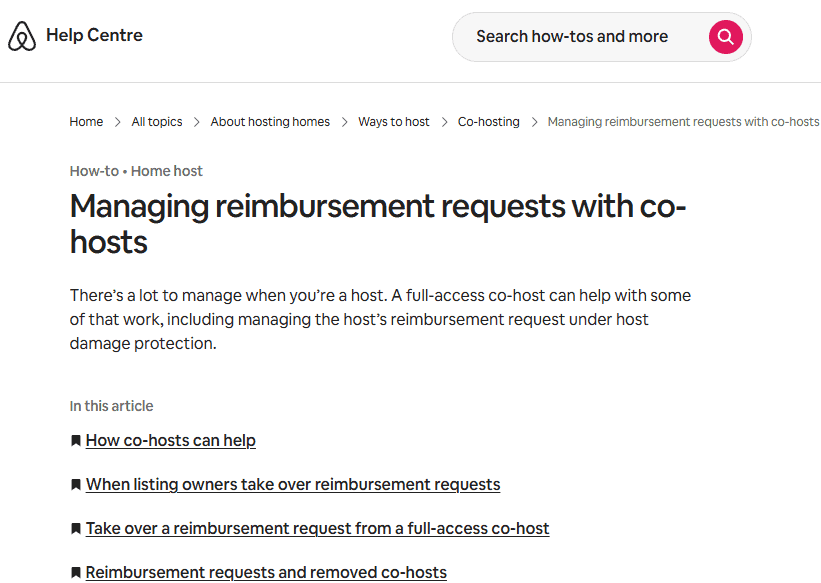
The structure of the system can also make it difficult for hosts to track where their claim currently sits in the process. A host may initially interact with customer support through the messaging system, then receive follow-up requests from a different team responsible for reviewing AirCover claims. Communication may arrive through email or through Airbnb’s internal messaging interface, depending on the stage of the case.
For hosts who are unfamiliar with the platform’s internal processes, these transitions can create uncertainty about whether the claim is actively being reviewed or waiting for additional information.
The issue becomes more noticeable when a claim requires detailed documentation or when the guest disputes responsibility for the damage. In those cases, the support system effectively becomes a mediator between the two parties. The host provides evidence. The guest may respond or contest the claim. Support agents review the information and determine whether it meets the criteria for reimbursement.
This multi-step review process can work smoothly when the evidence is clear and both parties respond quickly. But when responses are delayed or documentation needs further verification, the claim can move slowly between different stages of review.
As a result, the perception among some hosts is that cases sometimes sit unresolved for long periods while they move through the support structure. Whether the delay is caused by verification, documentation gaps, or internal review procedures, the experience often feels to hosts like the claim is circulating between teams before reaching a final decision.
For a platform operating at Airbnb’s scale, this kind of layered support structure may be difficult to avoid. But for hosts waiting for reimbursement after property damage, each additional transfer in the support chain can extend the timeline of an already complicated process.
Depreciation, Partial Reimbursements, and Procedural Deadlines
Even when Airbnb approves a damage claim, hosts do not always receive the full replacement cost of the damaged item. Instead, reimbursement is often calculated using depreciation rules that resemble those used in insurance claims. This means the amount paid may reflect the current value of the damaged item rather than the price of buying a new replacement.
Airbnb’s Host Damage Protection documentation states that reimbursement may be based on the value of the item at the time of loss. The company notes that compensation may take into account factors such as the age and condition of the item before the damage occurred.
In practice, this can lead to partial reimbursement when older furniture or appliances are damaged. For example, if a sofa purchased several years earlier is destroyed during a guest’s stay, the reimbursement amount may reflect the depreciated value of the item rather than the cost of a brand-new sofa.
This approach is common in property insurance. Insurers often distinguish between replacement cost and actual cash value. Replacement cost refers to the amount required to buy a new equivalent item. Actual cash value refers to the replacement cost minus depreciation based on age and wear.
Airbnb’s reimbursement system8 often follows a similar logic. The company may approve a claim but reduce the payout if the item being replaced was already several years old.
Some hosts encounter this policy only after filing their first claim. In online discussions, hosts frequently mention that the reimbursement amount was lower than the price of replacing the damaged item with a new version.
One host who described a successful claim outcome still noted the effect of depreciation in the final payout:
“They were going to pay me… lower due to their policy on old for old replacement.”
Experiences like this highlight the difference between reimbursement and full replacement coverage. Even when the claim is approved, the payment may cover only part of the repair or replacement cost.
This can be particularly noticeable with large household items such as sofas, mattresses, televisions, or appliances. These items depreciate over time, which means the reimbursement amount can be significantly lower than the price of purchasing a new version.
Airbnb’s policies also state that hosts must provide proof of value when submitting claims. Documentation such as purchase receipts, invoices, or repair estimates may be required in order to calculate reimbursement.
Without clear documentation showing the original cost of an item, determining its depreciated value becomes more difficult and may lead to lower reimbursement.
Alongside depreciation rules, procedural deadlines also play a major role in determining whether a host receives compensation at all.
Airbnb’s claim process includes several strict timelines that hosts must follow. According to MasterHost9, the first major deadline is the fourteen-day window to file a reimbursement request after a guest checks out. If damage is discovered, the host must report it through the Resolution Center within fourteen days or before the next guest checks in, whichever comes first.
This requirement encourages hosts to inspect their properties quickly after each stay. If the damage is discovered weeks later, the claim may no longer qualify for reimbursement under the platform’s rules.
The next important deadline concerns supporting documentation. Once a claim is escalated to Airbnb under AirCover, hosts are typically required to provide full documentation of the damage within a set period. StayVello10 notes that supporting documents such as invoices, repair estimates, and proof of ownership should generally be submitted within about thirty days after escalation.
These timelines can create logistical challenges. In many cases, obtaining repair estimates or contractor evaluations takes time. A broken appliance may require a technician visit before an estimate can be issued. Structural damage or large furniture replacement may require inspection or professional quotes.
If these steps take too long, the host risks missing the documentation deadline required by the platform.
Host guides frequently warn that missing these deadlines can lead to automatic claim rejection, even if the damage itself is legitimate. The system, therefore, places significant responsibility on hosts to document damage quickly and collect supporting evidence within a limited time frame.
This procedural structure is intended to prevent fraudulent claims and ensure that damage reports are filed promptly. However, it also means that timing can become just as important as the damage itself when determining the outcome of a claim.
For hosts who manage multiple properties or who rely on professional cleaners and maintenance staff, delays in discovering damage can occur. If the issue is noticed after the reporting window closes, the claim may not qualify for reimbursement regardless of the circumstances.
Taken together, depreciation rules and strict procedural deadlines shape the financial outcome of many Airbnb damage claims. Even when a claim is accepted, the reimbursement amount may reflect the depreciated value of the item rather than the full replacement cost. At the same time, hosts must act quickly to document damage and submit evidence within the platform’s defined time limits.
The Economic Logic Behind Verification
From the platform’s perspective, a slow verification process serves an important purpose. Airbnb11 processes millions of bookings each year across more than two hundred countries and regions.
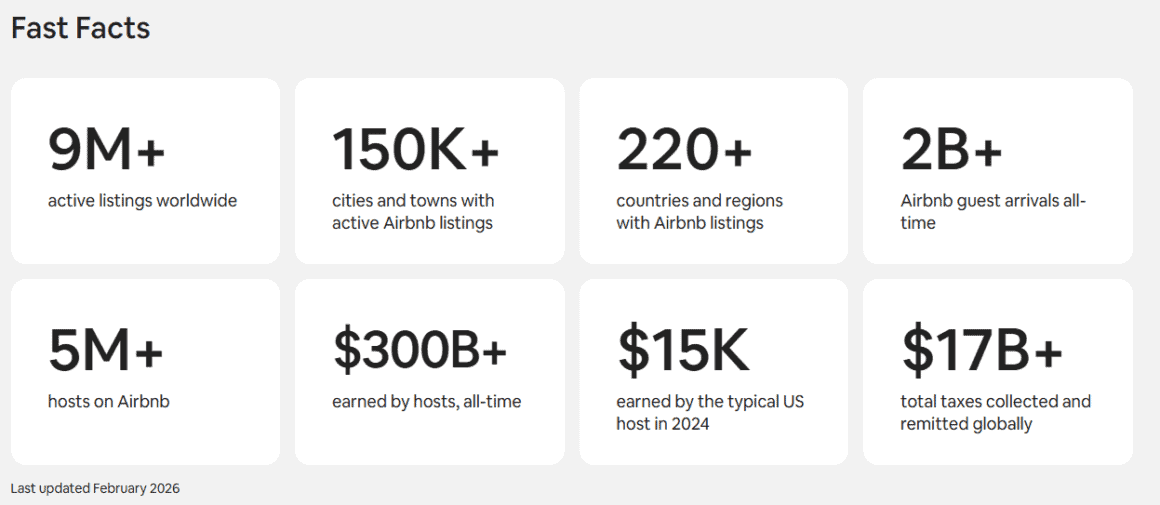
A protection program that pays claims quickly without verification could invite fraudulent claims or exaggerated repair costs.
By requiring documentation and multi-stage review, the company reduces the risk of abuse.
This approach resembles traditional insurance claims handling, where adjusters review evidence before approving payment.
However, the verification process shifts the burden of time onto hosts. Damage often needs to be repaired immediately so that the property can continue operating as a rental. Hosts, therefore, pay for repairs up front while waiting for reimbursement.
For many hosts, the biggest challenge is not whether reimbursement eventually occurs. It is the delay between the damage and the payout.
Repairs cannot wait for a three-month review process. Broken furniture must be replaced, and damaged walls must be repaired before the next guest arrives.
As a result, hosts often pay for repairs themselves while the claim is under review.
In effect, hosts provide short-term financing for the repair process while the platform investigates the claim.
This reality is rarely highlighted in Airbnb’s marketing material for AirCover but is widely discussed among professional hosts who manage multiple properties.
One reason the issue generates mixed feedback is that not all claims move slowly. Some hosts report quick reimbursements when evidence is clear and the guest does not dispute responsibility.
In those cases, the claim may be resolved within days.
But when disputes arise or documentation is incomplete, the process slows significantly.
Several factors influence the timeline of a claim.
The first is whether the guest accepts responsibility for the damage.
The second is the quality and completeness of documentation submitted by the host.
The third is whether the case requires additional review by Airbnb’s support or insurance partners.
The more complex the case becomes, the longer the process tends to take.
The Broader Trust Problem
The growth of the sharing economy depends on trust between strangers. Platforms like Airbnb attempt to create that trust through guarantees, verification systems, and review mechanisms.
Host protection programs such as AirCover play an important role in maintaining that trust. They reassure property owners that they will not bear the full cost if a guest damages their home.
However, when reimbursement claims take months to resolve, the guarantee can feel distant.
The system still works in many cases. But the slow pace of some claims highlights a broader challenge faced by digital platforms.
Balancing fairness, fraud prevention, and speed is difficult at a global scale.
Airbnb must verify claims carefully to protect both guests and hosts. Yet every additional layer of verification adds time.
That tension sits at the center of the reimbursement delay problem.
Airbnb’s damage protection system offers substantial financial coverage on paper. The program promises millions of dollars in protection for hosts whose property is damaged during a stay.
In practice, reimbursement depends on a structured dispute process that includes strict deadlines, extensive documentation, and multiple review stages.
The process begins with host and guest negotiation. It continues through evidence collection and internal review. Each stage can extend the timeline of the claim.
Airbnb’s own documentation suggests that claim processing can take up to three months after receiving documentation. For hosts who must repair damage immediately, that waiting period can feel far longer.
Most hosts who navigate the process eventually receive some form of reimbursement. But the experience often reveals a gap between the promise of platform protection and the operational realities behind it.
Airbnb’s protection program functions less like instant coverage and more like a formal dispute resolution system.
For hosts, understanding that difference may be the key to navigating the process successfully.
Sources
- Airbnb, www.airbnb.ie/help/article/279. Accessed 7 Mar. 2026. ↩︎
- Iyer, Aishwarya. “Aircover Airbnb for Host: What is it, How to Claim, and Pros & Cons?” PriceLabs, 22 Dec. 2022, hello.pricelabs.co/aircover-by-airbnb-pros-and-cons/. Accessed 7 Mar. 2026. ↩︎
- Airbnb, www.airbnb.co.in/help/article/2906. Accessed 7 Mar. 2026. ↩︎
- “What Airbnb AirCover is and How it Works” The Leading All-In-One Vacation Rental Management, www.hostaway.com/blog/airbnb-aircover/. Accessed 7 Mar. 2026. ↩︎
- Airbnb, www.airbnb.co.in/help/article/1415. Accessed 7 Mar. 2026. ↩︎
- “Topic: Airbnb” Statista, www.statista.com/topics/2273/airbnb/?srsltid=AfmBOopf9tTvkm1lduUh0aFLjQbNx1NJ0Ip_YhINPoRL3eRX0zcwU064. Accessed 9 Mar. 2026. ↩︎
- Reddit, www.reddit.com/r/airbnb_hosts/comments/19cecfu/resolution_center_is_broken_when_filing_damage/. Accessed 9 Mar. 2026. ↩︎
- Airbnb, www.airbnb.co.in/help/article/3545. Accessed 9 Mar. 2026. ↩︎
- MasterHost, masterhost.ca/reasons-for-airbnb-claim-rejection/. Accessed 9 Mar. 2026. ↩︎
- StayVello, stayvello.com/navigating-airbnb-damage-claims-and-resolutions-process/. Accessed 9 Mar. 2026. ↩︎
- Airbnb, news.airbnb.com/en-uk/about-us/. Accessed 9 Mar. 2026. ↩︎